


Clinical and Microbiological Factors Associated with High Nasopharyngeal Pneumococcal Density in Patients with Pneumococcal Pneumonia
- PMID: 26466142
- PMCID: PMC4605601
- DOI: 10.1371/journal.pone.0140112
Clinical and Microbiological Factors Associated with High Nasopharyngeal Pneumococcal Density in Patients with Pneumococcal Pneumonia
Abstract
Background: We aimed to study if certain clinical and/or microbiological factors are associated with a high nasopharyngeal (NP) density of Streptococcus pneumoniae in pneumococcal pneumonia. In addition, we aimed to study if a high NP pneumococcal density could be useful to detect severe pneumococcal pneumonia.
Methods: Adult patients hospitalized for radiologically confirmed community-acquired pneumonia were included in a prospective study. NP aspirates were collected at admission and were subjected to quantitative PCR for pneumococcal DNA (Spn9802 DNA). Patients were considered to have pneumococcal etiology if S. pneumoniae was detected in blood culture and/or culture of respiratory secretions and/or urinary antigen test.
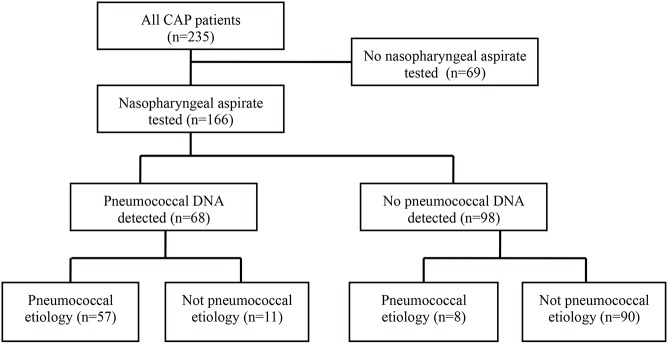
Results: Of 166 included patients, 68 patients had pneumococcal DNA detected in NP aspirate. Pneumococcal etiology was noted in 57 patients (84%) with positive and 8 patients (8.2%) with negative test for pneumococcal DNA (p<0.0001). The median NP pneumococcal density of DNA positive patients with pneumococcal etiology was 6.83 log10 DNA copies/mL (range 1.79-9.50). In a multivariate analysis of patients with pneumococcal etiology, a high pneumococcal density was independently associated with severe pneumonia (Pneumonia Severity Index risk class IV-V), symptom duration ≥2 days prior to admission, and a medium/high serum immunoglobulin titer against the patient's own pneumococcal serotype. NP pneumococcal density was not associated with sex, age, smoking, co-morbidity, viral co-infection, pneumococcal serotype, or bacteremia. Severe pneumococcal pneumonia was noted in 28 study patients. When we studied the performance of PCR with different DNA cut-off levels for detection of severe pneumococcal pneumonia, we found sensitivities of 54-82% and positive predictive values of 37-56%, indicating suboptimal performance.
Conclusions: Pneumonia severity, symptom duration ≥2 days, and a medium/high serum immunoglobulin titer against the patient's own serotype were independently associated with a high NP pneumococcal density. NP pneumococcal density has limited value for detection of severe pneumococcal pneumonia.
Conflict of interest statement
Figures
References
-
- Woodhead M. Community-acquired pneumonia in Europe: causative pathogens and resistance patterns. Eur Respir J Suppl. 2002; 36:20s–7s. - PubMed
-
- Chiou CC. Does penicillin remain the drug of choice for pneumococcal pneumonia in view of emerging in vitro resistance? Clin Infect Dis. 2006; 42:234–7. - PubMed
MeSH terms
Substances
LinkOut - more resources
Full Text Sources
Other Literature Sources
Miscellaneous
