


Development of a SNP-based assay for measuring genetic diversity in the Tasmanian devil insurance population
- PMID: 26467759
- PMCID: PMC4607143
- DOI: 10.1186/s12864-015-2020-4
Development of a SNP-based assay for measuring genetic diversity in the Tasmanian devil insurance population
Abstract
Background: The Tasmanian devil (Sarcophilus harrisii) has undergone a recent, drastic population decline due to the highly contagious devil facial tumor disease. The tumor is one of only two naturally occurring transmissible cancers and is almost inevitably fatal. In 2006 a disease-free insurance population was established to ensure that the Tasmanian devil is protected from extinction. The insurance program is dependent upon preserving as much wild genetic diversity as possible to maximize the success of subsequent reintroductions to the wild. Accurate genotypic data is vital to the success of the program to ensure that loss of genetic diversity does not occur in captivity. Until recently, microsatellite markers have been used to study devil population genetics, however as genetic diversity is low in the devil and potentially decreasing in the captive population, a more sensitive genotyping assay is required.
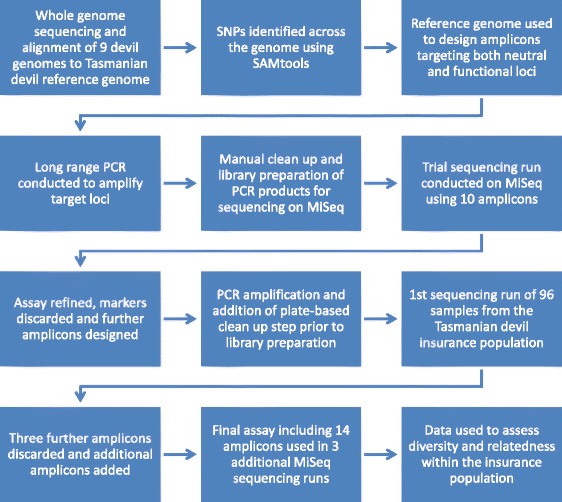
Methods: Utilising the devil reference genome and whole genome re-sequencing data, we have identified polymorphic regions for use in a custom genotyping assay. These regions were amplified using PCR and sequenced on the Illumina MiSeq platform to refine a set a markers to genotype the Tasmanian devil insurance population.
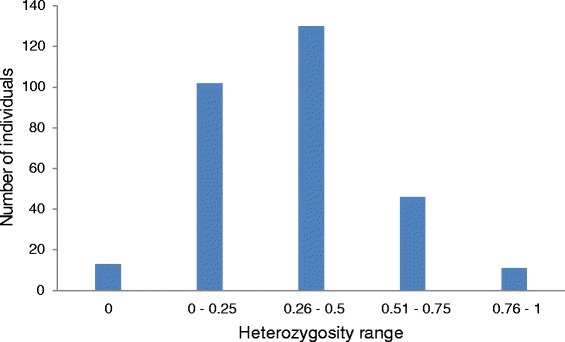
Results: We have developed a set of single nucleotide polymorphic (SNP) markers, assayed by amplicon sequencing, that provide a high-throughput method for monitoring genetic diversity and assessing familial relationships among devils. To date we have used a total of 267 unique SNPs within both putatively neutral and functional loci to genotype 305 individuals in the Tasmanian devil insurance population. We have used these data to assess genetic diversity in the population as well as resolve the parentage of 21 offspring.
Conclusions: Our molecular data has been incorporated with studbook management practices to provide more accurate pedigree information and to inform breeding recommendations. The assay will continue to be used to monitor the genetic diversity of the insurance population of Tasmanian devils with the aim of reducing inbreeding and maximizing success of reintroductions to the wild.
Figures
References
-
- McCallum H, Tompkins D, Jones M, Lachish S, Marvanek S, Lazenby B, et al. Distribution and impacts of Tasmanian devil facial tumor disease. Ecohealth. 2007;4(3):318–25. doi: 10.1007/s10393-007-0118-0. - DOI
-
- Obendorf DL, McGlashan ND. Research priorities in the Tasmanian devil facial tumour debate. Eur J Oncol. 2008;13(4):229–38.
-
- Hawkins CE, Baars C, Hesterman H, Hocking GJ, Jones ME, Lazenby B, et al. Emerging disease and population decline of an island endemic, the Tasmanian devil Sarcophilus harrisii. Biol Conserv. 2006;131(2):307–24. doi: 10.1016/j.biocon.2006.04.010. - DOI
Publication types
MeSH terms
LinkOut - more resources
Full Text Sources
Other Literature Sources
