


Ca2+ Influx through Store-operated Calcium Channels Replenishes the Functional Phosphatidylinositol 4,5-Bisphosphate Pool Used by Cysteinyl Leukotriene Type I Receptors
- PMID: 26468289
- PMCID: PMC4705955
- DOI: 10.1074/jbc.M115.678292
Ca2+ Influx through Store-operated Calcium Channels Replenishes the Functional Phosphatidylinositol 4,5-Bisphosphate Pool Used by Cysteinyl Leukotriene Type I Receptors
Abstract
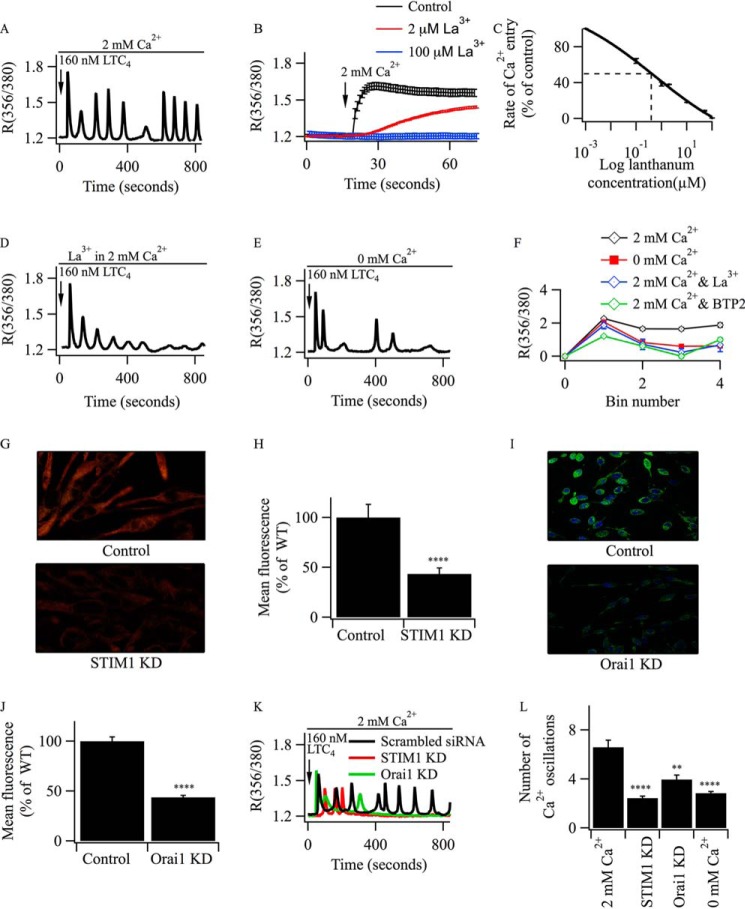
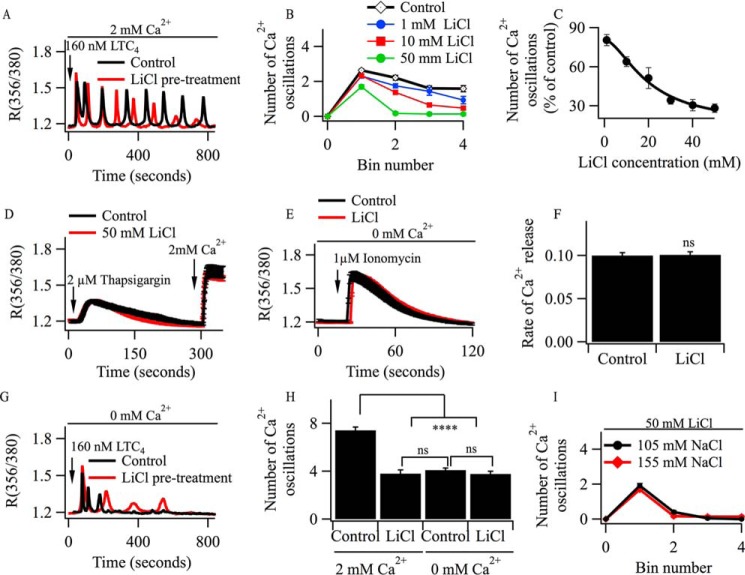
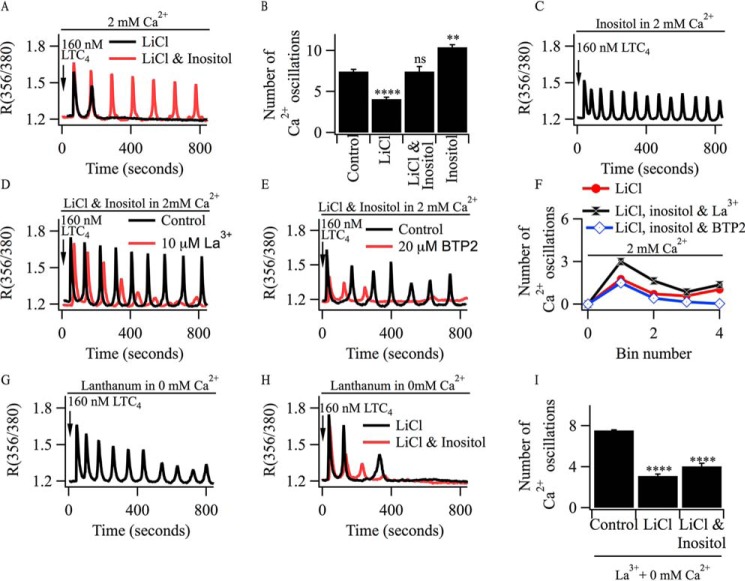
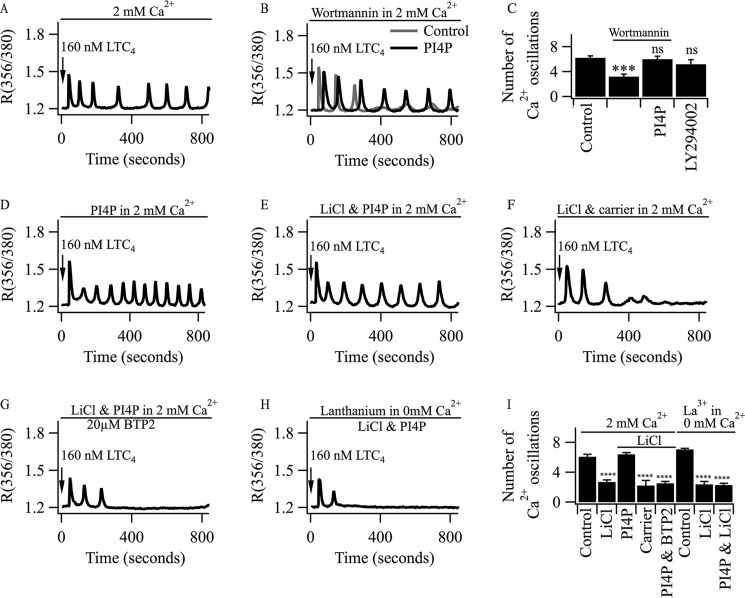
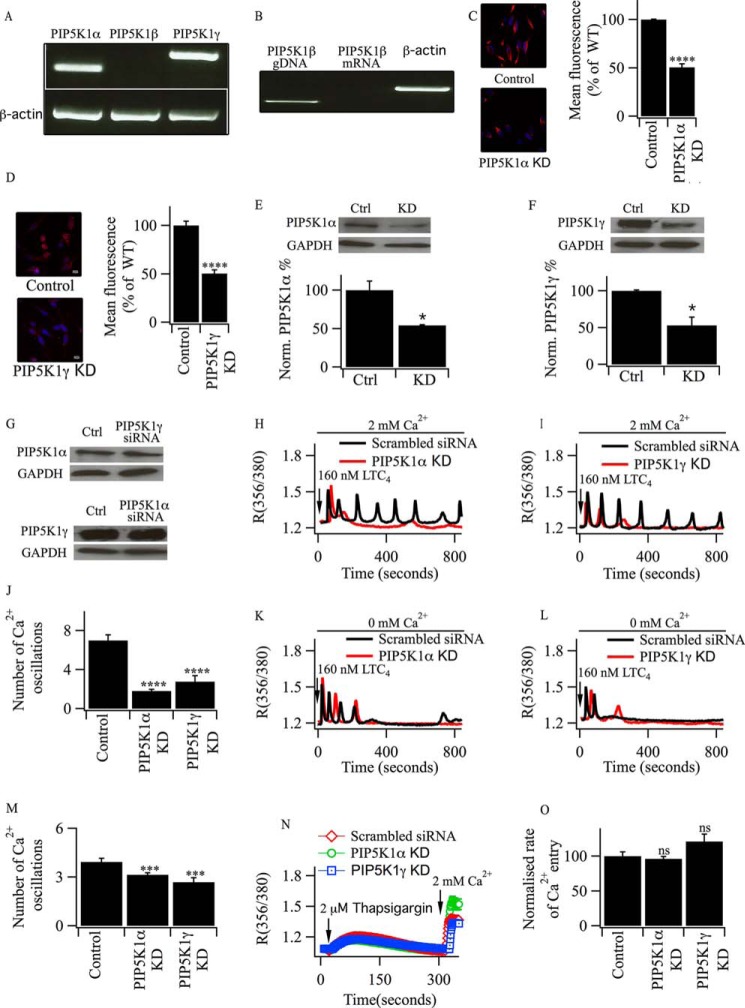
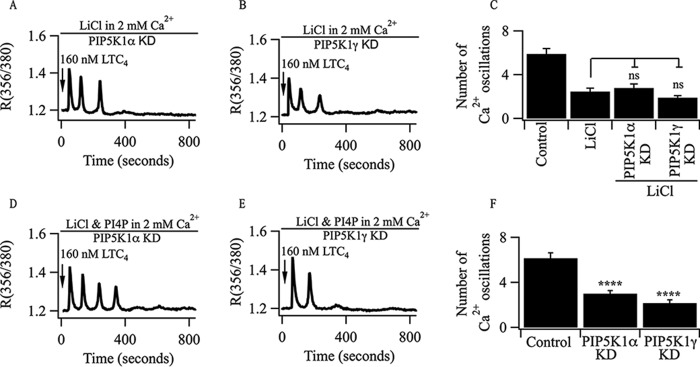
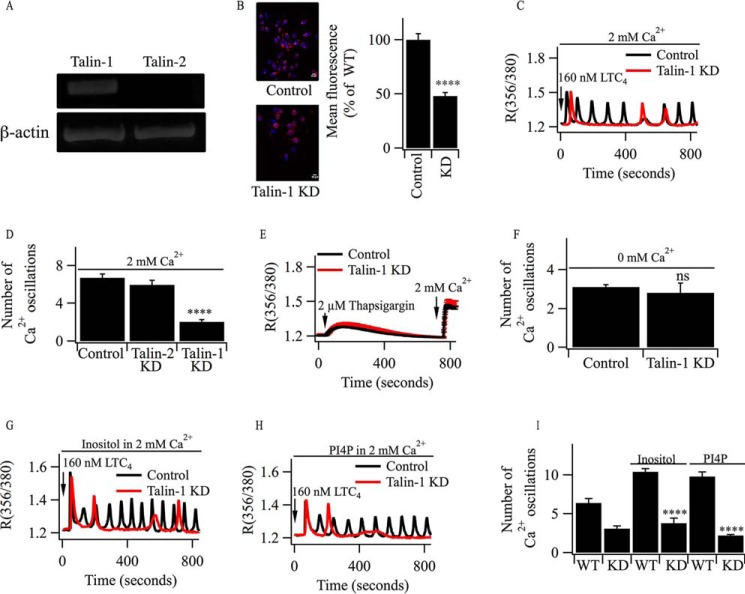
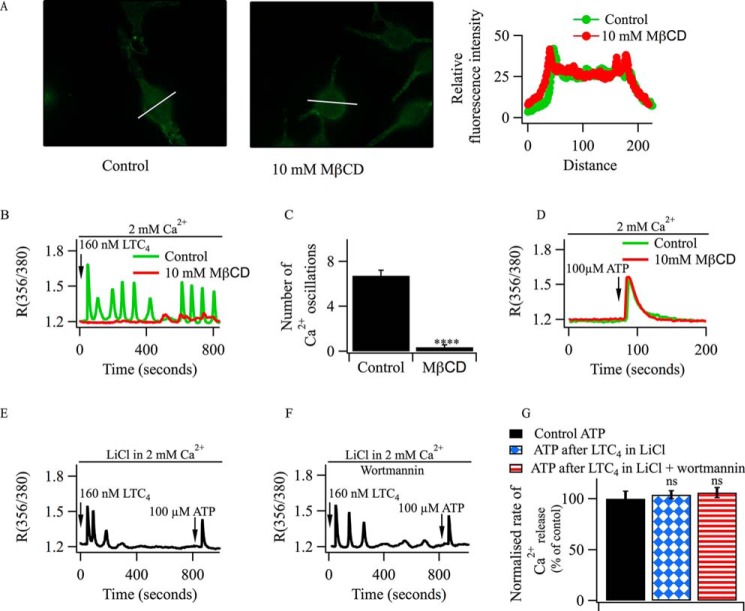
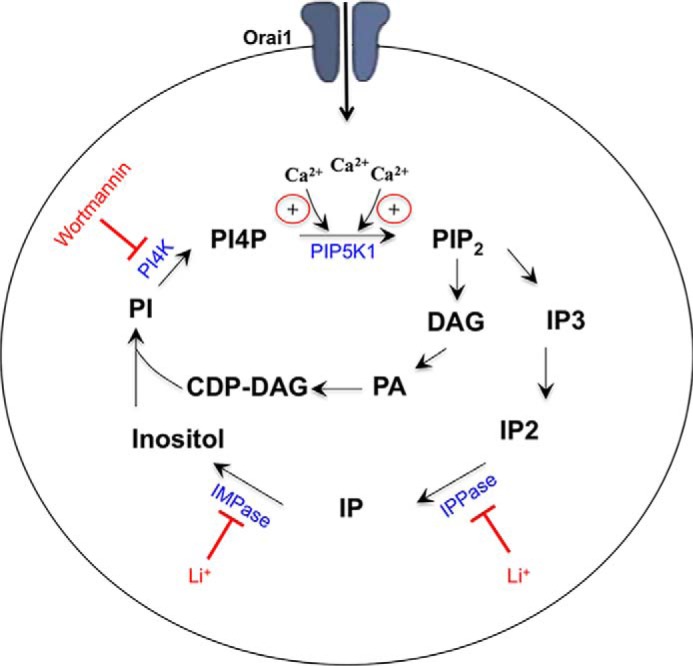
Oscillations in cytoplasmic Ca(2+) concentration are a universal mode of signaling following physiological levels of stimulation with agonists that engage the phospholipase C pathway. Sustained cytoplasmic Ca(2+) oscillations require replenishment of the membrane phospholipid phosphatidylinositol 4,5-bisphosphate (PIP2), the source of the Ca(2+)-releasing second messenger inositol trisphosphate. Here we show that cytoplasmic Ca(2+) oscillations induced by cysteinyl leukotriene type I receptor activation run down when cells are pretreated with Li(+), an inhibitor of inositol monophosphatases that prevents PIP2 resynthesis. In Li(+)-treated cells, cytoplasmic Ca(2+) signals evoked by an agonist were rescued by addition of exogenous inositol or phosphatidylinositol 4-phosphate (PI4P). Knockdown of the phosphatidylinositol 4-phosphate 5 (PIP5) kinases α and γ resulted in rapid loss of the intracellular Ca(2+) oscillations and also prevented rescue by PI4P. Knockdown of talin1, a protein that helps regulate PIP5 kinases, accelerated rundown of cytoplasmic Ca(2+) oscillations, and these could not be rescued by inositol or PI4P. In Li(+)-treated cells, recovery of the cytoplasmic Ca(2+) oscillations in the presence of inositol or PI4P was suppressed when Ca(2+) influx through store-operated Ca(2+) channels was inhibited. After rundown of the Ca(2+) signals following leukotriene receptor activation, stimulation of P2Y receptors evoked prominent inositol trisphosphate-dependent Ca(2+) release. Therefore, leukotriene and P2Y receptors utilize distinct membrane PIP2 pools. Our findings show that store-operated Ca(2+) entry is needed to sustain cytoplasmic Ca(2+) signaling following leukotriene receptor activation both by refilling the Ca(2+) stores and by helping to replenish the PIP2 pool accessible to leukotriene receptors, ostensibly through control of PIP5 kinase activity.
Keywords: calcium channel; calcium intracellular release; calcium release-activated calcium channel protein 1 (ORAI1); phosphatidylinositol kinase (PI kinase); phosphatidylinositol signaling.
© 2015 by The American Society for Biochemistry and Molecular Biology, Inc.
Figures
References
-
- Berridge M. J., Bootman M. D., and Roderick H. L. (2003) Calcium signalling: dynamics, homeostasis and remodelling. Nat. Rev. Mol. Cell Biol. 4, 517–529 - PubMed
-
- Clapham D. E. (2007) Calcium signaling. Cell 131, 1047–1058 - PubMed
-
- Parekh A. B. (2011) Decoding cytosolic Ca2+ oscillations. TiBS 36, 78–87 - PubMed
-
- Berridge M. J. (1993) Inositol trisphosphate and calcium signalling. Nature 361, 315–325 - PubMed
-
- Thomas A. P., Bird G. S., Hajnóczky G., Robb-Gaspers L. D., and Putney J. W. Jr. (1996) Spatial and temporal aspects of cellular calcium signalling. FASEB J. 10, 1505–1517 - PubMed
Publication types
MeSH terms
Substances
Grants and funding
LinkOut - more resources
Full Text Sources
Other Literature Sources
Research Materials
Miscellaneous
