


Pacemaker Dependency after Cardiac Surgery: A Systematic Review of Current Evidence
- PMID: 26470027
- PMCID: PMC4607414
- DOI: 10.1371/journal.pone.0140340
Pacemaker Dependency after Cardiac Surgery: A Systematic Review of Current Evidence
Abstract
Background: Severe postoperative conduction disturbances requiring permanent pacemaker implantation frequently occur following cardiac surgery. Little is known about the long-term pacing requirements and risk factors for pacemaker dependency in this population.
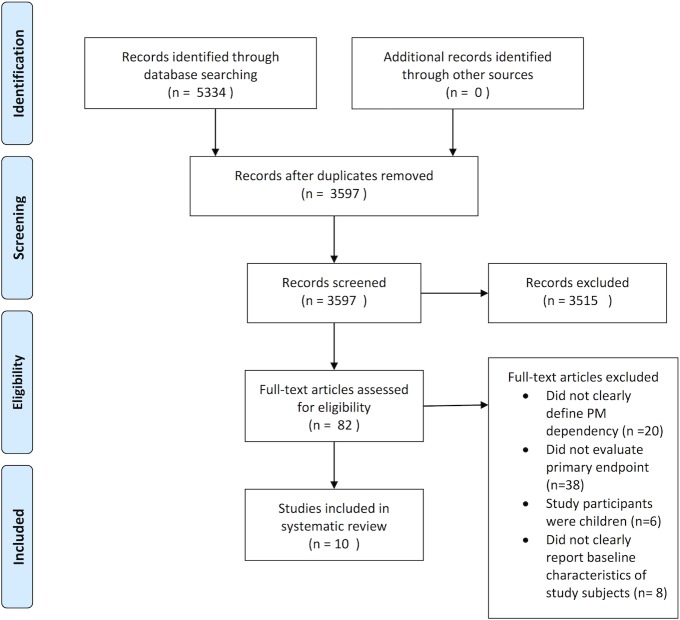
Methods: We performed a systematic review of the literature addressing rates and predictors of pacemaker dependency in patients requiring permanent pacemaker implantation after cardiac surgery. Using a comprehensive search of the Medline, Web of Science and EMBASE databases, studies were selected for review based on predetermined inclusion and exclusion criteria.
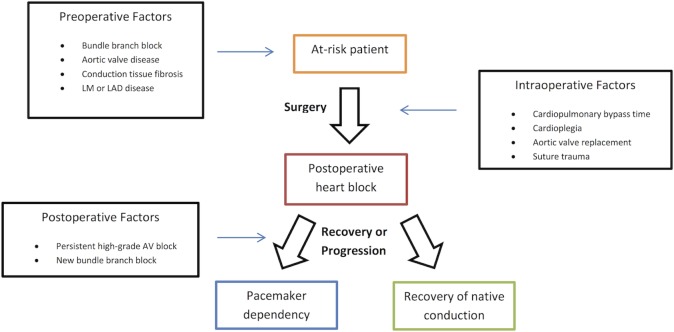
Results: A total of 8 studies addressing the endpoint of pacemaker-dependency were identified, while 3 studies were found that addressed the recovery of atrioventricular (AV) conduction endpoint. There were 10 unique studies with a total of 780 patients. Mean follow-up ranged from 6-72 months. Pacemaker dependency rates ranged from 32%-91% and recovery of AV conduction ranged from 16%-42%. There was significant heterogeneity with respect to the definition of pacemaker dependency. Several patient and procedure-specific variables were found to be independently associated with pacemaker dependency, but these were not consistent between studies.
Conclusions: Pacemaker dependency following cardiac surgery occurs with variable frequency. While individual studies have identified various perioperative risk factors for pacemaker dependency and non-resolution of AV conduction disease, results have been inconsistent. Well-conducted studies using a uniform definition of pacemaker dependency might identify patients who will benefit most from early permanent pacemaker implantation after cardiac surgery.
Conflict of interest statement
Figures
References
-
- Elahi MM, Lee D, Dhannapuneni RR. Predictors of permanent pacemaker implantation during the early postoperative period after valve surgery. Texas Heart Institute journal / from the Texas Heart Institute of St Luke's Episcopal Hospital, Texas Children's Hospital. 2006;33(4):455–7. Epub 2007/01/12. ; PubMed Central PMCID: PMCPmc1764945. - PMC - PubMed
-
- Batra AS, Wells WJ, Hinoki KW, Stanton RA, Silka MJ. Late recovery of atrioventricular conduction after pacemaker implantation for complete heart block associated with surgery for congenital heart disease. The Journal of thoracic and cardiovascular surgery. 2003;125(6):1291–3. Epub 2003/06/28. . - PubMed
Publication types
MeSH terms
LinkOut - more resources
Full Text Sources
Other Literature Sources
Medical
