


Waterborne Risperidone Decreases Stress Response in Zebrafish
- PMID: 26473477
- PMCID: PMC4608780
- DOI: 10.1371/journal.pone.0140800
Waterborne Risperidone Decreases Stress Response in Zebrafish
Abstract
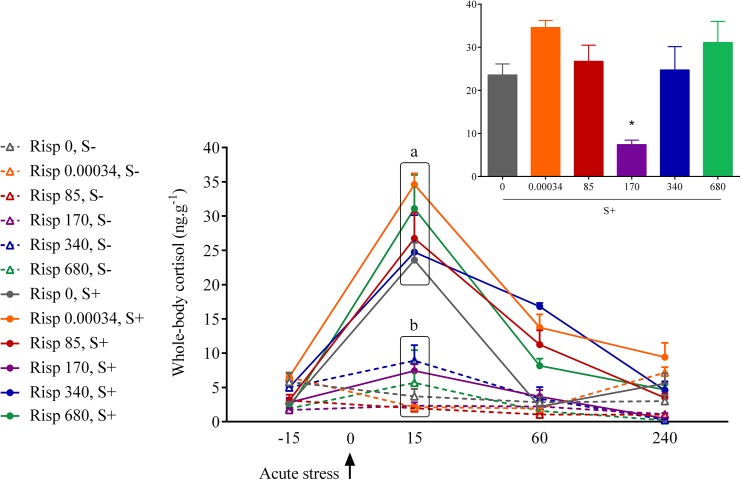
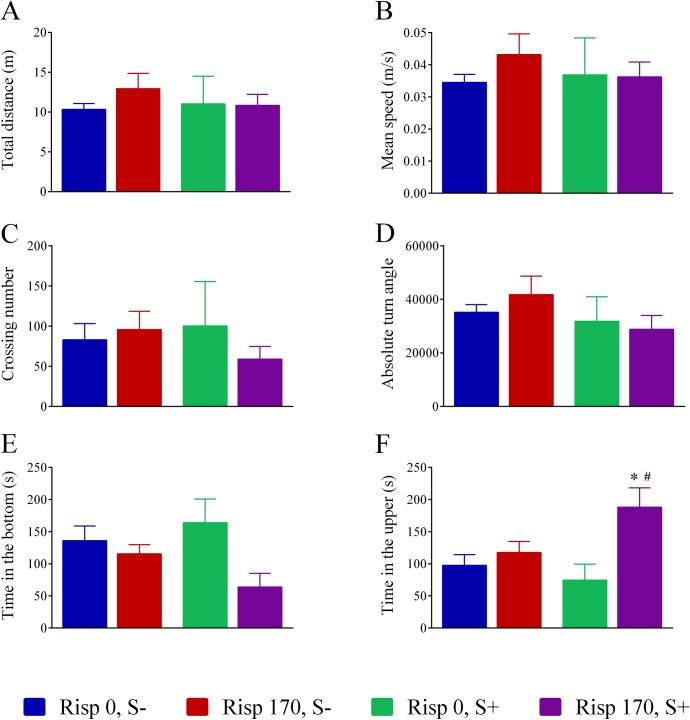
The presence of drugs and their metabolites in surface waters and municipal effluents has been reported in several studies, but its impacts on aquatic organisms are not yet well understood. This study investigated the effects of acute exposure to the antipsychotic risperidone on the stress and behavioral responses in zebrafish. It became clear that intermediate concentration of risperidone inhibited the hypothalamic-pituitary-interrenal axis and displayed anxiolytic-like effects in zebrafish. The data presented here suggest that the presence of this antipsychotic in aquatic environments can alter neuroendocrine and behavior profiles in zebrafish.
Conflict of interest statement
Figures
References
-
- Hignite C, Azarnoff DL (1977) Drugs and drug metabolites as environmental contaminants: chloro phenoxyisobutyrate and salicylic acid in sewage water effluent. Life Sci 20: 337–341. - PubMed
-
- Brooks BW, Chambliss CK, Stanley JK, Ramirez A, Banks KE, Johnson RD et al. (2005) Determinations of Select Antidepressant in Fish From An Effuent–Dominated Stream. Environm Toxicol Chem 24: 464–469. - PubMed
-
- Alonso AG, Catala M, Maroto RR, Gil JL, de Miguel AG, Valcarcel Y. (2010) Pollution by psychoactive pharmaceuticals in the Rivers of Madrid metropolitan area (Spain). EnvironmInternat 36:195–201. - PubMed
-
- Jones OA, Lester JN, Voulvoulis N (2005) Pharmaceuticals: a threat to drinking water? Trends Biotechnol 23: 163–167. - PubMed
Publication types
MeSH terms
Substances
LinkOut - more resources
Full Text Sources
Other Literature Sources
