. 2016 Mar 1;22(5):1150-60.
doi: 10.1158/1078-0432.CCR-15-1522. Epub 2015 Oct 16.

SAR405838: A Novel and Potent Inhibitor of the MDM2:p53 Axis for the Treatment of Dedifferentiated Liposarcoma

Affiliations

SAR405838: A Novel and Potent Inhibitor of the MDM2:p53 Axis for the Treatment of Dedifferentiated Liposarcoma

Kate Lynn J Bill et al. Clin Cancer Res. .

Erratum in

Abstract

Purpose: Dedifferentiated liposarcoma (DDLPS) is an aggressive malignancy that can recur locally or disseminate even after multidisciplinary care. Genetically amplified and expressed MDM2, often referred to as a "hallmark" of DDLPS, mostly sustains a wild-type p53 genotype, substantiating the MDM2:p53 axis as a potential therapeutic target for DDLPS. Here, we report on the preclinical effects of SAR405838, a novel and highly selective MDM2 small-molecule inhibitor, in both in vitro and in vivo DDLPS models.

Experimental design: The therapeutic effectiveness of SAR405838 was compared with the known MDM2 antagonists Nutlin-3a and MI-219. The effects of MDM2 inhibition were assessed in both in vitro and in vivo. In vitro and in vivo microarray analyses were performed to assess differentially expressed genes induced by SAR405838, as well as the pathways that these modulated genes enriched.

Results: SAR405838 effectively stabilized p53 and activated the p53 pathway, resulting in abrogated cellular proliferation, cell-cycle arrest, and apoptosis. Similar results were observed with Nutlin-3a and MI-219; however, significantly higher concentrations were required. In vitro effectiveness of SAR405838 activity was recapitulated in DDLPS xenograft models where significant decreases in tumorigenicity were observed. Microarray analyses revealed genes enriching the p53 signaling pathway as well as genomic stability and DNA damage following SAR405838 treatment.

Conclusions: SAR405838 is currently in early-phase clinical trials for a number of malignancies, including sarcoma, and our in vitro and in vivo results support its use as a potential therapeutic strategy for the treatment of DDLPS.


Conflict of interest statement

Conflicts of Interest: I. Meaux, C. Barriere, and L. Debussche are research investigators at Sanofi-Aventis at the time of work. No potential conflicts of interest were disclosed by the other authors.

Figures

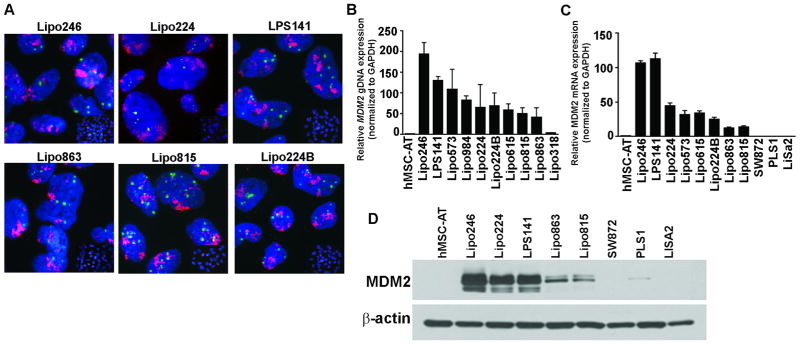
Figure 1
Figure 1. MDM2 amplification and expression in DDLPS cell panel
(A) Representative images of fluorescence in situ hybridization of the 12q13~15 amplicon in a cell line panel (MDM2: red signal and CEP12: green signal); DDLPS: Lipo246, Lipo224, Lipo863, Lipo815, Lipo224B, LPS141; Pleomorphic LPS: SW872, PLS1, LiSa2. (B) q-PCR was performed for MDM2 genomic amplification on a large DDLPS cell line panel, along with hMSC-AT as a normal control (C) q-PCR analyzed MDM2 mRNA expression levels in DDLPS cell lines, hMSC-AT, and in two pleomorphic LPS cell lines, PLS1 and LiSa2. (D) Western blot analysis of MDM2 protein expression in DDLPS cell lines versus control cell lines.
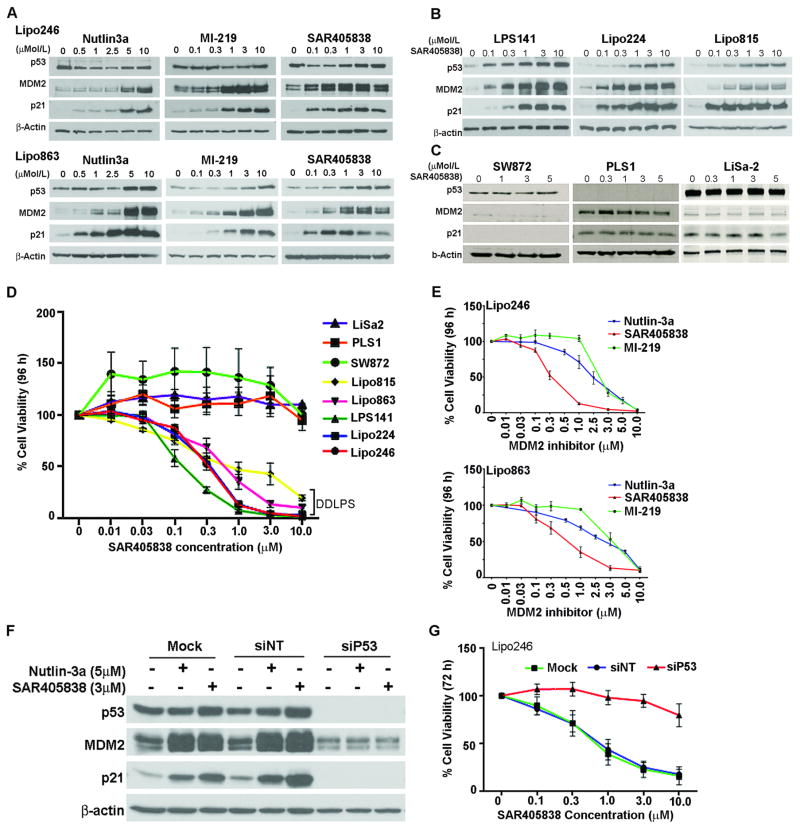
Figure 2
Figure 2. Activation of the p53 pathway in DDLPS cell lines
(A) Lipo246 (upper panel) and Lipo863 (lower panel) DDLPS cells were incubated with increasing concentrations of Nutlin-3a, MI-219, and SAR405838 for 24 h; p53, MDM2 and p21 proteins were analyzed via Western blot. (B) As in (A), an additional panel of DDLPS cell lines was evaluated via western blot for their cellular response to SAR405838 treatment. (C) SAR405838 had no effect on p53-dependent signaling in control cell lines; SW872, PLS1 and LiSa-2. (D) MTS assays measured dose-dependent effects on cell viability following exposure to SAR405838 for 96 h on exponentially growing DDLPS cells. (E) MTS assays measured cell viability of Lipo246 (left panel) and Lipo863 after exposure to increasing concentrations of Nutlin-3a, SAR405838, and MI-219 after 96h. (F) Western blot analysis assessed the effects of transient p53 knockdown in Lipo246 cells (72 h) using mock treated cells, siNT, and siP53 when treated with either Nutlin-3a or SAR405838. (H) siP53 knockdown reduces the effects of SAR405838 on cell viability. Data represent the mean ± SEM from ≥ 3 independent experiments.
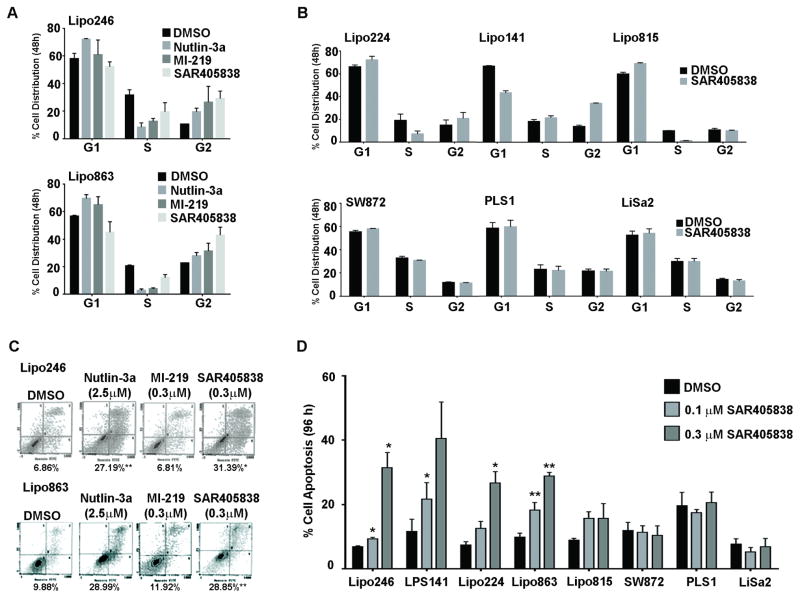
Figure 3
Figure 3. SAR405838 effectively induces p53 pathway activation by inhibiting cell cycle and survival
(A) Representative graphs of Lipo246 (upper panel) and Lipo863 (lower panel) were incubated for 48 hours with Nutlin-3a (5 μM), MI-219 (3 μM), or SAR405838 (3 μM) and their cell cycle profiles were analyzed via FACS. (B) LPS cell lines cell-cycle distributions following 48h treatment with SAR405838 (1 μM, 3 μM) or DMSO are shown graphically; SAR405838 effectively arrested DDLPS cells in G1 and G2 phases but had no effect on cells lines with lacking WT p53 or amplified MDM2 (SW872 and PLS1, and LiSa2; respectively). (C) Lipo246 (upper panel) and Lipo863 (lower panel) were incubated with MDM2 inhibitors (96 h); the degree of apoptosis was analyzed by Annexin V/FITC staining (representative images). (D) Apoptotic responses were measured in a larger panel of cell lines by FACS analyses following treatment with DMSO or 0.1 μM, or 0.3 μM of SAR405838 for 96 hours. Data shown represents the average percent of apoptosis induced by the indicated inhibitor; n=3 experiments ± SEM; t-test: *=p < 0.05.
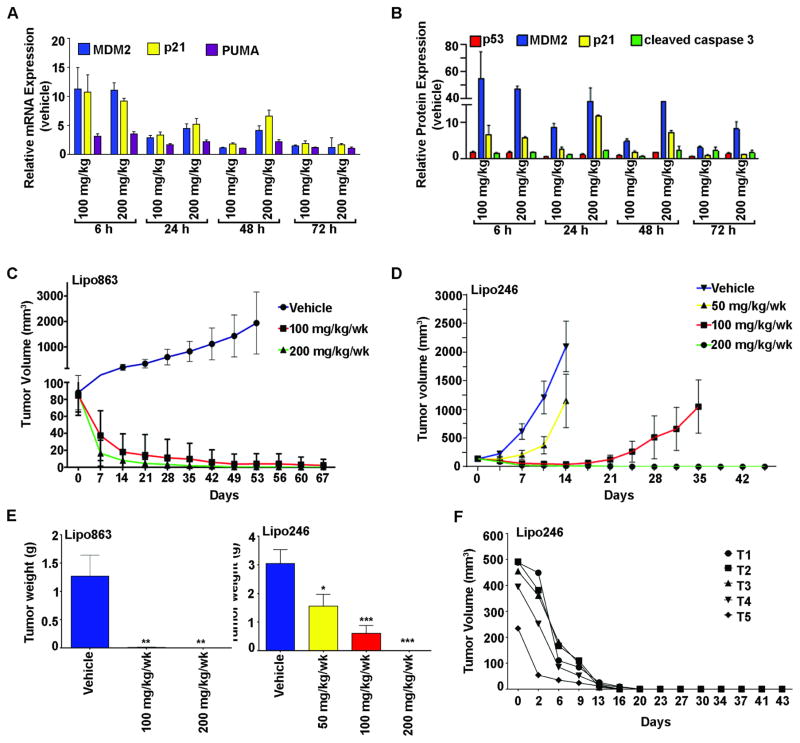
Figure 4
Figure 4. Antitumor effects of SAR405838 in DDLPS xenograft models
A) mRNA expression levels from DDLPS xenografts following SAR405838 treatment. B) Protein expression levels of selected genes in response to time (6–72 h) and a single dose (100 and 200 mg/kg, p.o.) of SAR405838 or vehicle. Data represents mean ± SEM, n=3. Oral administration of SAR405838 (50, 100 or 200 mg/kg) or vehicle control in nude mice (n=7–8 per group) bearing s.c. Lipo863 (C) and Lipo246 (D) xenograft tumors, which significantly decreased tumor volumes (± SEM) and (E) tumor weights (mean tumor weight at termination for each group of mice was recorded ± SEM; t-test: *=P<0.05, **=P<0.01, ***=P<0.001). (F) 200 mg/kg/wk was orally administered to Lipo246 xenograft bearing mice (n=5); robust in vivo antitumor activity was seen, and after two treatments tumors were completely eradicated in mice.
Figure 5
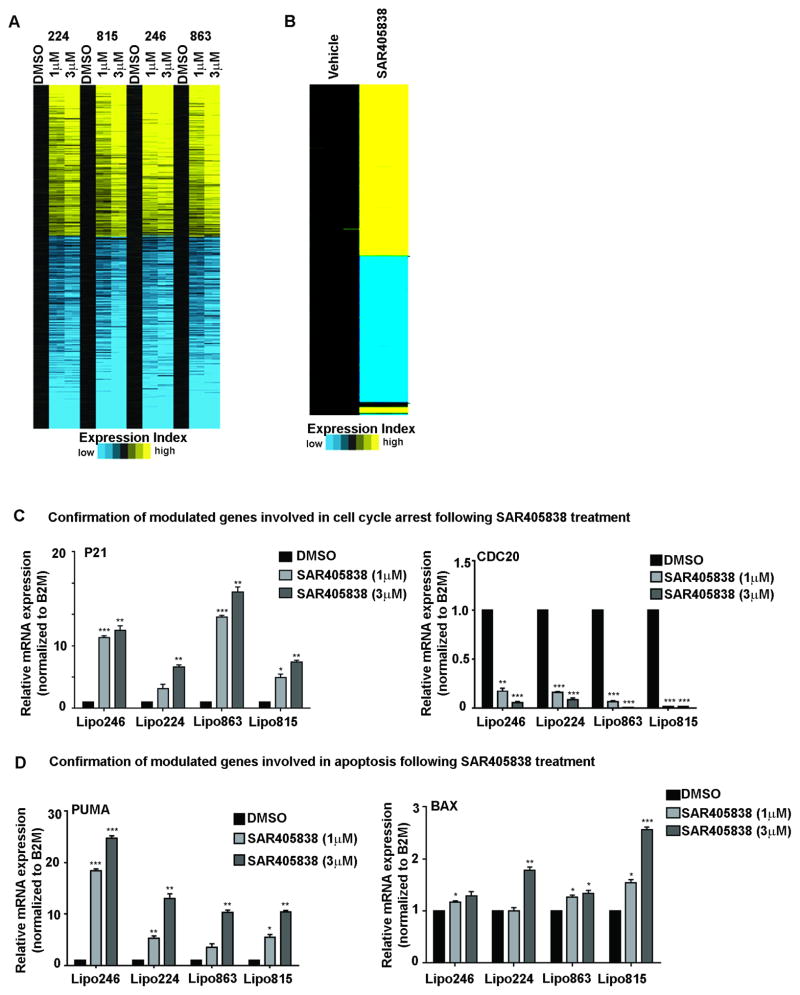
Figure 5. Heatmap of differentially expressed genes in DDLPS in response to SAR405838
(A) The heatmap of DMSO-treated and SAR405838-treated DDLPS cells that demonstrate 858 most significantly differentially expressed genes in for three of the four DDLPS cells line profiles (1 μM + 3 μM). Within each cell line the gene values are centered on corresponding control profiles (black). Yellow indicates significantly up-regulated genes, and blue indicates down-regulated genes (p < 0.05; FDR 0.05; fold change >1.4). (B) The heatmap represents the 1074 most significant differentially expressed genes in Lipo246 xenografts treated with either the vehicle control or SAR495838 in vivo. Yellow indicates significantly up-regulated genes, and blue indicates down-regulated genes, which were selected at a FDR 0.05 and a fold change >2.0 or <0.5 and a p < 0.01. Confirmation of select p53-modulated genes involved in cell cycle (C) and apoptosis (D). Data shown represents the mean ± SEM from ≥ 3 independent experiments; *=P<0.05, **=P<0.01, ***=P<0.001.

References

    1. Fletcher CDM, Bridge J, Hogendoorn P, Unni KK, Mertens F. In: World Health Organization Classification of Tumours Pathology and Genetics of Tumours of Soft Tissue and Bone. 4. Fletcher CDM, Unni KK, Mertens F, editors. Lyon, France: IARC Press; 2013.
    1. Evans HL. Liposarcoma a study of 55 cases with a reassessment of its classification. Am J Surg Pathol. 1979;3 - PubMed
    1. Evans HL, Khurana KK, Kemp BL, Ayala AG. Heterologous Elements in the Dedifferentiated Components of Dedifferentiated Liposarcoma. Am J Clin Pathol. 1994;18:1077–182. - PubMed
    1. Ghadimi MP, Al-Zaid T, Madewell J, Peng T, Colombo C, Hoffman A, et al. Diagnosis, management, and outcome of patients with dedifferentiated liposarcoma systemic metastasis. Ann Surg Oncol. 2011;18:3762–70. - PubMed
    1. Keung EZ, Hornick JL, Bertagnolli MM, Baldini EH, Raut CP. Predictors of outcomes in patients with primary retroperitoneal dedifferentiated liposarcoma undergoing surgery. J Am Coll Surg. 2014;218:206–17. - PubMed

Publication types

MeSH terms