


Do Subjective Memory Complaints Lead or Follow Objective Cognitive Change? A Five-Year Population Study of Temporal Influence
- PMID: 26477680
- PMCID: PMC4615611
- DOI: 10.1017/S1355617715000922
Do Subjective Memory Complaints Lead or Follow Objective Cognitive Change? A Five-Year Population Study of Temporal Influence
Abstract
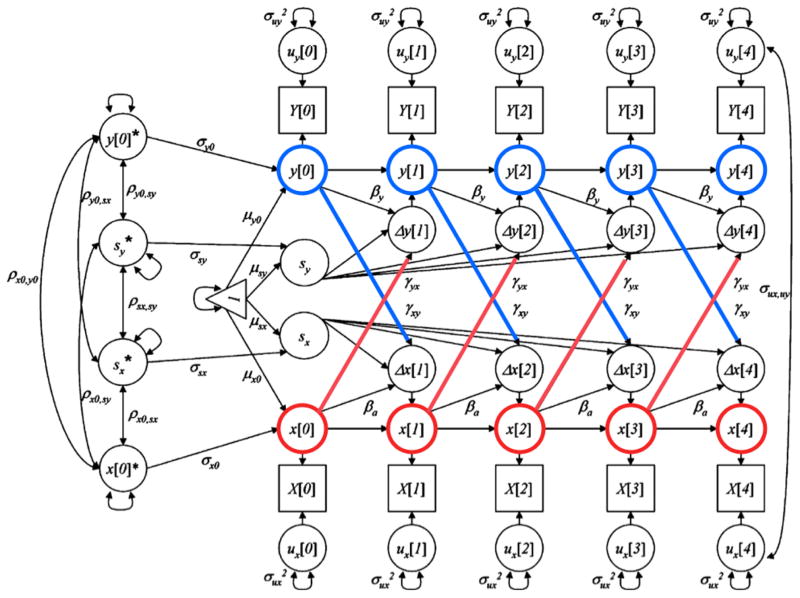
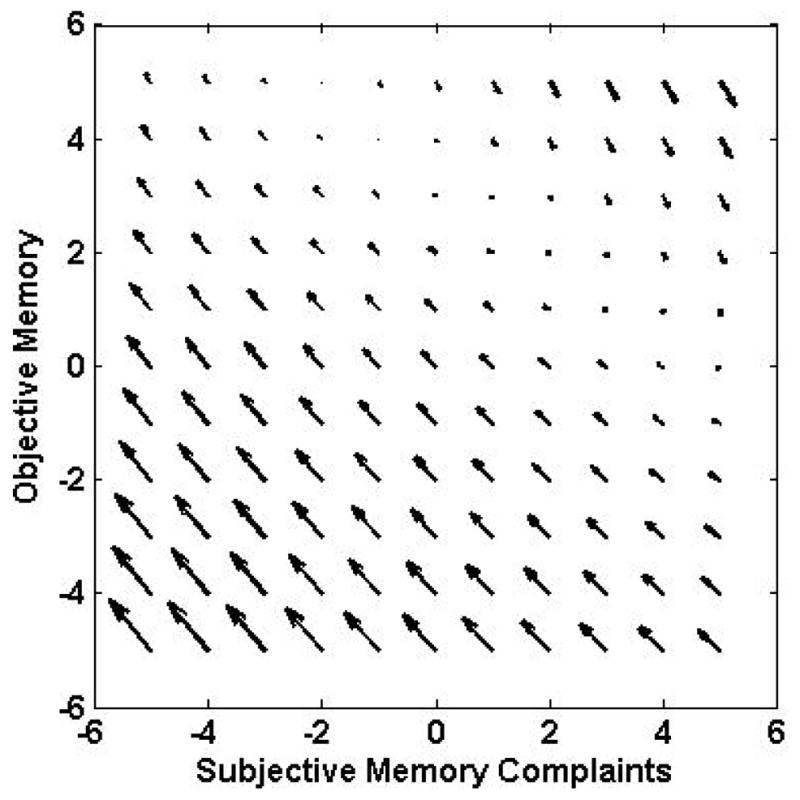
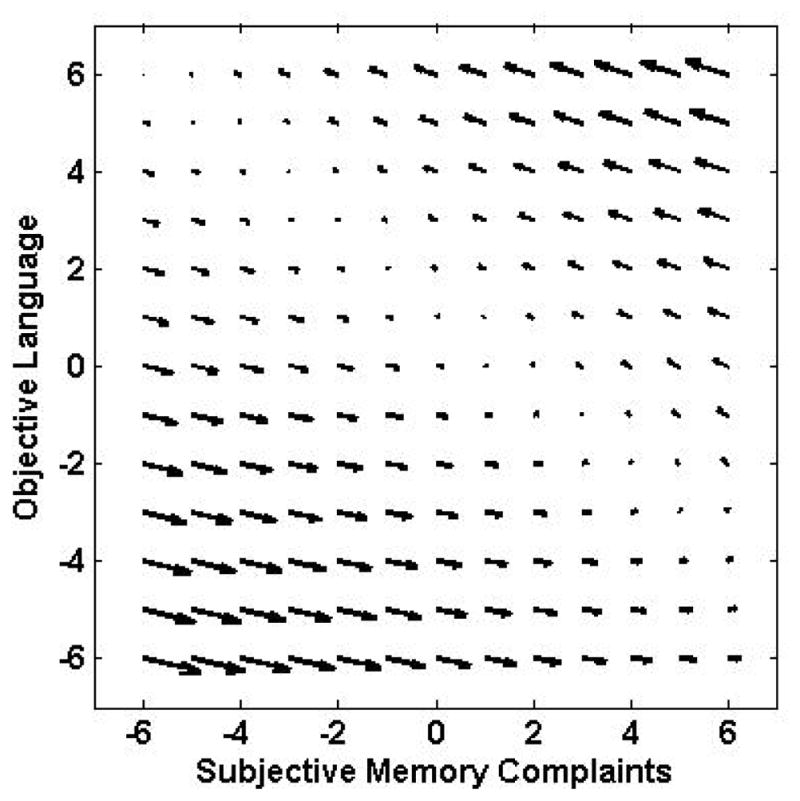
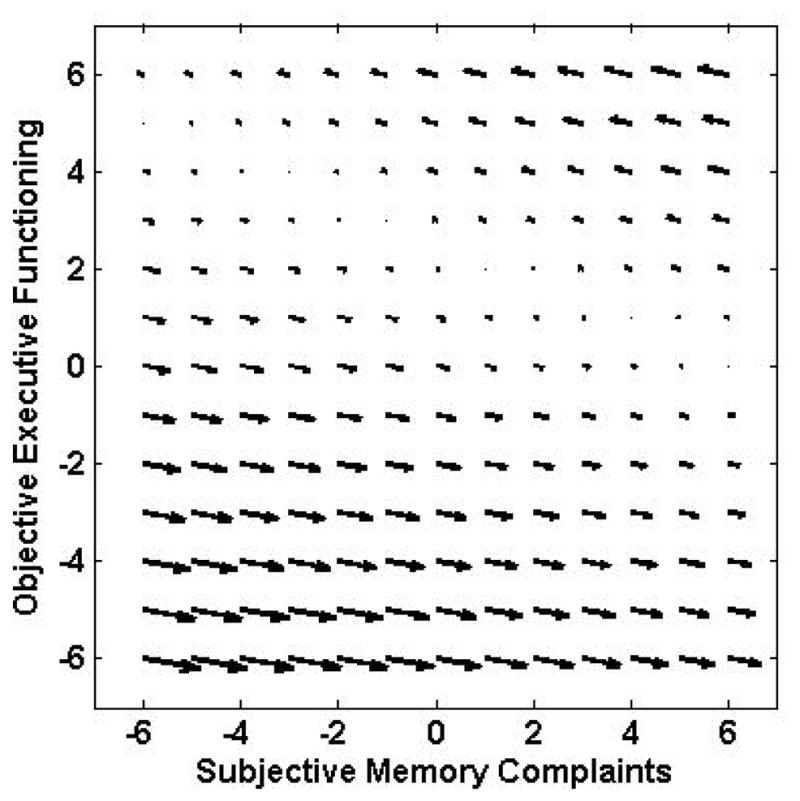
The relationship between subjective memory complaints (SM) and objective memory (OM) performance in aging has been variably characterized in a substantial literature, to date. In particular, cross-sectional studies often observe weak or no associations. We investigated whether subjective memory complaints and objectively measured cognition influence each other over time, and if so, which is the stronger pathway of change-objective to subjective, or subjective to objective-or whether they are both important. Using bivariate latent change score modeling in data from a population study (N=1980) over 5 annual assessment cycles, we tested four corresponding hypotheses: (1) no coupling between SM and OM over time; (2) SM as leading indicator of change in OM; (3) OM as leading indicator of change in SM; (4) dual coupling over time, with both SM and OM leading subsequent change in the other. We also extended objective cognition to two other domains, language and executive functions. The dual-coupling models best fit the data for all three objective cognitive domains. The SM-OM temporal dynamics differ qualitatively compared to other domains, potentially reflecting changes in insight and self-awareness specific to memory impairment. Subjective memory and objective cognition reciprocally influence each other over time. The temporal dynamics between subjective and objective cognition in aging are nuanced, and must be carefully disentangled to shed light on the underlying processes.
Keywords: Age-related memory disorders (MeSH); Aging; Anosognosia; Epidemiology; Latent change score modeling; Meta-cognition.
Conflict of interest statement
The authors report no conflicts of interest regarding this study.
Figures
References
-
- Bandura A. Regulation of cognitive processes through perceived self-efficacy. Developmental Psychology. 1989;25(5):729.
-
- Benito-León J, Mitchell AJ, Vega S, Bermejo-Pareja F. A population-based study of cognitive function in older people with subjective memory complaints. Journal of Alzheimer’s Disease. 2010;22(1):159–170. - PubMed
-
- Boker SM, McArdle J. Statistical vector field analysis applied to mixed cross-sectional and longitudinal data. Experimental Aging Research. 1995;21(1):77–93. - PubMed
Publication types
MeSH terms
Grants and funding
LinkOut - more resources
Full Text Sources
Medical
