RETRACTED: Chemotherapy Resistance in Diffuse-Type Gastric Adenocarcinoma Is Mediated by RhoA Activation in Cancer Stem-Like Cells
- PMID: 26482039
- PMCID: PMC4823002
- DOI: 10.1158/1078-0432.CCR-15-1356
RETRACTED: Chemotherapy Resistance in Diffuse-Type Gastric Adenocarcinoma Is Mediated by RhoA Activation in Cancer Stem-Like Cells
Retraction in
-
Retraction: Chemotherapy Resistance in Diffuse-Type Gastric Adenocarcinoma Is Mediated by RhoA Activation in Cancer Stem-Like Cells.Clin Cancer Res. 2024 Oct 15;30(20):4802. doi: 10.1158/1078-0432.CCR-24-2133. Clin Cancer Res. 2024. PMID: 39402968 Free PMC article. No abstract available.
Abstract
Purpose: The Lauren diffuse type of gastric adenocarcinoma (DGA), as opposed to the intestinal type (IGA), often harbors mutations in RHOA, but little is known about the role of RhoA in DGA.
Experimental design: We examined RhoA activity and RhoA pathway inhibition in DGA cell lines and in two mouse xenograft models. RhoA activity was also assessed in patient tumor samples.
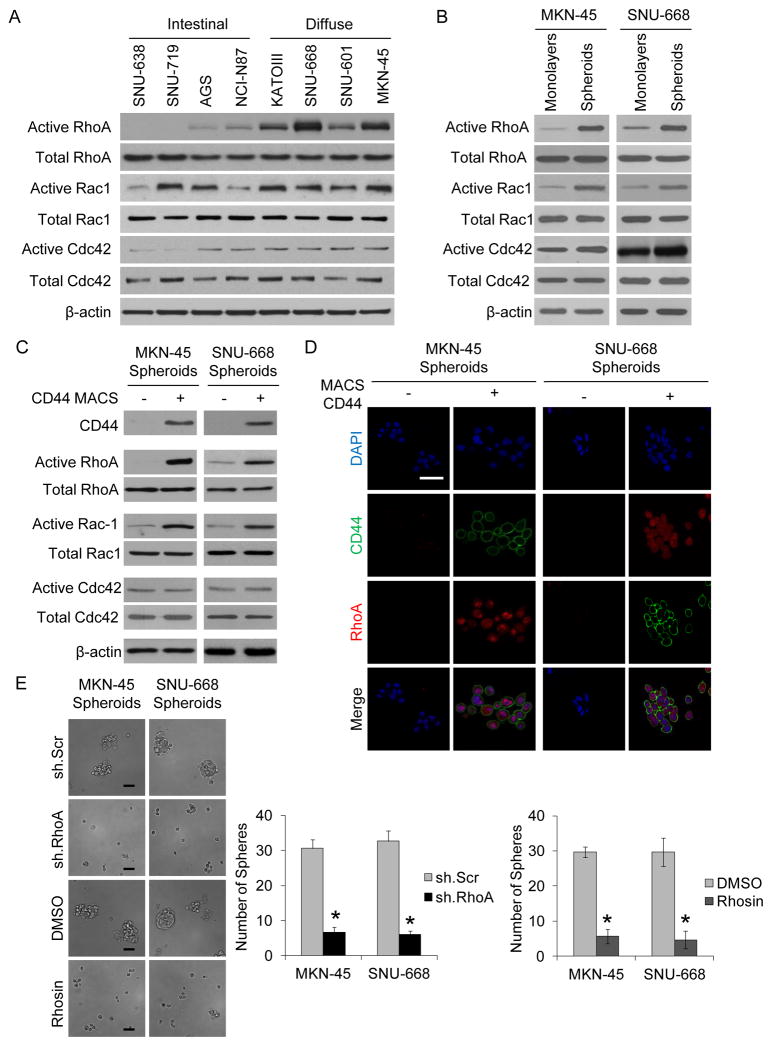
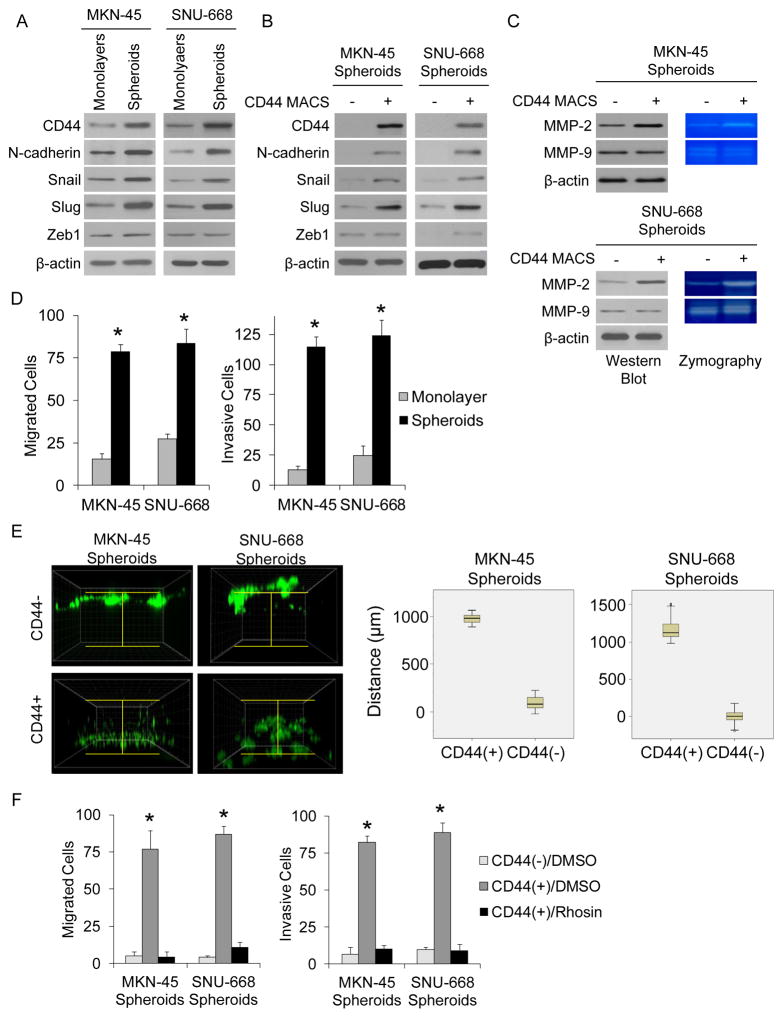
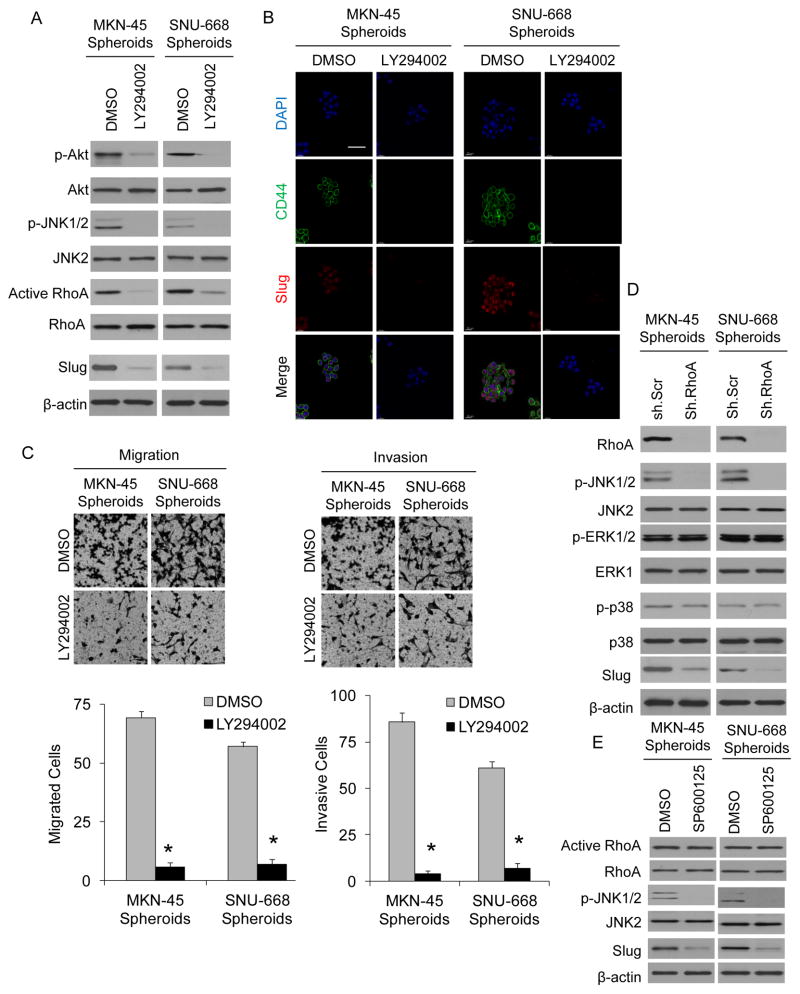
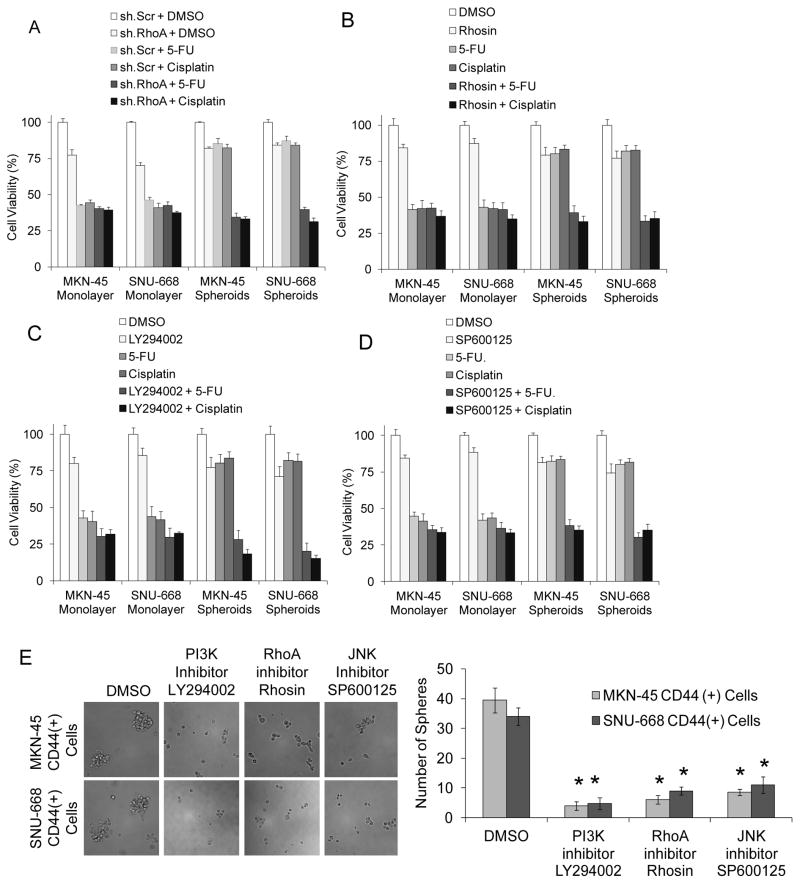
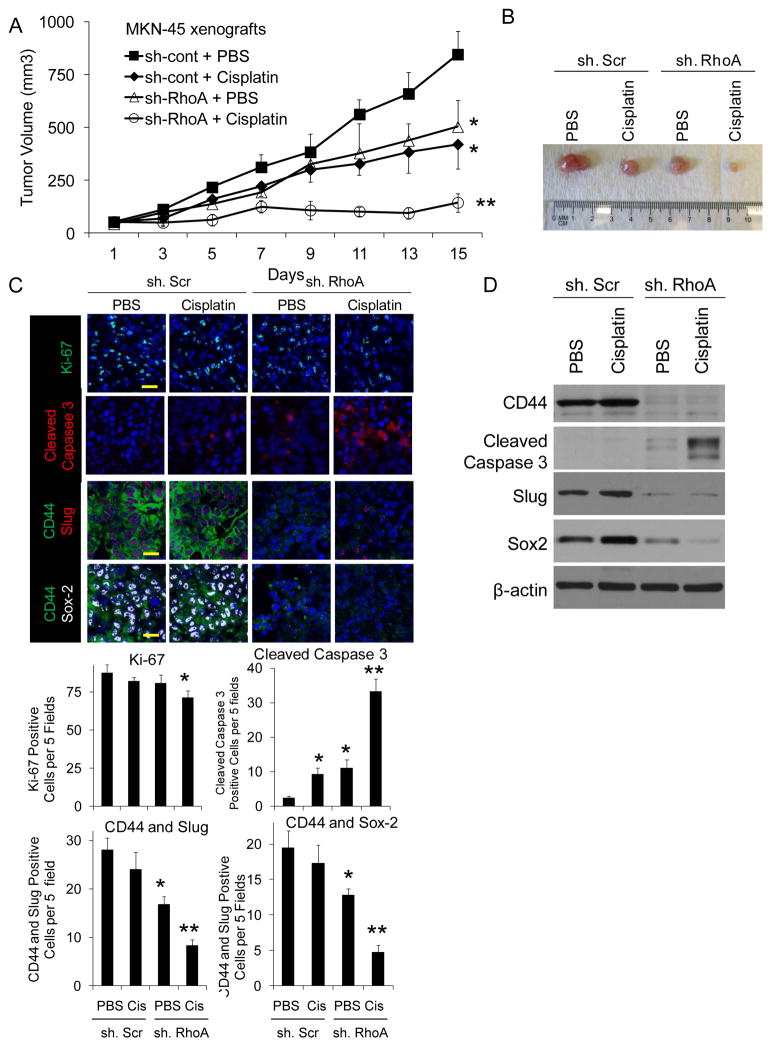
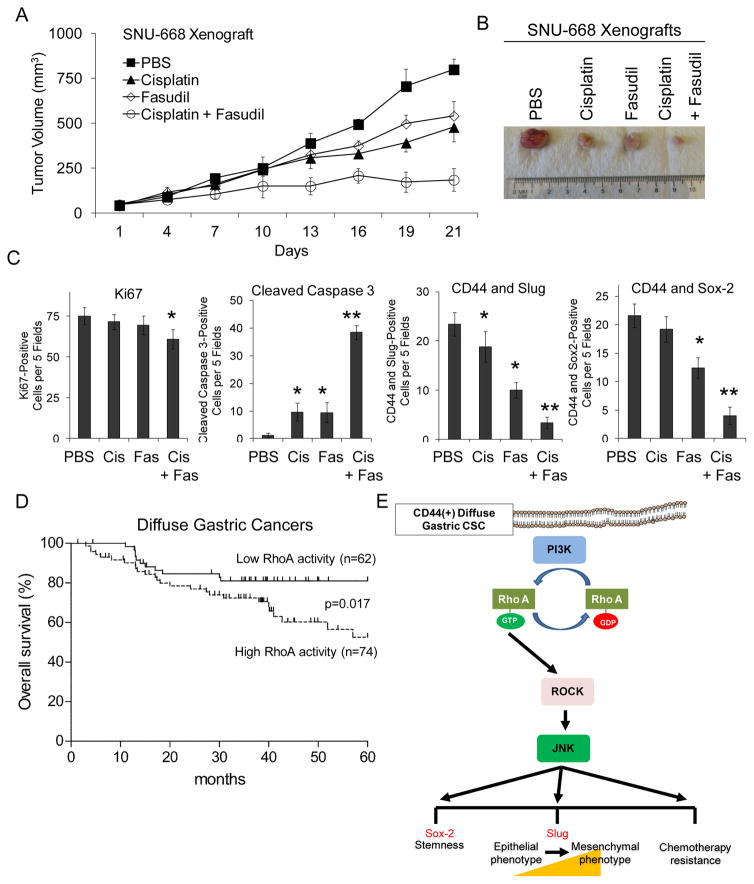
Results: RhoA activity was higher in DGA compared with IGA cell lines and was further increased when grown as spheroids to enrich for cancer stem-like cells (CSCs) or when sorted using the gastric CSC marker CD44. RhoA shRNA or the RhoA inhibitor Rhosin decreased expression of the stem cell transcription factor, Sox2, and decreased spheroid formation by 78% to 81%. DGA spheroid cells had 3- to 5-fold greater migration and invasion than monolayer cells, and this activity was Rho-dependent. Diffuse GA spheroid cells were resistant in a cytotoxicity assay to 5-fluorouracil and cisplatin chemotherapy, and this resistance could be reversed with RhoA pathway inhibition. In two xenograft models, cisplatin inhibited tumor growth by 40% to 50%, RhoA inhibition by 32% to 60%, and the combination by 77% to 83%. In 288 patient tumors, increased RhoA activity correlated with worse overall survival in DGA patients (P = 0.017) but not in IGA patients (P = 0.612).
Conclusions: RhoA signaling promotes CSC phenotypes in DGA cells. Increased RhoA activity is correlated with worse overall survival in DGA patients, and RhoA inhibition can reverse chemotherapy resistance in DGA CSC and in tumor xenografts. Thus, the RhoA pathway is a promising new target in DGA patients.
©2015 American Association for Cancer Research.
Conflict of interest statement
Conflict of interest: The authors declare no conflicts of interest.
Figures
References
-
- Jemal A, Bray F, Center MM, Ferlay J, Ward E, Forman D. Global cancer statistics. CA Cancer J Clin. 2011;61:69–90. - PubMed
-
- Wagner AD, Grothe W, Haerting J, Kleber G, Grothey A, Fleig WE. Chemotherapy in advanced gastric cancer: a systematic review and meta-analysis based on aggregate data. J Clin Oncol. 2006;24:2903–9. - PubMed
-
- Cunningham D, Starling N, Rao S, Iveson T, Nicolson M, Coxon F, et al. Capecitabine and oxaliplatin for advanced esophagogastric cancer. N Engl J Med. 2008;358:36–46. - PubMed
-
- LAUREN P. THE TWO HISTOLOGICAL MAIN TYPES OF GASTRIC CARCINOMA: DIFFUSE AND SO-CALLED INTESTINAL-TYPE CARCINOMA. AN ATTEMPT AT A HISTO-CLINICAL CLASSIFICATION. Acta Pathol Microbiol Scand. 1965;64:31–49. - PubMed
-
- Lynch HT, Grady W, Suriano G, Huntsman D. Gastric cancer: new genetic developments. J Surg Oncol. 2005;90:114–33. - PubMed
Publication types
MeSH terms
Substances
Grants and funding
LinkOut - more resources
Full Text Sources
Other Literature Sources
Medical
Miscellaneous