


The influence of non-steroidal anti-inflammatory drugs on the gut microbiome
- PMID: 26482265
- PMCID: PMC4754147
- DOI: 10.1016/j.cmi.2015.10.003
The influence of non-steroidal anti-inflammatory drugs on the gut microbiome
Abstract
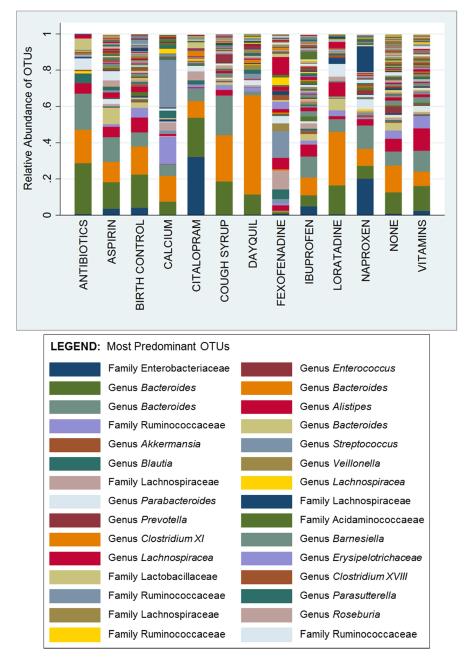
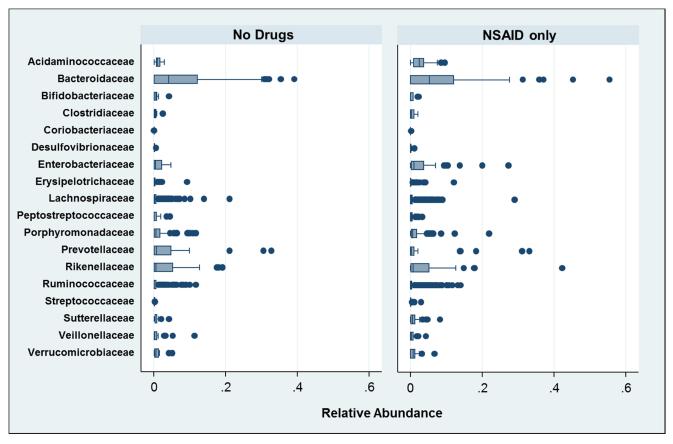
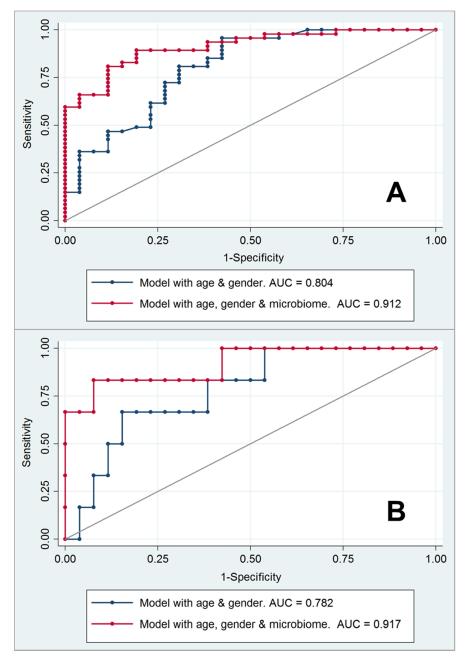
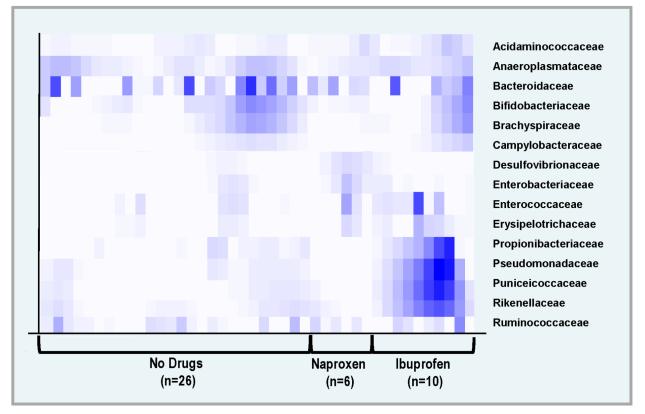
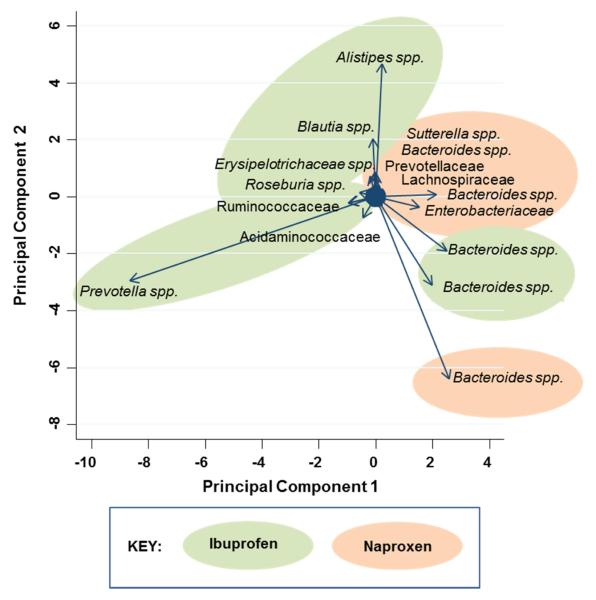
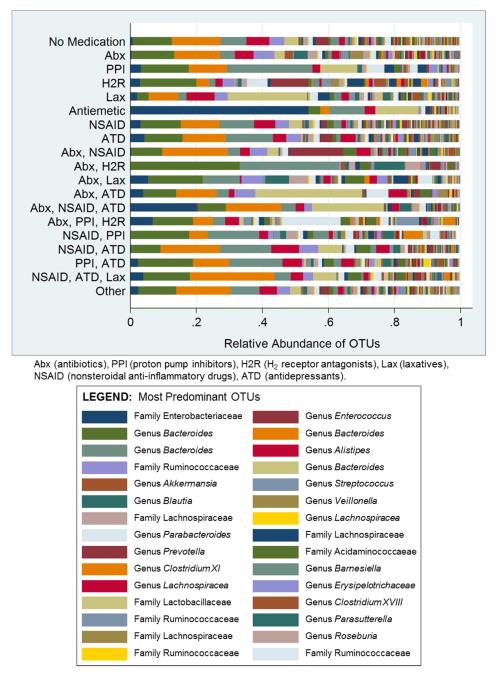
The composition of the gut microbiome with the use of non-steroidal anti-inflammatory drugs (NSAIDs) has not been fully characterized. Drug use within the past 30 days was ascertained in 155 adults, and stool specimens were submitted for analysis. Area under the receiver operating characteristic curve (AUC) was calculated in logit models to distinguish the relative abundance of operational taxonomic units (OTUs) by medication class. The type of medication had a greater influence on the gut microbiome than the number of medications. NSAIDs were particularly associated with distinct microbial populations. Four OTUs (Prevotella species, Bacteroides species, family Ruminococcaceae, and Barnesiella species) discriminated aspirin users from those using no medication (AUC = 0.96; 95% CI 0.84-1.00). The microbiome profile of celecoxib users was similar to that of ibuprofen users, with both showing enrichment of Acidaminococcaceae and Enterobacteriaceae. Bacteria from families Propionibacteriaceae, Pseudomonadaceae, Puniceicoccaceae and Rikenellaceae were more abundant in ibuprofen users than in controls or naproxen users. Bacteroides species and Erysipelotrichaceae species discriminated individuals using NSAIDs plus proton-pump inhibitors from those using NSAIDs alone (AUC = 0.96; 95% CI 0.87-1.00). Bacteroides species and a bacterium of family Ruminococcaceae discriminated individuals using NSAIDs in combination with antidepressants and laxatives from those using NSAIDs alone (AUC = 0.98; 95% CI 0.93-1.00). In conclusion, bacteria in the gastrointestinal tract reflect the combinations of medications that people ingest. The bacterial composition of the gut varied with the type of NSAID ingested.
Keywords: Bacteria; drug; gastrointestinal tract; microbiota; non-steroidal anti-inflammatory drugs.
Copyright © 2015 European Society of Clinical Microbiology and Infectious Diseases. Published by Elsevier Ltd. All rights reserved.
Figures
References
-
- National Center for Health Statistics . Health, United States, 2013: with special feature on prescription drugs. Hyattsville, Maryland: 2014. - PubMed
-
- Consumer Healthcare Products Association . Understanding trust in OTC medicines: consumer and healthcare provider perspectives. Nielsen and IMS; 2013.
-
- Zhou Y, Boudreau DM, Freedman AN. Trends in the use of aspirin and nonsteroidal anti-inflammatory drugs in the general U.S. population. Pharmacoepidemiol Drug Saf. 2014;23:43–50. - PubMed
-
- Marlicz W, Loniewski I, Grimes DS, Quigley EM. Nonsteroidal anti-inflammatory drugs, proton pump inhibitors, and gastrointestinal injury: contrasting interactions in the stomach and small intestine. Mayo Clin Proc. 2014;89(12):1699–1709. - PubMed
Publication types
MeSH terms
Substances
Grants and funding
LinkOut - more resources
Full Text Sources
Other Literature Sources
Miscellaneous
