


Evaluating Subcriticality during the Ebola Epidemic in West Africa
- PMID: 26484544
- PMCID: PMC4618845
- DOI: 10.1371/journal.pone.0140651
Evaluating Subcriticality during the Ebola Epidemic in West Africa
Erratum in
-
Correction: Evaluating Subcriticality during the Ebola Epidemic in West Africa.PLoS One. 2016 Jun 2;11(6):e0157068. doi: 10.1371/journal.pone.0157068. eCollection 2016. PLoS One. 2016. PMID: 27254105 Free PMC article.
Abstract
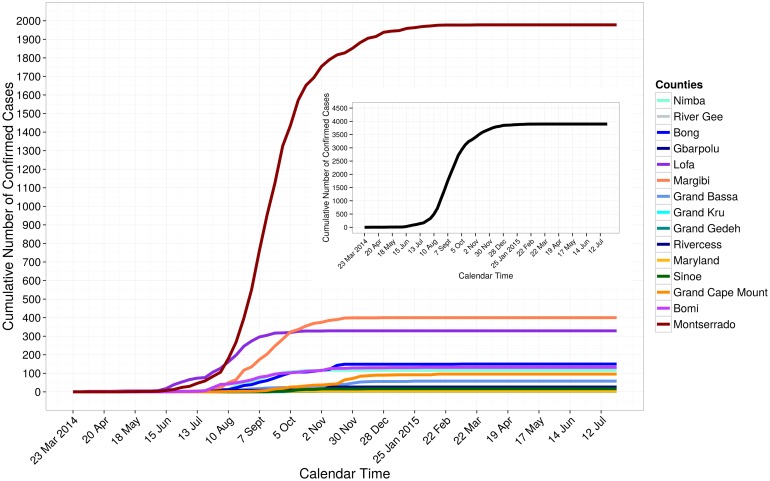
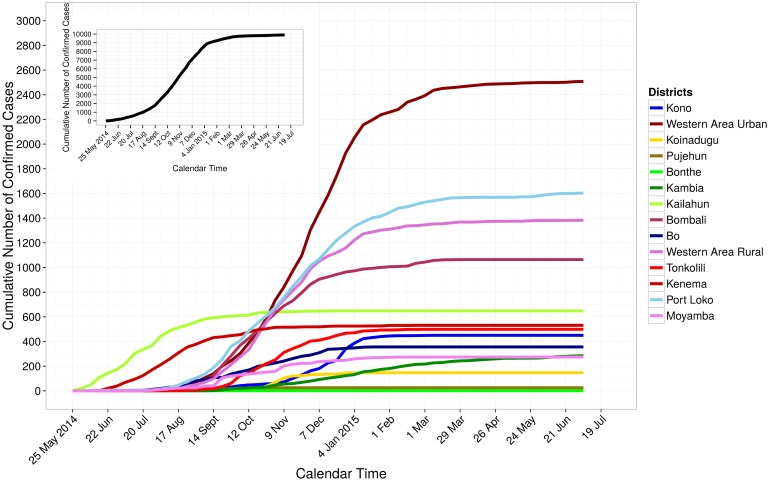
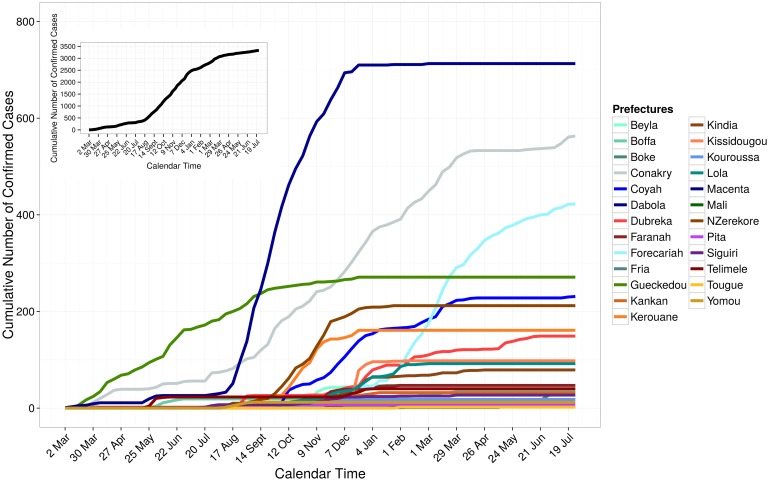
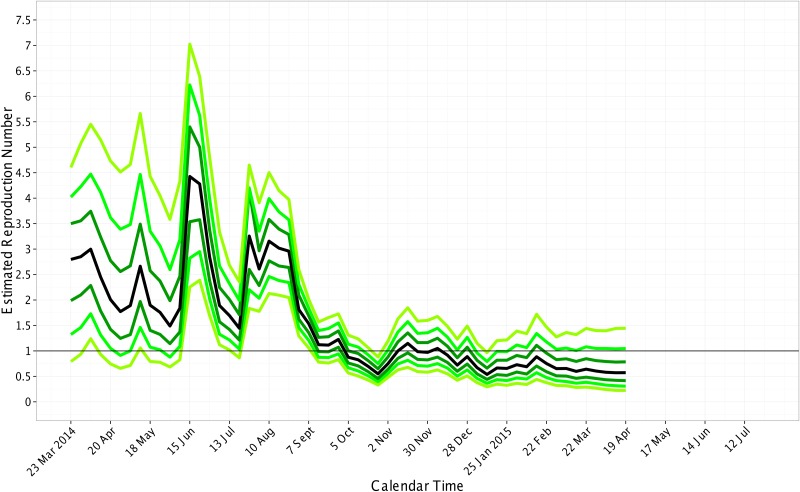
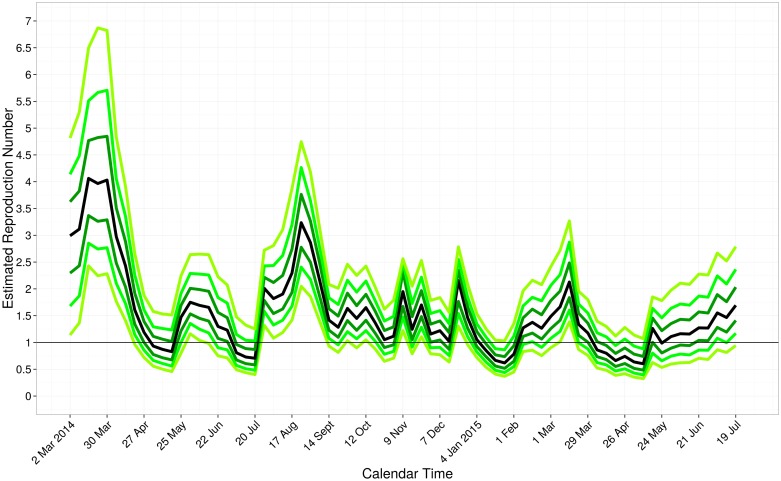
The 2014-2015 Ebola outbreak is the largest and most widespread to date. In order to estimate ongoing transmission in the affected countries, we estimated the weekly average number of secondary cases caused by one individual infected with Ebola throughout the infectious period for each affected West African country using a stochastic hidden Markov model fitted to case data from the World Health Organization. If the average number of infections caused by one Ebola infection is less than 1.0, the epidemic is subcritical and cannot sustain itself. The epidemics in Liberia and Sierra Leone have approached subcriticality at some point during the epidemic; the epidemic in Guinea is ongoing with no evidence that it is subcritical. Response efforts to control the epidemic should continue in order to eliminate Ebola cases in West Africa.
Conflict of interest statement
Figures

References
-
- Ebola: a failure of international collective action. Lancet. 2014; 384: 637 - PubMed
-
- World Health Organization. “Ebola Response Roadmap,” (available at http://apps.who.int/iris/bitstream/10665/131596/1/EbolaResponseRoadmap.p...).
Publication types
MeSH terms
Grants and funding
LinkOut - more resources
Full Text Sources
Other Literature Sources
Medical
