


Flea-Associated Bacterial Communities across an Environmental Transect in a Plague-Endemic Region of Uganda
- PMID: 26485147
- PMCID: PMC4617453
- DOI: 10.1371/journal.pone.0141057
Flea-Associated Bacterial Communities across an Environmental Transect in a Plague-Endemic Region of Uganda
Abstract
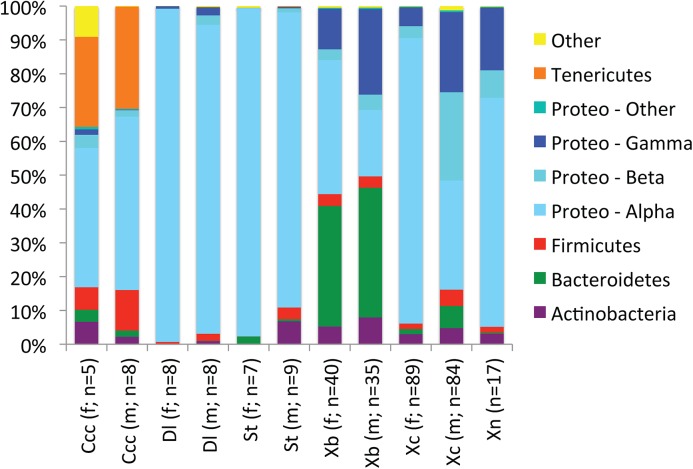
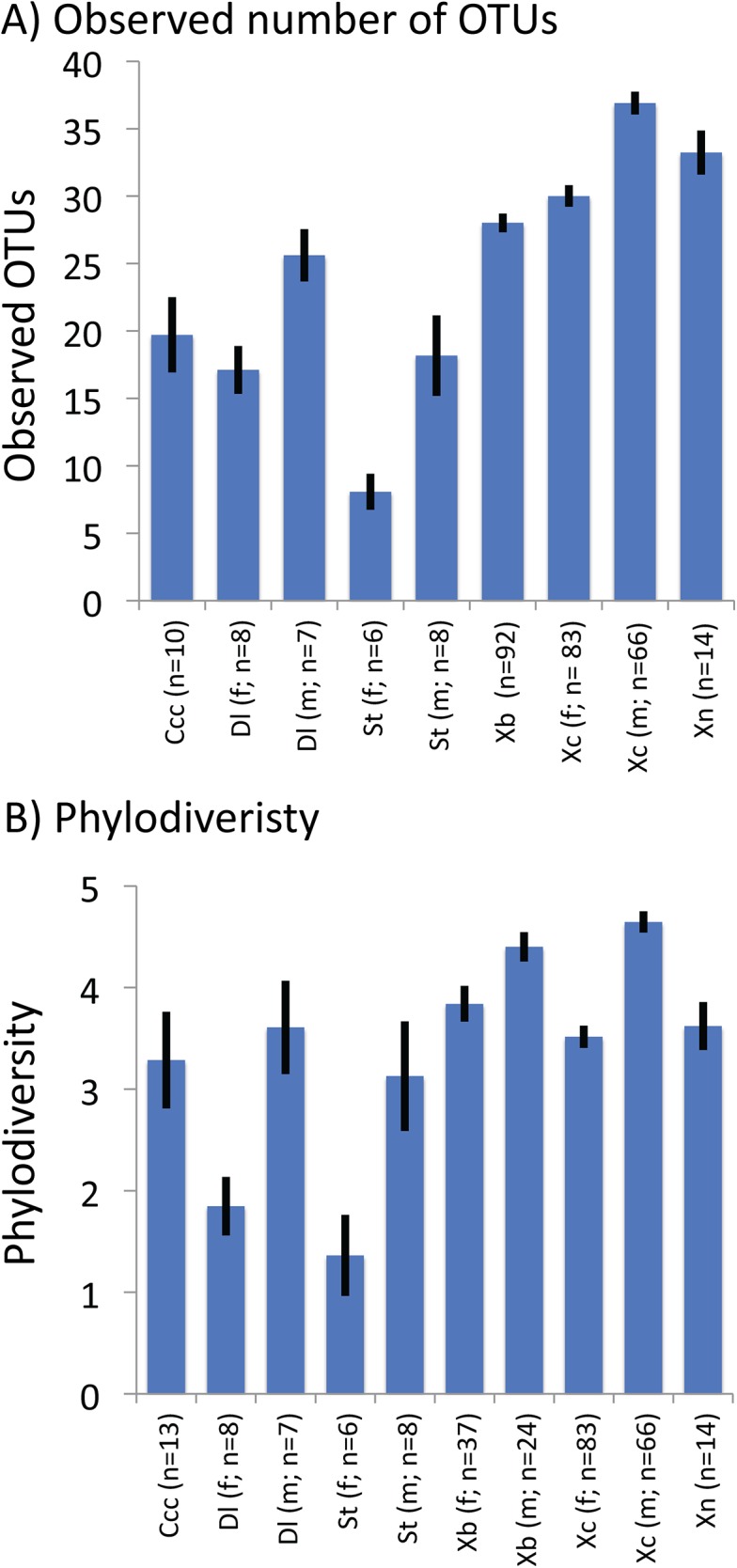
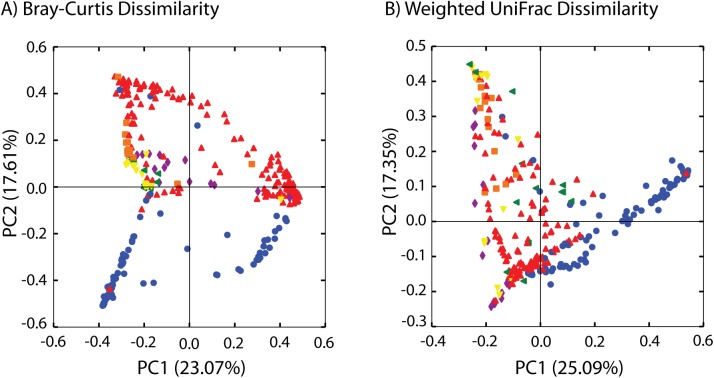
The vast majority of human plague cases currently occur in sub-Saharan Africa. The primary route of transmission of Yersinia pestis, the causative agent of plague, is via flea bites. Non-pathogenic flea-associated bacteria may interact with Y. pestis within fleas and it is important to understand what factors govern flea-associated bacterial assemblages. Six species of fleas were collected from nine rodent species from ten Ugandan villages between October 2010 and March 2011. A total of 660,345 16S rRNA gene DNA sequences were used to characterize bacterial communities of 332 individual fleas. The DNA sequences were binned into 421 Operational Taxonomic Units (OTUs) based on 97% sequence similarity. We used beta diversity metrics to assess the effects of flea species, flea sex, rodent host species, site (i.e. village), collection date, elevation, mean annual precipitation, average monthly precipitation, and average monthly temperature on bacterial community structure. Flea species had the greatest effect on bacterial community structure with each flea species harboring unique bacterial lineages. The site (i.e. village), rodent host, flea sex, elevation, precipitation, and temperature also significantly affected bacterial community composition. Some bacterial lineages were widespread among flea species (e.g. Bartonella spp. and Wolbachia spp.), but each flea species also harbored unique bacterial lineages. Some of these lineages are not closely related to known bacterial diversity and likely represent newly discovered lineages of insect symbionts. Our finding that flea species has the greatest effect on bacterial community composition may help future investigations between Yersinia pestis and non-pathogenic flea-associated bacteria. Characterizing bacterial communities of fleas during a plague epizootic event in the future would be helpful.
Conflict of interest statement
Figures
References
-
- World Health Organization. Human plague: review of regional morbidity and mortality, 2004–2009. Weekly Epidemiological Record. 2010; 85: 40–45.
-
- Collinge SK, Johnson WC, Ray C, Matchett R, Grensten J, Cully JF, et al. Testing the generality of a trophic-cascade model for plague. Ecohealth. 2005; 2: 102–112.
-
- Enscore RE, Biggerstaff BJ, Brown TL, Fulgham RF, Reynolds PJ, Engelthaler DM, et al. Modeling relationships between climate and the frequency of human plague cases in the southwestern United States, 1960–1997. Am J Trop Med Hyg. 2002; 66: 186–196. - PubMed
Publication types
MeSH terms
Substances
LinkOut - more resources
Full Text Sources
Other Literature Sources
Medical
Miscellaneous
