


Impact of Type 2 Diabetes and Postmenopausal Hormone Therapy on Incidence of Cognitive Impairment in Older Women
- PMID: 26486190
- PMCID: PMC4657616
- DOI: 10.2337/dc15-1385
Impact of Type 2 Diabetes and Postmenopausal Hormone Therapy on Incidence of Cognitive Impairment in Older Women
Abstract
Objective: In older women, higher levels of estrogen may exacerbate the increased risk for cognitive impairment conveyed by diabetes. We examined whether the effect of postmenopausal hormone therapy (HT) on cognitive impairment incidence differs depending on type 2 diabetes.
Research design and methods: The Women's Health Initiative (WHI) randomized clinical trials assigned women to HT (0.625 mg/day conjugated equine estrogens with or without [i.e., unopposed] 2.5 mg/day medroxyprogesterone acetate) or matching placebo for an average of 4.7-5.9 years. A total of 7,233 women, aged 65-80 years, were classified according to type 2 diabetes status and followed for probable dementia and cognitive impairment (mild cognitive impairment or dementia).
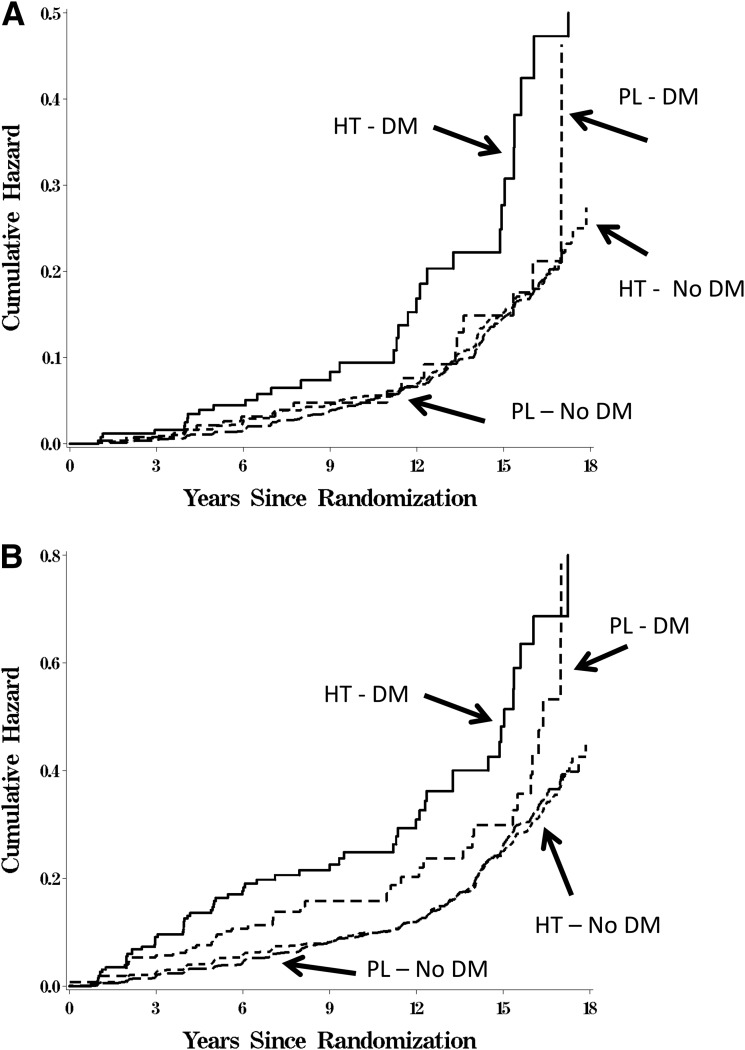
Results: Through a maximum of 18 years of follow-up, women with diabetes had increased risk of probable dementia (hazard ratio [HR] 1.54 [95% CI 1.16-2.06]) and cognitive impairment (HR 1.83 [1.50-2.23]). The combination of diabetes and random assignment to HT increased their risk of dementia (HR 2.12 [1.47-3.06]) and cognitive impairment (HR 2.20 [1.70-2.87]) compared with women without these conditions, interaction P = 0.09 and P = 0.08. These interactions appeared to be limited to women assigned to unopposed conjugated equine estrogens.
Conclusions: These analyses provide additional support to a prior report that higher levels of estrogen may exacerbate risks that type 2 diabetes poses for cognitive function in older women. The role estrogen plays in suppressing non-glucose-based energy sources in the brain may explain this interaction.
Trial registration: ClinicalTrials.gov NCT00000611.
© 2015 by the American Diabetes Association. Readers may use this article as long as the work is properly cited, the use is educational and not for profit, and the work is not altered.
Figures
References
-
- Mehlig K, Skoog I, Waern M, et al. . Physical activity, weight status, diabetes and dementia: a 34-year follow-up of the population study of women in Gothenburg. Neuroepidemiology 2014;42:252–259 - PubMed
-
- Carcaillon L, Brailly-Tabard S, Ancelin ML, et al. . High plasma estradiol interacts with diabetes on risk of dementia in older postmenopausal women. Neurology 2014;82:504–511 - PubMed
Publication types
MeSH terms
Substances
Associated data
Grants and funding
LinkOut - more resources
Full Text Sources
Other Literature Sources
Medical
