


Transcriptional regulation of hepatic lipogenesis
- PMID: 26490400
- PMCID: PMC4884795
- DOI: 10.1038/nrm4074
Transcriptional regulation of hepatic lipogenesis
Erratum in
- Nat Rev Mol Cell Biol. 2016 Jan;17(1):64
Abstract
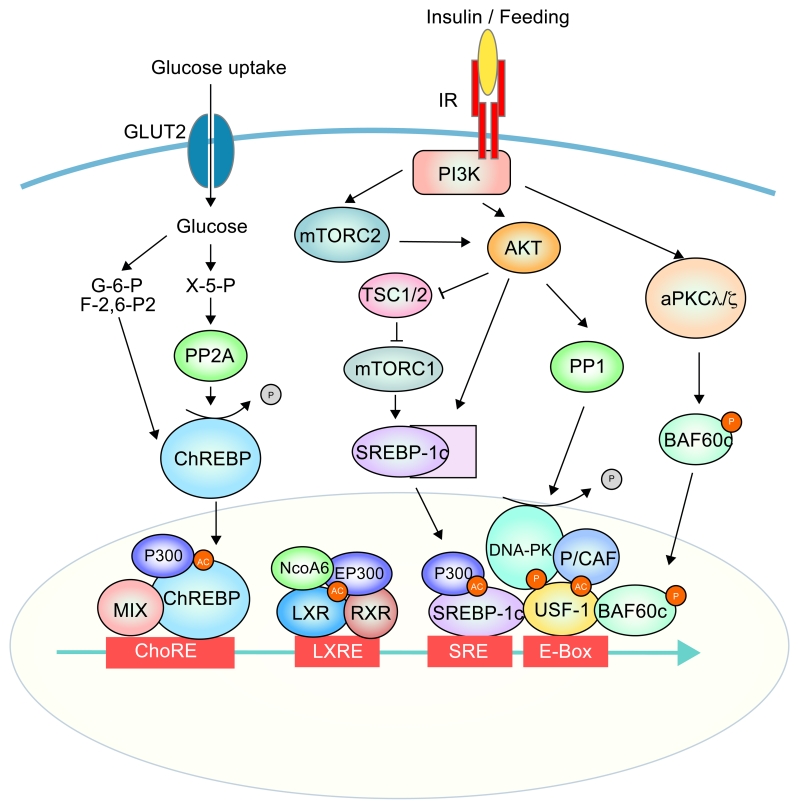
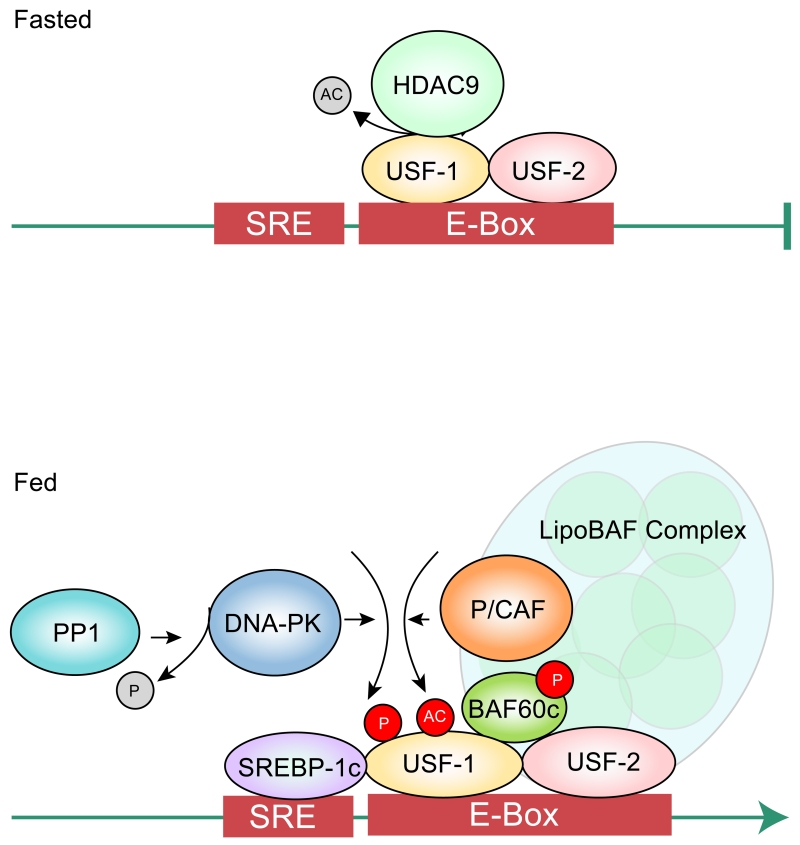
Fatty acid and fat synthesis in the liver is a highly regulated metabolic pathway that is important for very low-density lipoprotein (VLDL) production and thus energy distribution to other tissues. Having common features at their promoter regions, lipogenic genes are coordinately regulated at the transcriptional level. Transcription factors, such as upstream stimulatory factors (USFs), sterol regulatory element-binding protein 1C (SREBP1C), liver X receptors (LXRs) and carbohydrate-responsive element-binding protein (ChREBP) have crucial roles in this process. Recently, insights have been gained into the signalling pathways that regulate these transcription factors. After feeding, high blood glucose and insulin levels activate lipogenic genes through several pathways, including the DNA-dependent protein kinase (DNA-PK), atypical protein kinase C (aPKC) and AKT-mTOR pathways. These pathways control the post-translational modifications of transcription factors and co-regulators, such as phosphorylation, acetylation or ubiquitylation, that affect their function, stability and/or localization. Dysregulation of lipogenesis can contribute to hepatosteatosis, which is associated with obesity and insulin resistance.
Figures
References
-
- Liu Z, Thompson KS, Towle HC. Carbohydrate regulation of the rat L-type pyruvate kinase gene requires two nuclear factors: LF-A1 and a member of the c-myc family. J Biol Chem. 1993;268:12787–95. - PubMed
Publication types
MeSH terms
Substances
Grants and funding
LinkOut - more resources
Full Text Sources
Other Literature Sources
Miscellaneous
