


A proposal for an individualized pharmacogenetic-guided isoniazid dosage regimen for patients with tuberculosis
- PMID: 26491254
- PMCID: PMC4598210
- DOI: 10.2147/DDDT.S87131
A proposal for an individualized pharmacogenetic-guided isoniazid dosage regimen for patients with tuberculosis
Abstract
Background/aim: Isoniazid (INH) is an essential component of first-line anti-tuberculosis (TB) treatment. However, treatment with INH is complicated by polymorphisms in the expression of the enzyme system primarily responsible for its elimination, N-acetyltransferase 2 (NAT2), and its associated hepatotoxicity. The objective of this study was to develop an individualized INH dosing regimen using a pharmacogenetic-driven model and to apply this regimen in a pilot study.
Methods: A total of 206 patients with TB who received anti-TB treatment were included in this prospective study. The 2-hour post-dose concentrations of INH were obtained, and their NAT2 genotype was determined using polymerase chain reaction and sequencing. A multivariate regression analysis that included the variables of age, sex, body weight, and NAT2 genotype was performed to determine the best model for estimating the INH dose that achieves a concentration of 3.0-6.0 mg/L. This dosing algorithm was then used for newly enrolled 53 patients.
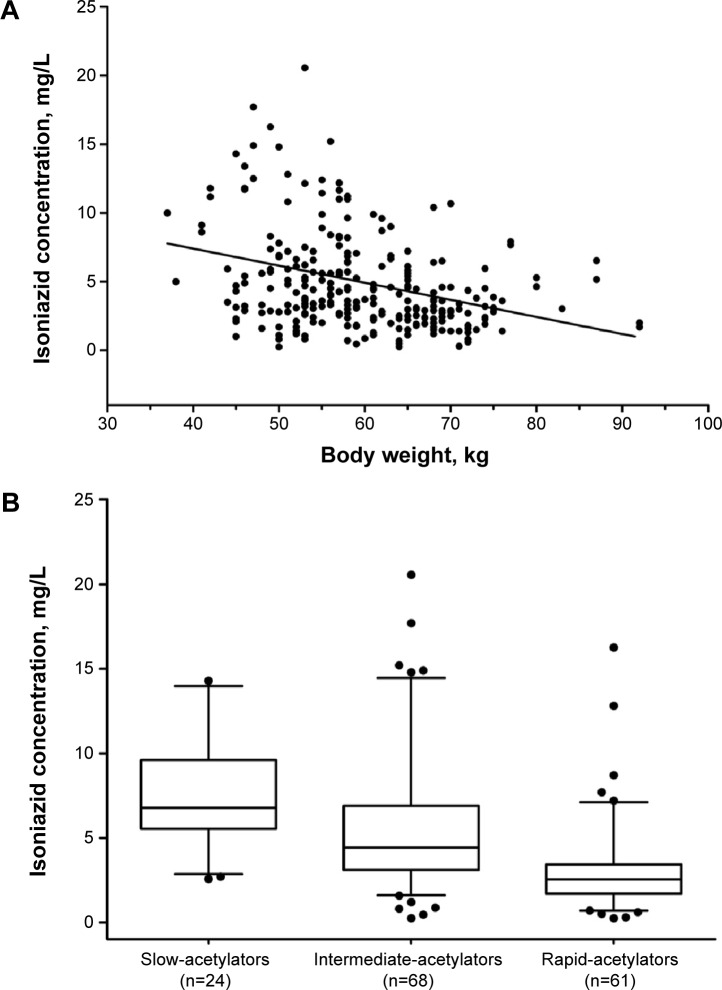
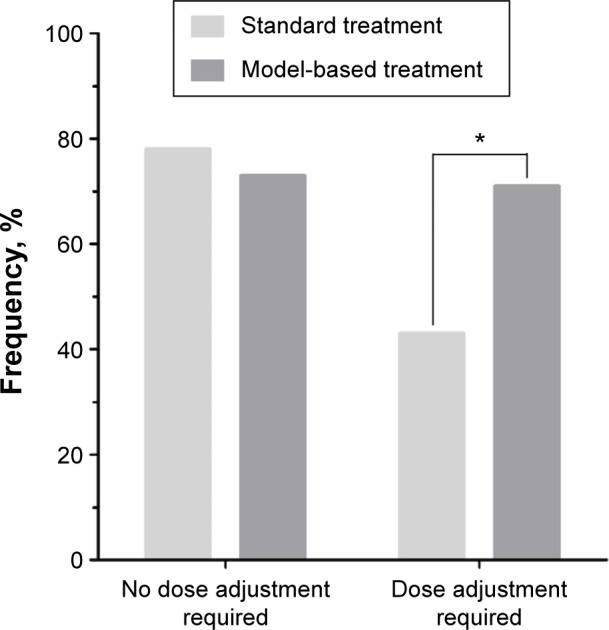
Results: Serum concentrations of INH were significantly lower in the rapid-acetylators than in the slow-acetylators (2.55 mg/L vs 6.78 mg/L, median, P<0.001). A multivariate stepwise linear regression analysis revealed that NAT2 and body weight independently affected INH concentrations: INH concentration (mg/L) = 13.821-0.1× (body weight, kg) -2.273× (number of high activity alleles of NAT2; 0, 1, 2). In 53 newly enrolled patients, the frequency at which they were within the therapeutic range of 3.0-6.0 mg/L was higher in the model-based treatment group compared to the standard treatment group (80.8% vs 59.3%).
Conclusion: The use of individualized pharmacogenetic-guided INH dosage regimens that incorporate NAT2 genotype and body weight may help to ensure achievement of therapeutic concentrations of INH in the TB patients.
Keywords: INH regimen; NAT2 genotype; pharmacogenomics; tuberculosis.
Figures
References
-
- World Health Organization Global Health Observatory Tuberculosis. [Accessed February 21, 2015]. Available from: http://www.who.int/gho/tb/en/index.html.
-
- World Health Organization Guidelines for Treatment of Tuberculosis. [Accessed February 23, 2015]. Available from: http://www.who.int/tb/publications/2010/9789241547833/en/
-
- Joint Committee for the Development of Korean Guidelines for TB and Korea Centers for Disease Control and Prevention . Korean Guidelines for Tuberculosis. 2014.
-
- Du H, Chen X, Fang Y, et al. Slow N-acetyltransferase 2 genotype contributes to anti-tuberculosis drug-induced hepatotoxicity: a meta-analysis. Mol Biol Rep. 2013;40(5):3591–3596. - PubMed
-
- Wang JY, Liu CH, Hu FC, et al. Risk factors of hepatitis during anti-tuberculous treatment and implications of hepatitis virus load. J Infect. 2011;62(6):448–455. - PubMed
Publication types
MeSH terms
Substances
LinkOut - more resources
Full Text Sources
Medical
Molecular Biology Databases
