


Macrophage-mediated cholesterol handling in atherosclerosis
- PMID: 26493158
- PMCID: PMC4717859
- DOI: 10.1111/jcmm.12689
Macrophage-mediated cholesterol handling in atherosclerosis
Abstract
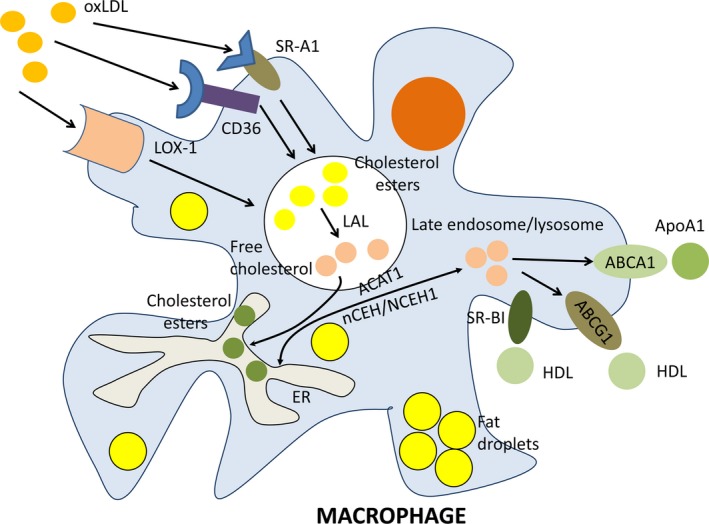
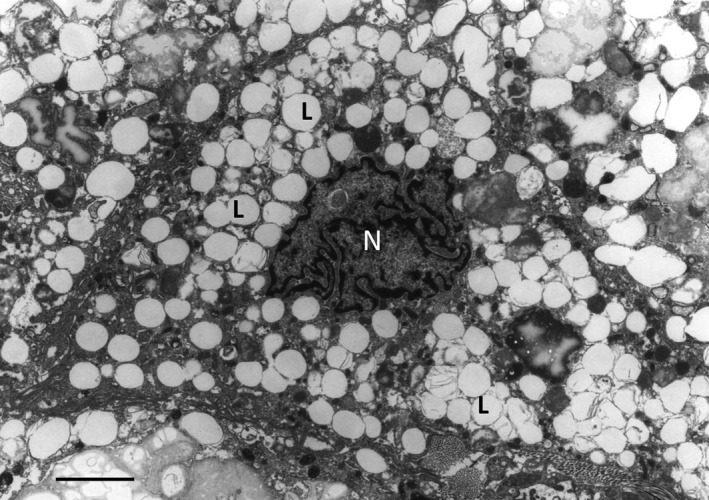
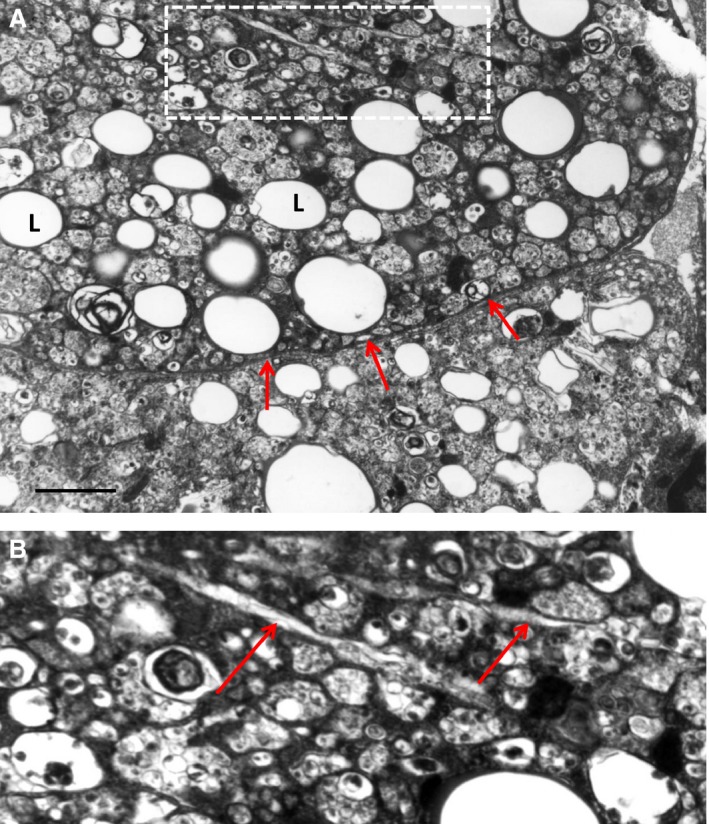
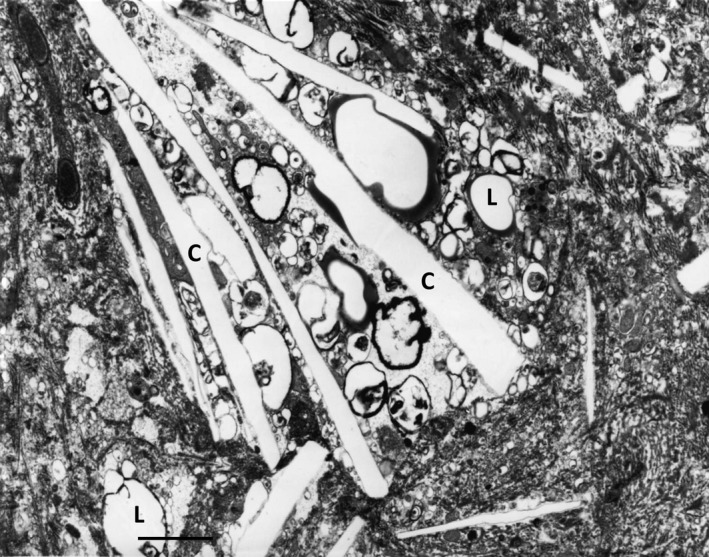
Formation of foam cells is a hallmark at the initial stages of atherosclerosis. Monocytes attracted by pro-inflammatory stimuli attach to the inflamed vascular endothelium and penetrate to the arterial intima where they differentiate to macrophages. Intimal macrophages phagocytize oxidized low-density lipoproteins (oxLDL). Several scavenger receptors (SR), including CD36, SR-A1 and lectin-like oxLDL receptor-1 (LOX-1), mediate oxLDL uptake. In late endosomes/lysosomes of macrophages, oxLDL are catabolysed. Lysosomal acid lipase (LAL) hydrolyses cholesterol esters that are enriched in LDL to free cholesterol and free fatty acids. In the endoplasmic reticulum (ER), acyl coenzyme A: cholesterol acyltransferase-1 (ACAT1) in turn catalyses esterification of cholesterol to store cholesterol esters as lipid droplets in the ER of macrophages. Neutral cholesteryl ester hydrolases nCEH and NCEH1 are involved in a secondary hydrolysis of cholesterol esters to liberate free cholesterol that could be then out-flowed from macrophages by cholesterol ATP-binding cassette (ABC) transporters ABCA1 and ABCG1 and SR-BI. In atherosclerosis, disruption of lipid homoeostasis in macrophages leads to cholesterol accumulation and formation of foam cells.
Keywords: atherogenesis; atherosclerosis; cholesterol; foam cells; lipoproteins; macrophages.
© 2015 The Authors. Journal of Cellular and Molecular Medicine published by John Wiley & Sons Ltd and Foundation for Cellular and Molecular Medicine.
Figures
References
-
- Colin S, Chinetti‐Gbaguidi G, Staels B. Macrophage phenotypes in atherosclerosis. Immunol Rev. 2014; 262: 153–66. - PubMed
-
- Stary HC, Chandler AB, Glagov S, et al A definition of initial, fatty streak, and intermediate lesions of atherosclerosis. A report from the Committee on Vascular Lesions of the Council on Arteriosclerosis, American Heart Association. Circulation. 1994; 89: 2462–78. - PubMed
-
- Bobryshev YV. Monocyte recruitment and foam cell formation in atherosclerosis. Micron. 2006; 37: 208–22. - PubMed
-
- Yu XH, Fu YC, Zhang DW, et al Foam cells in atherosclerosis. Clin Chim Acta. 2013; 424: 245–52. - PubMed
Publication types
MeSH terms
Substances
LinkOut - more resources
Full Text Sources
Other Literature Sources
Medical
Research Materials
Miscellaneous
