Pilot randomised trial of a healthy eating behavioural intervention in uncontrolled asthma
- PMID: 26493792
- PMCID: PMC5136475
- DOI: 10.1183/13993003.00591-2015
Pilot randomised trial of a healthy eating behavioural intervention in uncontrolled asthma
Abstract
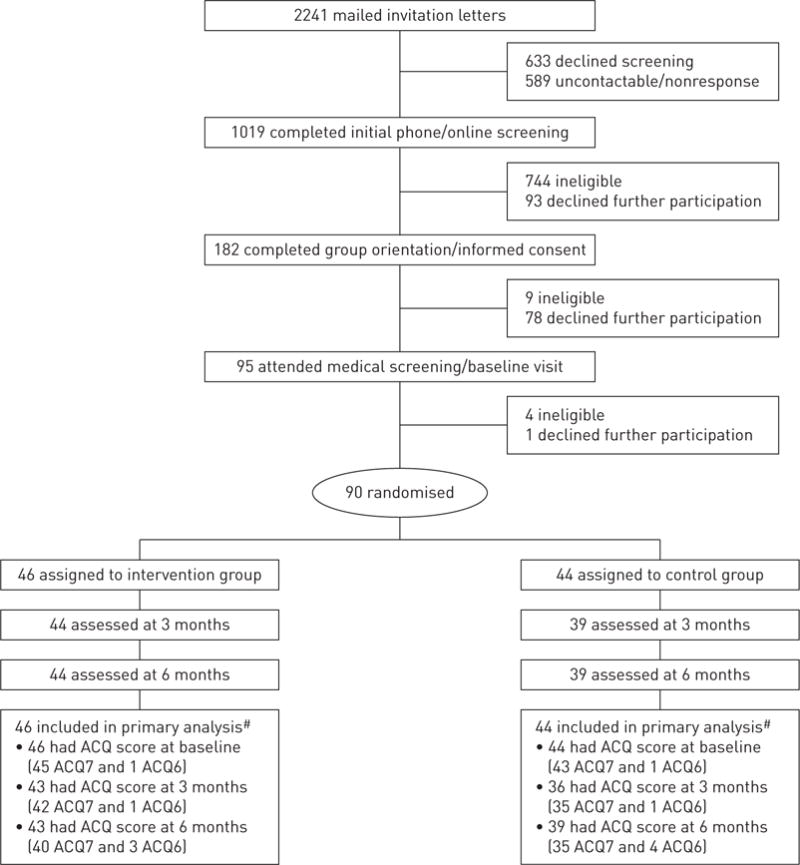
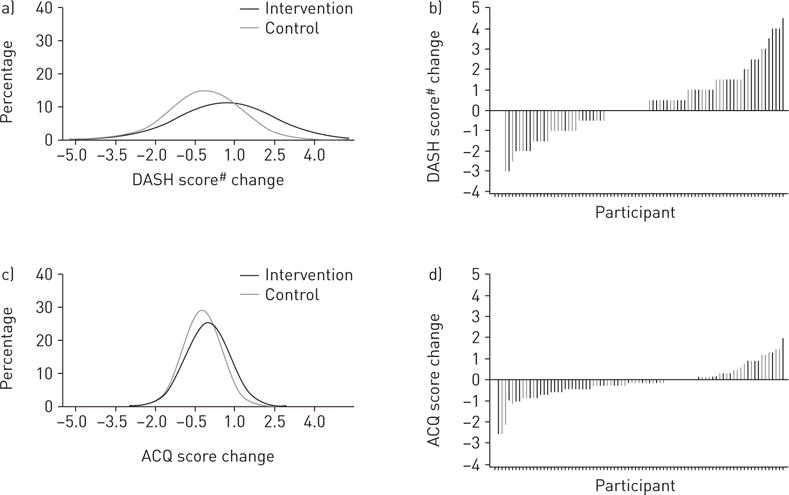
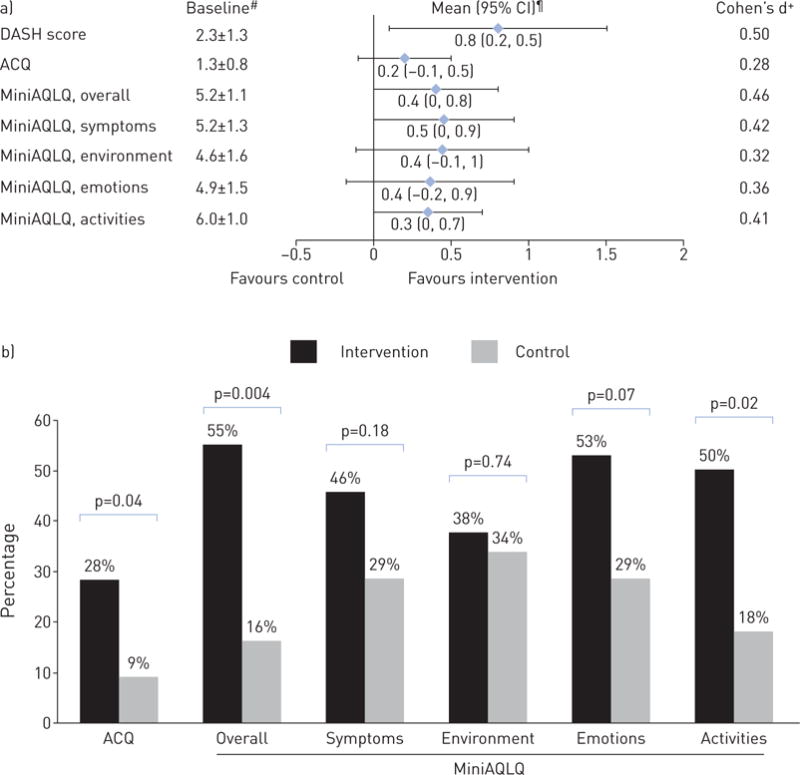
Rigorous research on the benefit of healthy eating patterns for asthma control is lacking.We randomised 90 adults with objectively confirmed uncontrolled asthma and a low-quality diet (Dietary Approaches to Stop Hypertension (DASH) scores <6 out of 9) to a 6-month DASH behavioural intervention (n=46) or usual-care control (n=44). Intention-to-treat analyses used repeated-measures mixed models.Participants were middle-aged, 67% female and multiethnic. Compared with controls, intervention participants improved on DASH scores (mean change (95% CI) 0.6 (0, 1.1) versus -0.3 (-0.8, 0.2); difference 0.8 (0.2, 1.5)) and the primary outcome, Asthma Control Questionnaire scores (-0.2 (-0.5, 0) versus 0 (-0.3, 0.3); difference -0.2 (-0.5, 0.1)) at 6 months. The mean group differences in changes in Mini Asthma Quality of Life Questionnaire overall and subdomain scores consistently favoured the intervention over the control group: overall 0.4 (95% CI 0, 0.8), symptoms 0.5 (0, 0.9), environment 0.4 (-0.1, 1.0), emotions 0.4 (-0.2, 0.9) and activities 0.3 (0, 0.7). These differences were modest, but potentially clinical significant.The DASH behavioural intervention improved diet quality with promising clinical benefits for better asthma control and functional status among adults with uncontrolled asthma. A full-scale efficacy trial is warranted.
Copyright ©ERS 2016.
Conflict of interest statement
can be found alongside the online version of this article at erj.ersjournals.com
Figures
References
-
- National Center for Health Statistics. National Health Interview Survey. 2012 www.cdc.gov/asthma/nhis/2012/table3-1.htm Date last accessed: March 7, 2014.
-
- Global Initiative for Asthma (GINA) Global Strategy for Asthma Management and Prevention. 2007 http://www.ginasthma.org/documents/4 Date last accessed: October 6, 2015.
-
- Allen S, Britton JR, Leonardi-Bee JA. Association between antioxidant vitamins and asthma outcome measures: systematic review and meta-analysis. Thorax. 2009;64:610–619. - PubMed
-
- Barros R, Moreira A, Fonseca J, et al. Dietary intake of alpha-linolenic acid and low ratio of n-6:n-3 PUFA are associated with decreased exhaled NO and improved asthma control. Br J Nutr. 2011;106:441–450. - PubMed
Publication types
MeSH terms
Substances
Grants and funding
LinkOut - more resources
Full Text Sources
Other Literature Sources
Medical