Bisphenol A Disrupts HNF4α-Regulated Gene Networks Linking to Prostate Preneoplasia and Immune Disruption in Noble Rats
- PMID: 26496021
- PMCID: PMC4701889
- DOI: 10.1210/en.2015-1363
Bisphenol A Disrupts HNF4α-Regulated Gene Networks Linking to Prostate Preneoplasia and Immune Disruption in Noble Rats
Abstract
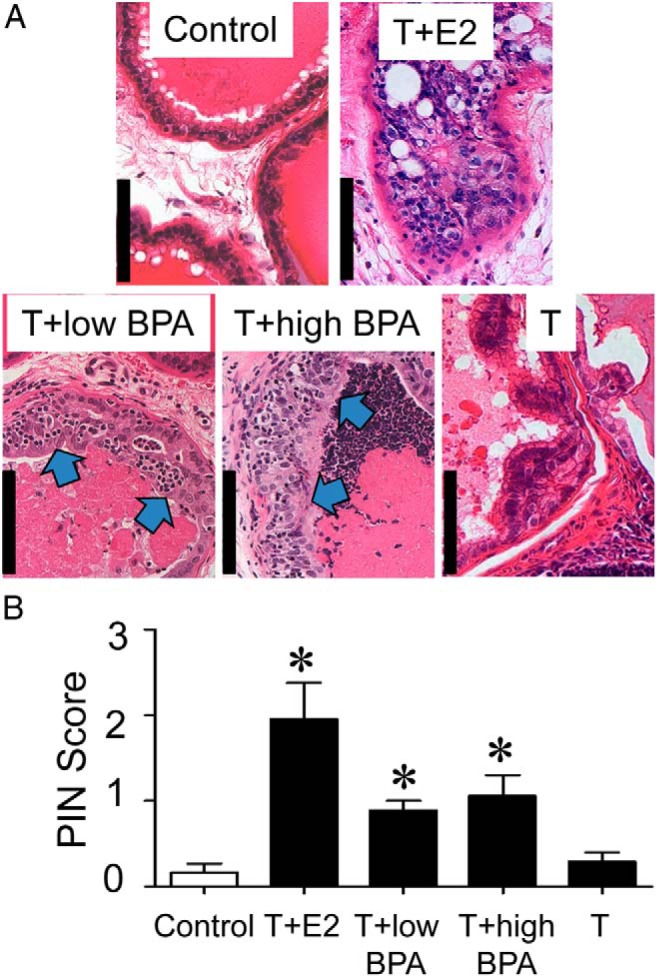
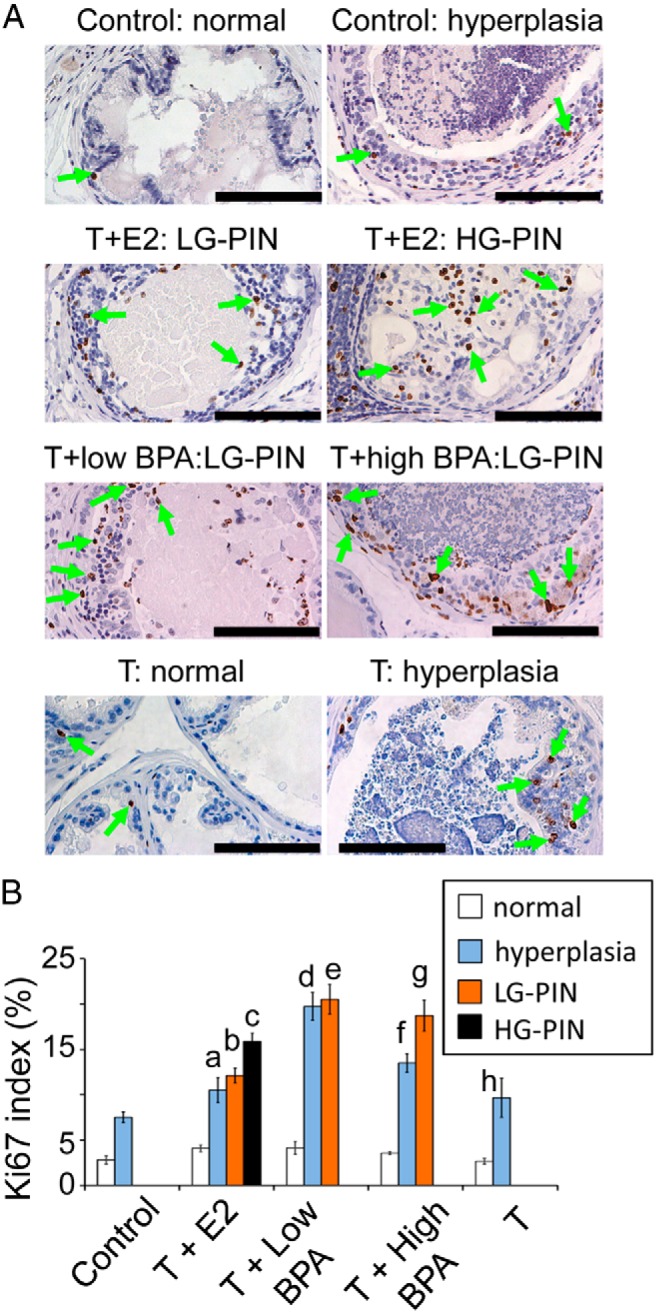
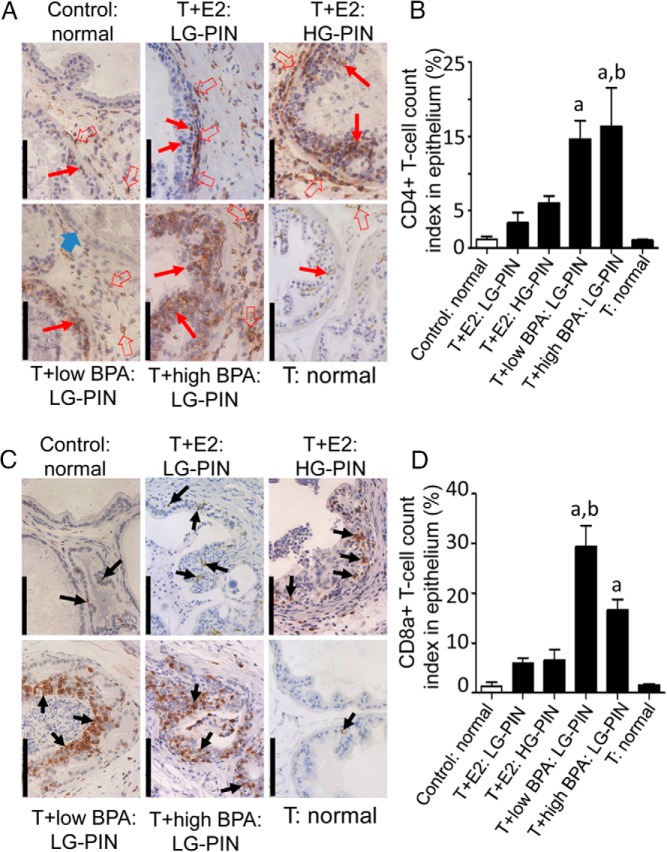
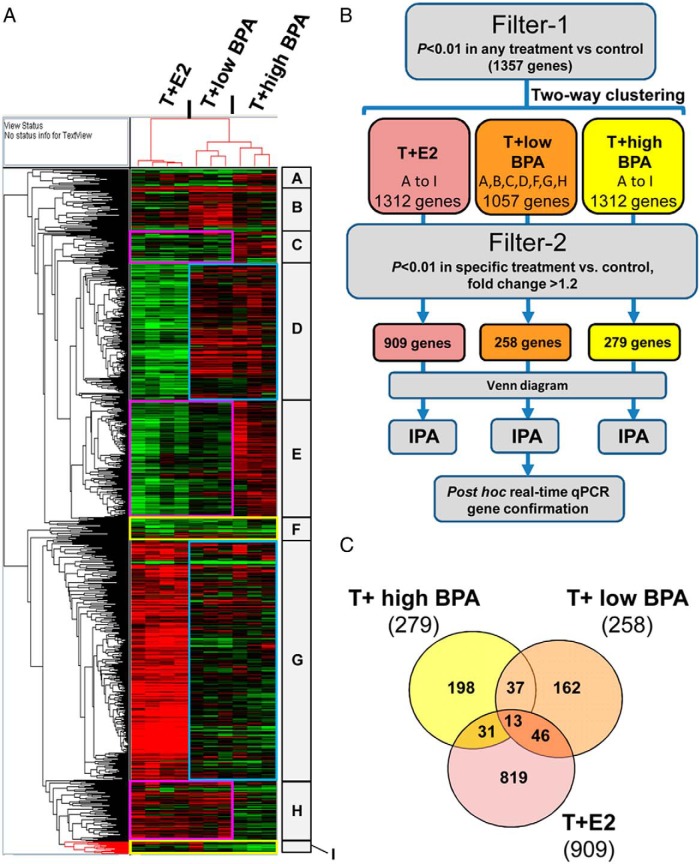
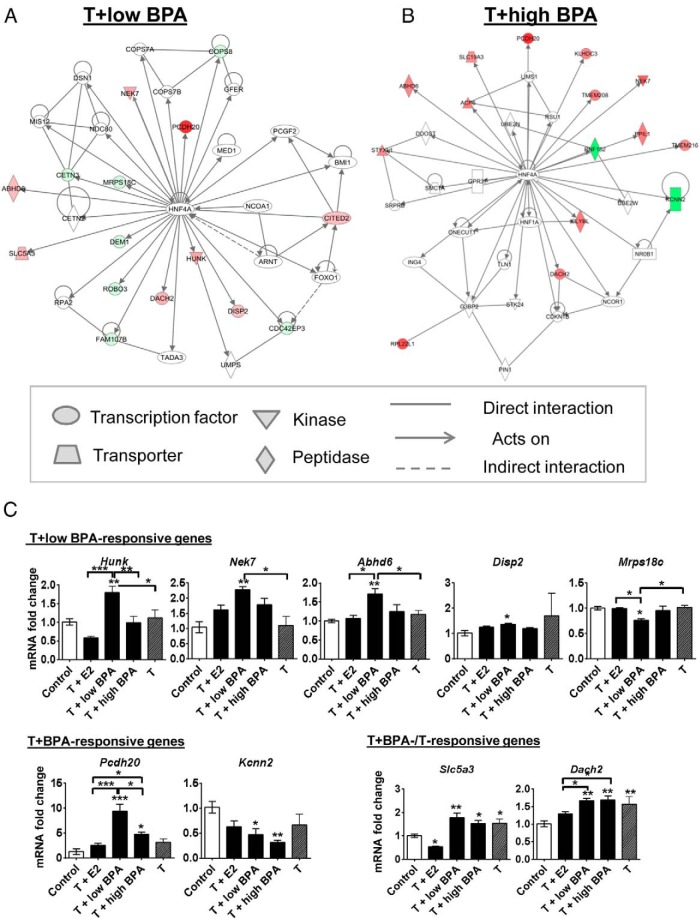
Exposure of humans to bisphenol A (BPA) is widespread and continuous. The effects of protracted exposure to BPA on the adult prostate have not been studied. We subjected Noble rats to 32 weeks of BPA (low or high dose) or 17β-estradiol (E2) in conjunction with T replenishment. T treatment alone or untreated groups were used as controls. Circulating T levels were maintained within the physiological range in all treatment groups, whereas the levels of free BPA were elevated in the groups treated with T+low BPA (1.06 ± 0.05 ng/mL, P < .05) and T+high BPA (10.37 ± 0.43 ng/mL, P < .01) when compared with those in both controls (0.1 ± 0.05 ng/mL). Prostatic hyperplasia, low-grade prostatic intraepithelial neoplasia (PIN), and marked infiltration of CD4+ and CD8+ T cells into the PIN epithelium (P < .05) were observed in the lateral prostates (LPs) of T+low/high BPA-treated rats. In contrast, only hyperplasia and high-grade PIN, but no aberrant immune responses, were found in the T+E2-treated LPs. Genome-wide transcriptome analysis in LPs identified differential changes between T+BPA vs T+E2 treatment. Expression of multiple genes in the regulatory network controlled by hepatocyte nuclear factor 4α was perturbed by the T+BPA but not by the T+E2 exposure. Collectively these findings suggest that the adult rat prostate, under a physiologically relevant T environment, is susceptible to BPA-induced transcriptomic reprogramming, immune disruption, and aberrant growth dysregulation in a manner distinct from those caused by E2. They are more relevant to our recent report of higher urinary levels BPA found in patients with prostate cancer than those with benign disease.
Figures
References
-
- Dodds EC, Fitzgerald MEH, Lawson W. Oestrogenic activity of some hydrocarbon derivatives of ethylene. Nature. 1937;140:772.
-
- Rubin BS. Bisphenol A: an endocrine disruptor with widespread exposure and multiple effects. J Steroid Biochem Mol Biol. 2011;127:27–34. - PubMed
-
- Vandenberg LN, Hauser R, Marcus M, Olea N, Welshons WV. Human exposure to bisphenol A (BPA). Reprod Toxicol. 2007;24:139–177. - PubMed
Publication types
MeSH terms
Substances
Grants and funding
- U54HL127624/HL/NHLBI NIH HHS/United States
- U01 ES020988/ES/NIEHS NIH HHS/United States
- RC2ES018758/ES/NIEHS NIH HHS/United States
- RC2 ES018789/ES/NIEHS NIH HHS/United States
- R21CA156042/CA/NCI NIH HHS/United States
- U54 HL127624/HL/NHLBI NIH HHS/United States
- R01 ES015584/ES/NIEHS NIH HHS/United States
- U01ES019480/ES/NIEHS NIH HHS/United States
- R01CA015776/CA/NCI NIH HHS/United States
- R01 CA112532/CA/NCI NIH HHS/United States
- R01CA112532/CA/NCI NIH HHS/United States
- P30 ES006096/ES/NIEHS NIH HHS/United States
- R01 CA015776/CA/NCI NIH HHS/United States
- RC2 ES018758/ES/NIEHS NIH HHS/United States
- U01ES020988/ES/NIEHS NIH HHS/United States
- R21 CA156042/CA/NCI NIH HHS/United States
- P30ES006096/ES/NIEHS NIH HHS/United States
- I01 BX000675/BX/BLRD VA/United States
- RC2ES018789/ES/NIEHS NIH HHS/United States
- R01ES015584/ES/NIEHS NIH HHS/United States
- U01 ES019480/ES/NIEHS NIH HHS/United States
LinkOut - more resources
Full Text Sources
Other Literature Sources
Medical
Molecular Biology Databases
Research Materials