


Metformin prevents cancer metastasis by inhibiting M2-like polarization of tumor associated macrophages
- PMID: 26497364
- PMCID: PMC4742188
- DOI: 10.18632/oncotarget.5541
Metformin prevents cancer metastasis by inhibiting M2-like polarization of tumor associated macrophages
Abstract
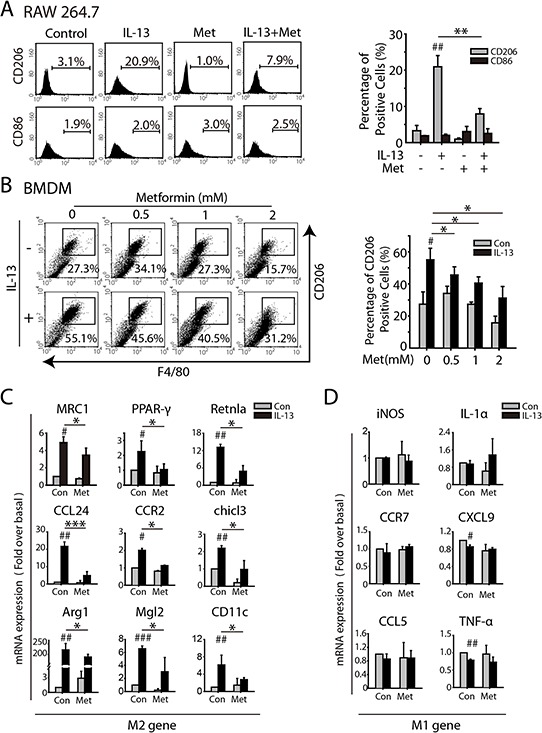
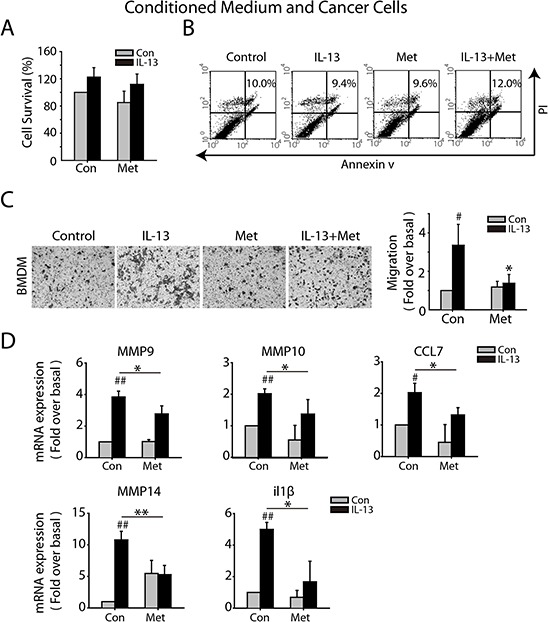
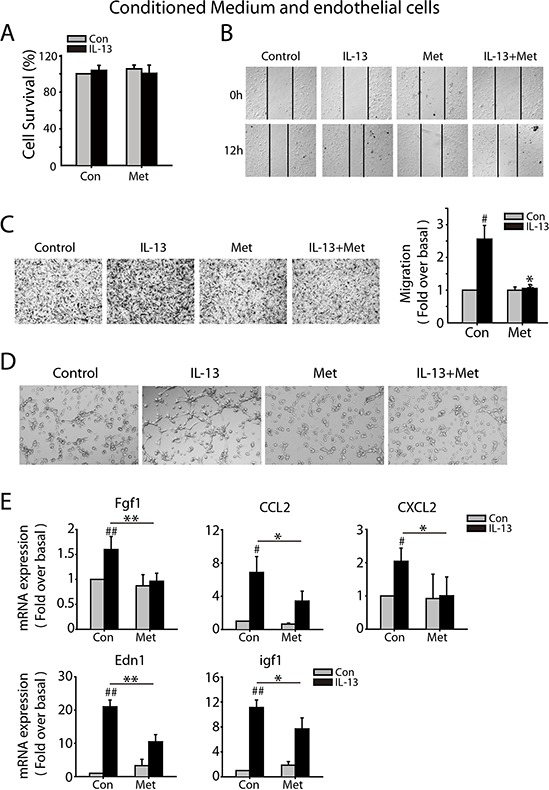
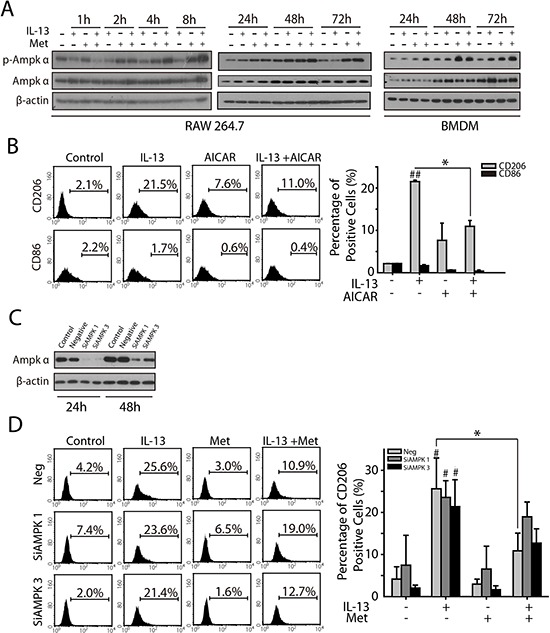
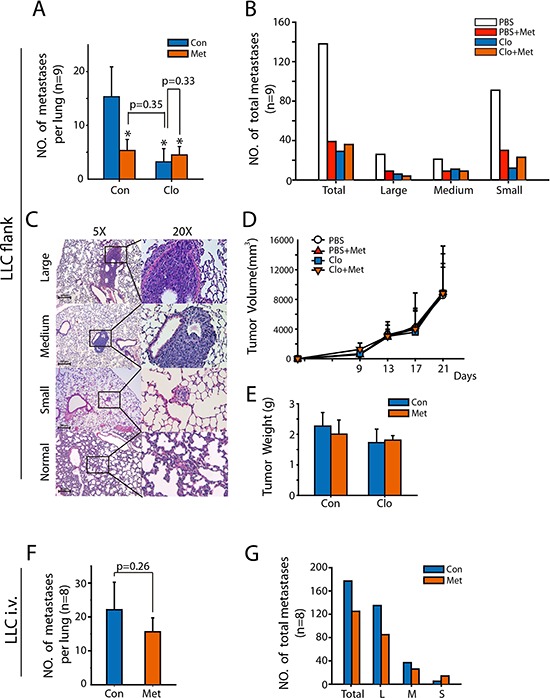
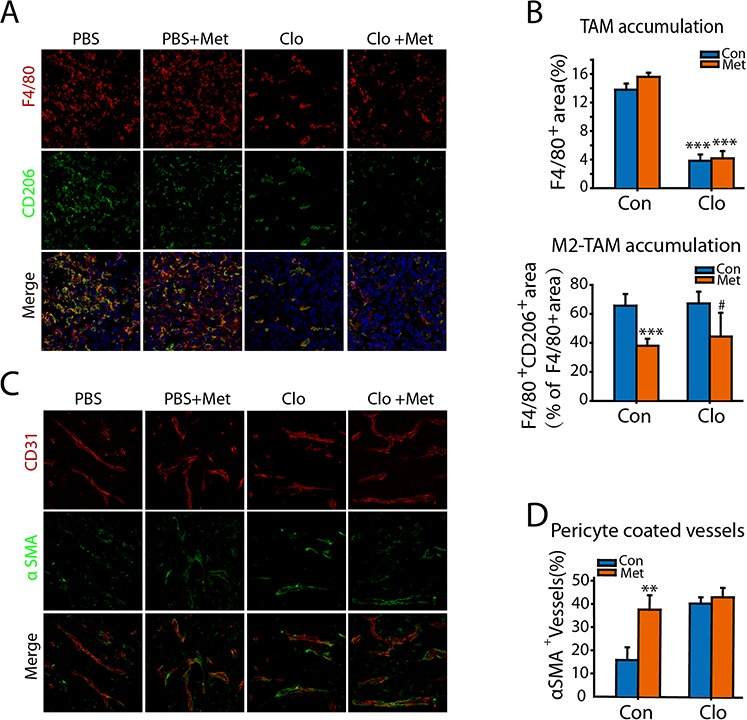
Accumulated evidence suggests that M2-like polarized tumor associated macrophages (TAMs) plays an important role in cancer progression and metastasis, establishing TAMs, especially M2-like TAMs as an appealing target for therapy intervention. Here we found that metformin significantly suppressed IL-13 induced M2-like polarization of macrophages, as illustrated by reduced expression of CD206, down-regulation of M2 marker mRNAs, and inhibition of M2-like macrophages promoted migration of cancer cells and endothelial cells. Metformin triggered AMPKα1 activation in macrophage and silencing of AMPKα1 partially abrogated the inhibitory effect of metformin in IL-13 induced M2-like polarization. Administration of AICAR, another activator of AMPK, also blocked the M2-like polarization of macrophages. Metformin greatly reduced the number of metastases of Lewis lung cancer without affecting tumor growth. In tumor tissues, the percentage of M2-like macrophage was decreased and the area of pericyte-coated vessels was increased. Further, the anti-metastatic effect of metformin was abolished when the animals were treated with macrophages eliminating agent clodronate liposome. These findings suggest that metformin is able to block the M2-like polarization of macrophages partially through AMPKα1, which plays an important role in metformin inhibited metastasis of Lewis lung cancer.
Keywords: AMPKα1; cancer metastasis; macrophage polarization; metformin.
Conflict of interest statement
The authors declare no conflicts of interest.
Figures
References
-
- Pickert G, Lim HY, Weigert A, Haussler A, Myrczek T, Waldner M, Labocha S, Ferreiros N, Geisslinger G, Lotsch J, Becker C, Brune B, Tegeder I. Inhibition of GTP cyclohydrolase attenuates tumor growth by reducing angiogenesis and M2-like polarization of tumor associated macrophages. Int J Cancer. 2013;132:591–604. - PubMed
-
- Cardoso AP, Pinto ML, Pinto AT, Oliveira MI, Pinto MT, Goncalves R, Relvas JB, Figueiredo C, Seruca R, Mantovani A, Mareel M, Barbosa MA, Oliveira MJ. Macrophages stimulate gastric and colorectal cancer invasion through EGFR Y, c-Src, Erk1/2 and Akt phosphorylation and smallGTPase activity. Oncogene. 2013 - PubMed
-
- Chen W, Ma T, Shen XN, Xia XF, Xu GD, Bai XL, Liang TB. Macrophage-induced tumor angiogenesis is regulated by the TSC2-mTOR pathway. Cancer Res. 2012;72:1363–1372. - PubMed
-
- Rolny C, Mazzone M, Tugues S, Laoui D, Johansson I, Coulon C, Squadrito ML, Segura I, Li X, Knevels E, Costa S, Vinckier S, Dresselaer T, Akerud P, De Mol M, Salomaki H, et al. HRG inhibits tumor growth and metastasis by inducing macrophage polarization and vessel normalization through downregulation of PlGF. Cancer Cell. 2011;19:31–44. - PubMed
Publication types
MeSH terms
Substances
LinkOut - more resources
Full Text Sources
Other Literature Sources
