. 2015 Oct 26:6:8635.
doi: 10.1038/ncomms9635.

Multi-level engineering facilitates the production of phenylpropanoid compounds in tomato

Affiliations

Multi-level engineering facilitates the production of phenylpropanoid compounds in tomato

Yang Zhang et al. Nat Commun. .

Abstract

Phenylpropanoids comprise an important class of plant secondary metabolites. A number of transcription factors have been used to upregulate-specific branches of phenylpropanoid metabolism, but by far the most effective has been the fruit-specific expression of AtMYB12 in tomato, which resulted in as much as 10% of fruit dry weight accumulating as flavonols and hydroxycinnamates. We show that AtMYB12 not only increases the demand of flavonoid biosynthesis but also increases the supply of carbon from primary metabolism, energy and reducing power, which may fuel the shikimate and phenylalanine biosynthetic pathways to supply more aromatic amino acids for secondary metabolism. AtMYB12 directly binds promoters of genes encoding enzymes of primary metabolism. The enhanced supply of precursors, energy and reducing power achieved by AtMYB12 expression can be harnessed to engineer high levels of novel phenylpropanoids in tomato fruit, offering an effective production system for bioactives and other high value ingredients.


Conflict of interest statement

C.M. is an unpaid director of Norfolk Plant Sciences Ltd. E.B. and C.M. are unpaid directors of Persephone Bio Ltd. The remaining authors declare no competing financial interests.

Figures
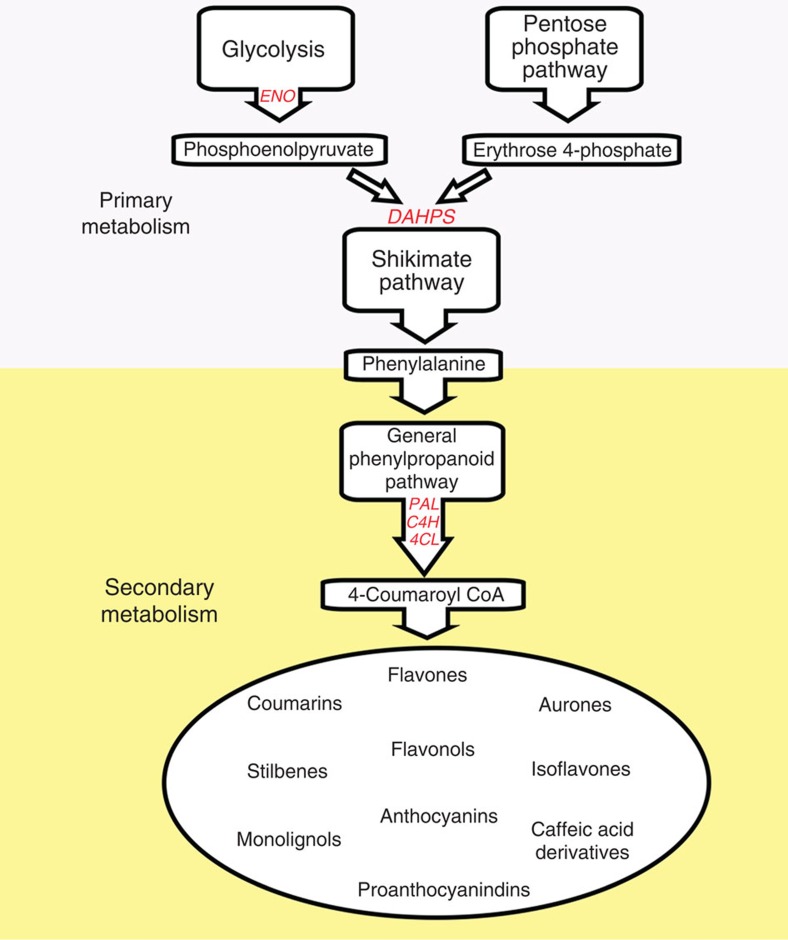
Figure 1
Figure 1. Schematic representation of the phenylpropanoid pathway in plants and its relationships to primary metabolic pathways.
Important primary and secondary metabolic genes are highlighted in red. DAHPS, 3-deoxy-D-arabino-heptulosonate 7-phosphate synthase; ENO, plastidial enolase; PAL, phenylalanine ammonia lyase; C4H, cinnamate 4-hydroxylase; 4CL, 4-coumaroyl CoA ligase.
Figure 2
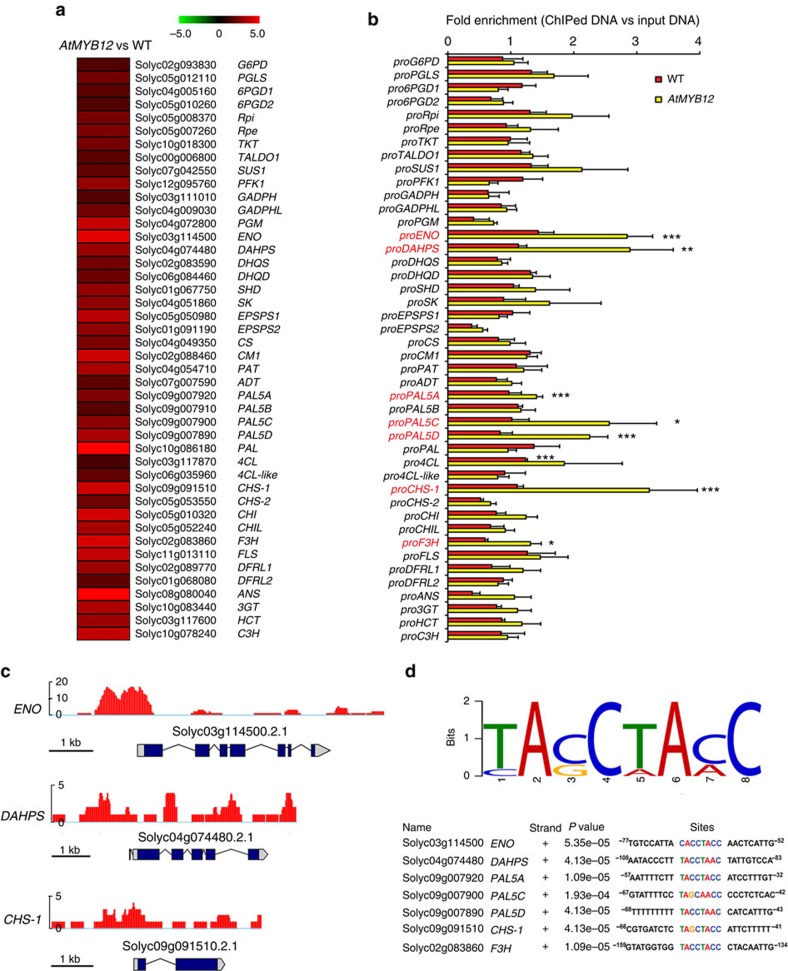
Figure 2. AtMYB12 binds directly to the promoter regions of genes encoding enzymes of both primary and secondary metabolism to promote flavonoid biosynthesis in tomato.
(a) RNA-seq showed that genes involved in the pentose phosphate pathway, glycolysis, the shikimate pathway and flavonoid biosynthesis were upregulated in AtMYB12 tomatoes compared with controls. The heat map compares transcript levels in AtMYB12 tomatoes with those in WT fruit. Absolute values are scaled by log2. Gene IDs and abbreviations are explained in Supplementary Table 6. (b) AtMYB12 binds directly to the promoter regions of seven genes encoding enzymes of both primary and secondary metabolism (highlighted in red), as shown by ChIP-qPCR analysis of AtMYB12 binding in the promoter regions of genes shown in a. ACTIN was used as internal control. The promoter sequence enrichment compared with ACTIN was calculated for each sample. Data are presented as the ratio between ChIPed DNA and Input DNA. Error bars represent s.e.m. (n=3). *(P<0.15), **(P<0.10) and ***(P<0.05) (Student's t-test) indicate significant enrichment compared with input DNA. (c) ChIP-sequencing data of AtMYB12 binding sites in the ENO, DAHPS and CHS1 promoters. Scale bars, 1 kb. (d) Predicted binding motif of AtMYB12 in tomato. Sequence alignment was performed using MEME. Numbers indicate the nucleotide positions from the start of transcription.
Figure 3
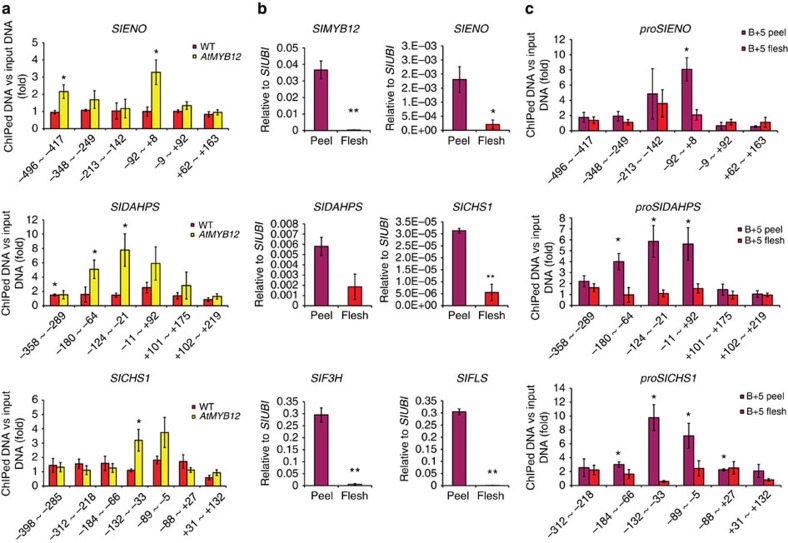
Figure 3. AtMYB12 and SlMYB12 bind directly to the promoter regions of SlENO, SlDAHPS and SlCHS1.
(a) Binding of AtMYB12 to the regions of SlENO, SlDAHPS and SlCHS1 was analysed by ChIP-qPCR. Pericarp (peel plus flesh) samples of WT and AtMYB12 fruit were harvested at 3 days after breaker. The numbers on the horizontal axis below the bars correspond to the left and right border of the amplified region relative to the transcription start site and bars indicate means and s.e.m.'s (n=3); asterisks indicate significant differences compared with the negative control (P value<0.05, Student's t-test). (b) SlMYB12 expression is predominantly in the peel of WT tomato fruit and is associated with elevated expression of genes involved in both primary and secondary metabolism. Expression of SlMYB12, SlENO, SlDAHPS, SlCHS1, SlF3H and SlFLS was measured by qRT-PCR in both peel and flesh of WT fruit at 5 days after breaker. Error bars show s.e.m. (n=3), *(P<0.05) and **(P<0.01) indicate significant differences (Student's t-test). (c) Binding of SlMYB12 to the promoters of SlENO, SlDAHPS and SlCHS1 was confirmed by ChIP-qPCR. Peel and flesh samples of WT fruit were harvested at 5 days after breaker. The numbers on the horizontal axis below the bars correspond to the left and right borders of the amplified regions relative to the initial transcription start site, and bars indicate means and s.e.m.'s (n=3); asterisks indicate significant differences compared with the negative control (P value<0.05, Student's t-test).
Figure 4
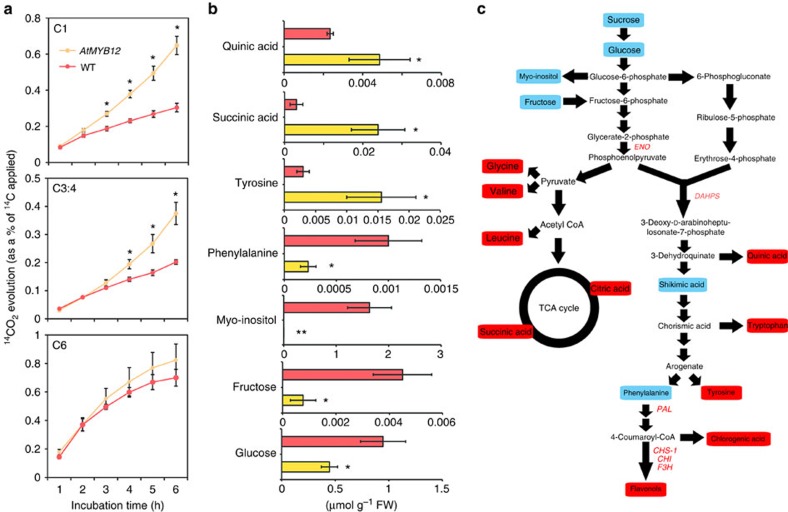
Figure 4. AtMYB12 changes the flux of carbon in tomato fruit.
(a) Respiratory parameters in fruits of AtMYB12 and WT. Evolution of 14CO2 from C1, C3:C4 and C6 position of glucose in pericarp discs of AtMYB12 and WT tomato fruit 10 days post breaker (10 dpb). Values are means ±s.e.m. of determinations on four independent samples and asterisks indicate values that were significantly different (P<0.05) from WT (Student's t-test). (b) Redistribution of 13C label following incubation of AtMYB12 (yellow) and WT (red) tomato fruits (10 dpb). The absolute isotope redistribution (μmol g−1 FW) is shown after an incubation period of 4 h with [U-13C] glucose. Values are means ±s.e. of determinations on four independent samples; and asterisks indicate values that were significantly different *(P<0.05) from WT (Student's t-test). (c) Pathway scheme summarizing the metabolic changes in AtMYB12 tomato compared with WT fruit. Data from RNA-seq, ChIP-qPCR, isotope feeding experiments and metabolomic analyses are summarized. Metabolites which changed significantly (P<0.05, Student's t-test) in AtMYB12 tomatoes compared with WT are highlighted in red (for increased) and blue (for decreased). Black arrows represent a route rather than a single metabolic reaction and thus may be comprised of multiple reactions. Genes highlighted in red are direct targets of AtMYB12 as revealed by RNA-seq and ChIP-qPCR data.
Figure 5
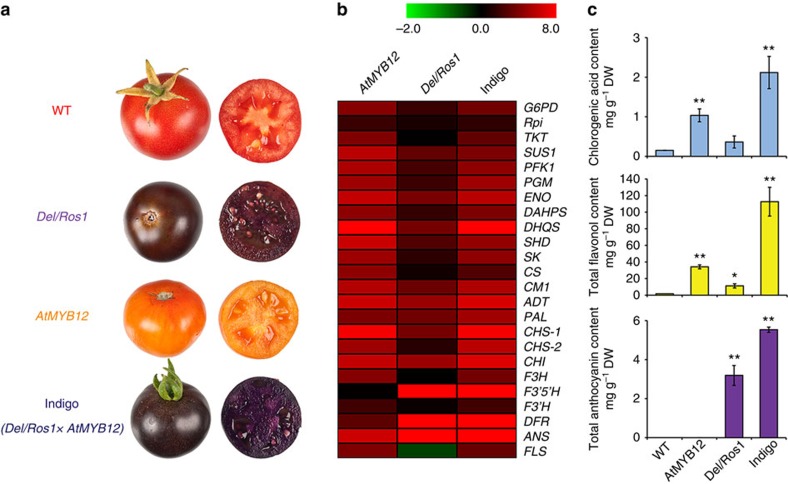
Figure 5. Co-expression of AtMYB12 with other transcription factors in tomato fruit enhances phenylpropanoid production.
(a) Phenotypes of WT, AtMYB12, Del/Ros1 and Indigo (Del/Ros1 × AtMYB12) tomato fruit. Pictures were taken at seven days after breaker. (b) RT-qPCR data indicated that AtMYB12 activates expression of genes encoding enzymes of primary metabolism and first stages of flavonoid biosynthesis, while Del/Ros1 mainly activates genes encoding enzymes late in flavonoid biosynthesis. For Indigo tomato, however, all genes encoding enzymes of primary and secondary metabolism were highly upregulated. The heat map compares transcript levels in the different tomato lines to those in WT fruit. Absolute values are scaled by log2. The details of all genes are explained in Supplementary Table 7. (c) The contents of the major phenylpropanoids (CGA, flavonols and anthocyanins) were significantly increased in Indigo tomatoes compared with other tomato lines. Asterisks indicate values that were significantly different *(P<0.05), **(P<0.01) from WT (Student's t-test). Error bars show s.e.m. (n=3).
Figure 6
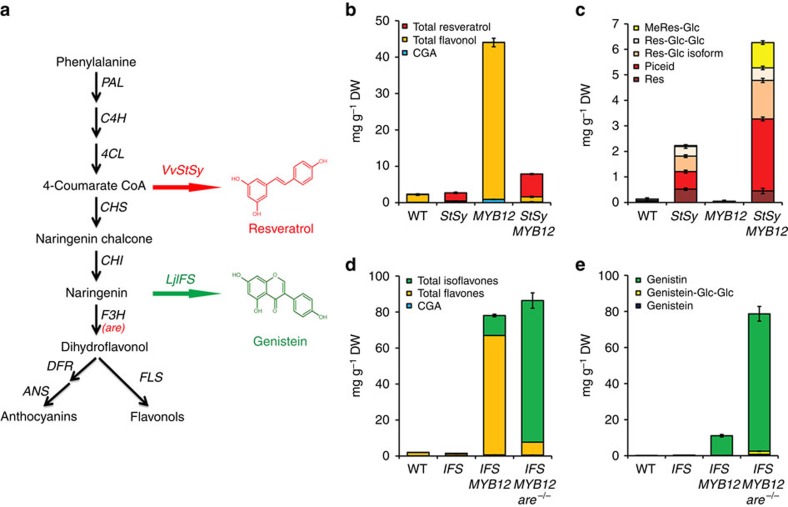
Figure 6. Co-expression of AtMYB12 with other structural genes in tomato fruit enhances novel phenylpropanoid production.
(a) Schematic representation of resveratrol and genistein biosynthesis. Both pathways arise from flavonoid biosynthesis (in black) by the addition of VvStSy and LjIFS respectively. After synthesis, both resveratrol and genistein are glycosylated to form piceid and genistin. The naturally occurring are mutant is deficient in F3H activity. (b) The contents of CGA, total flavonols and total resveratrol compounds in different genotypes. Fruit were harvested 10 days after breaker. Error bars show s.e.m. (n=3). (c) The detailed contents of resveratrol (Res), piceid, resveratrol-glycoside isoform (Res-Glc Isoform), resveratrol-di-glycosides (Res-Glc-Glc) and methylated resveratrol-glycosides (MeRes-Glc) in different genotypes. Error bars show s.e.m. (n=3). (d) The contents of CGA, total flavonols and total isoflavones in different genotypes. Fruit were harvested 10 days after breaker. Error bars show s.e.m. (n=3). (e) The detailed contents of genistein, genistin and genistein-di-glucosides (genistein-Glc-Glc) in different genotypes. Error bars show s.e.m. (n=3).

References

    1. Bovy A. et al. High-flavonol tomatoes resulting from the heterologous expression of the maize transcription factor genes LC and C1. Plant Cell 14, 2509–2526 (2002). - PMC - PubMed
    1. Butelli E. et al. Enrichment of tomato fruit with health-promoting anthocyanins by expression of select transcription factors. Nat. Biotechnol. 26, 1301–1308 (2008). - PubMed
    1. Luo J. et al. AtMYB12 regulates caffeoyl quinic acid and flavonol synthesis in tomato: expression in fruit results in very high levels of both types of polyphenol. Plant J. 56, 316–326 (2008). - PubMed
    1. Herrmann K. M. & Weaver L. M. The Shikimate Pathway. Annu. Rev. Plant. Physiol. Plant. Mol. Biol. 50, 473–503 (1999). - PubMed
    1. Tzin V. et al. Expression of a bacterial feedback-insensitive 3-deoxy-D-arabino-heptulosonate 7-phosphate synthase of the shikimate pathway in Arabidopsis elucidates potential metabolic bottlenecks between primary and secondary metabolism. New Phytol. 194, 430–439 (2012). - PubMed

Publication types

MeSH terms