


Comparison of end-of-life care for older people living at home and in residential homes: a mortality follow-back study among GPs in the Netherlands
- PMID: 26500319
- PMCID: PMC4617266
- DOI: 10.3399/bjgp15X687349
Comparison of end-of-life care for older people living at home and in residential homes: a mortality follow-back study among GPs in the Netherlands
Abstract
Background: The proportion of older people is increasing, therefore their place of residence and place of care at the end of life are becoming increasingly important.
Aim: To compare aspects of end-of-life care among older people in residential homes and home settings in the Netherlands.
Design and setting: Nationwide representative mortality follow-back study among GPs in the Netherlands.
Method: The study included patients aged ≥65 years who died non-suddenly, whose longest place of residence in their last year of life was at home or in a residential home (n = 498). Differences were analysed using Pearson's χ(2) test, Mann-Whitney U tests, and multivariate logistic regression.
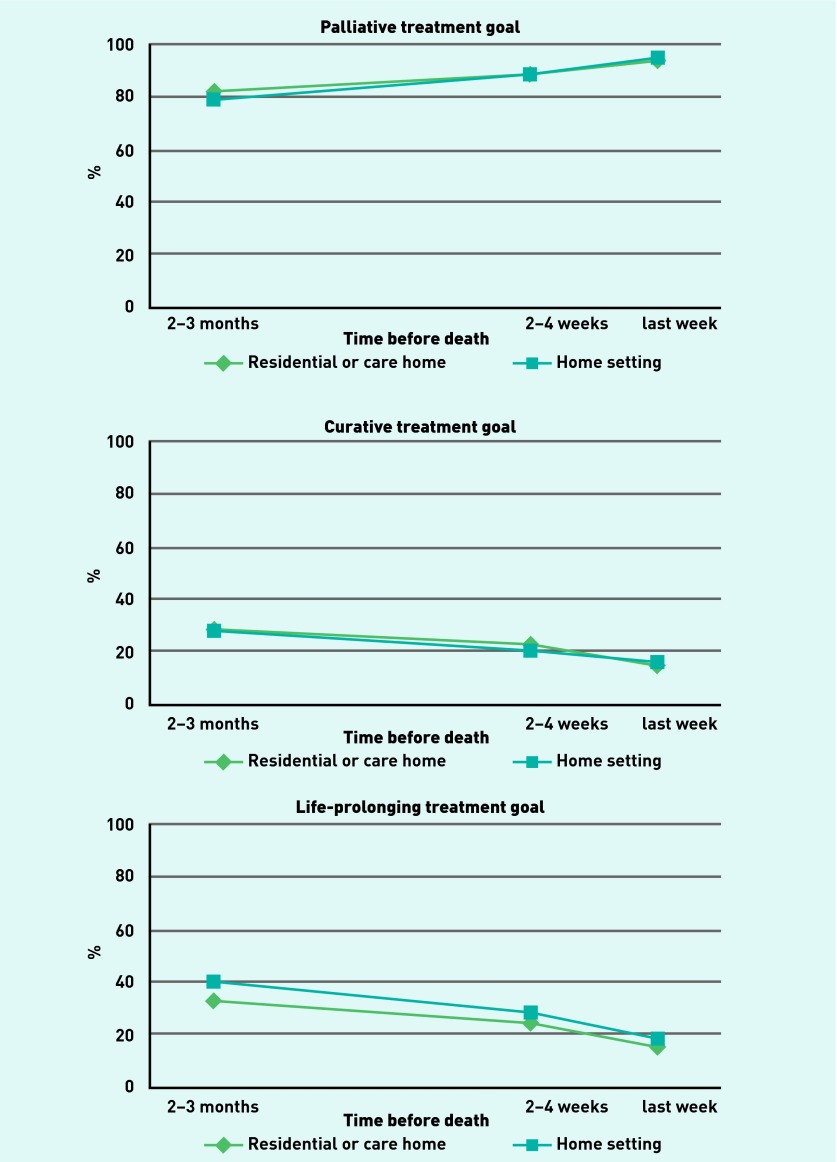
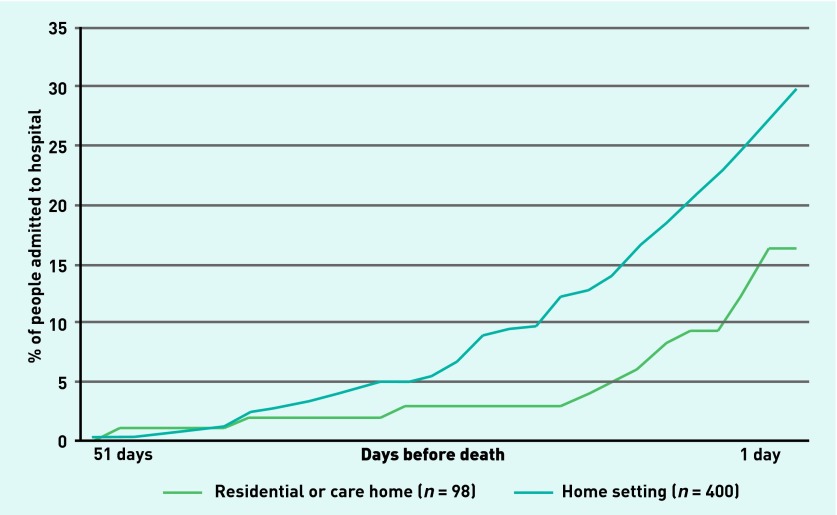
Results: Controlling for the differences between the populations in home settings and residential homes, no differences were found in treatment goals, communication about end-of-life care, or use of specialised palliative care between the two settings. However, people living in a residential home were more likely to have received palliative care from a GP than people living at home (OR 2.84, 95% confidence interval [CI] = 1.41 to 5.07). In residential homes, people more often experienced no transfer between care settings (OR 2.76, 95% CI = 1.35 to 5.63) and no hospitalisations (OR 2.2, 95% CI = 1.04 to 4.67) in the last 3 months of life, and died in hospital less often (OR 0.78, 95% CI = 0.63 to 0.97) than those people living at home.
Conclusion: Despite similar treatment goals, care in residential homes seems more successful in avoiding transfers and hospitalisation at the end of life. Especially since older people are encouraged to stay at home longer, measures should be taken to ensure they are not at higher risk of transfers and hospitalisations in this setting.
Keywords: end of life care; general practitioner; palliative care; residential facilities; terminal care.
© British Journal of General Practice 2015.
Figures
References
-
- Social Protection Committee. European Commission . Adequate social protection for long-term care needs in an ageing society. Brussels: European Commission; 2014.
-
- Polder JJ, Barendregt JJ, Van Oers H. Health care costs in the last year of life: the Dutch experience. Soc Sci Med. 2006;63(7):1720–1731. - PubMed
-
- Langton JM, Blanch B, Drew AK, et al. Retrospective studies of end-of-life resource utilization and costs in cancer care using health administrative data: a systematic review. Palliat Med. 2014;28(10):1167–1196. - PubMed
-
- Gardiner C, Brereton L, Frey R, et al. Exploring the financial impact of caring for family members receiving palliative and end-of-life care: a systematic review of the literature. Palliat Med. 2014;28(5):375–390. - PubMed
Publication types
MeSH terms
LinkOut - more resources
Full Text Sources
Medical
