


Melatonin as a Potent and Inducible Endogenous Antioxidant: Synthesis and Metabolism
- PMID: 26501252
- PMCID: PMC6332205
- DOI: 10.3390/molecules201018886
Melatonin as a Potent and Inducible Endogenous Antioxidant: Synthesis and Metabolism
Abstract
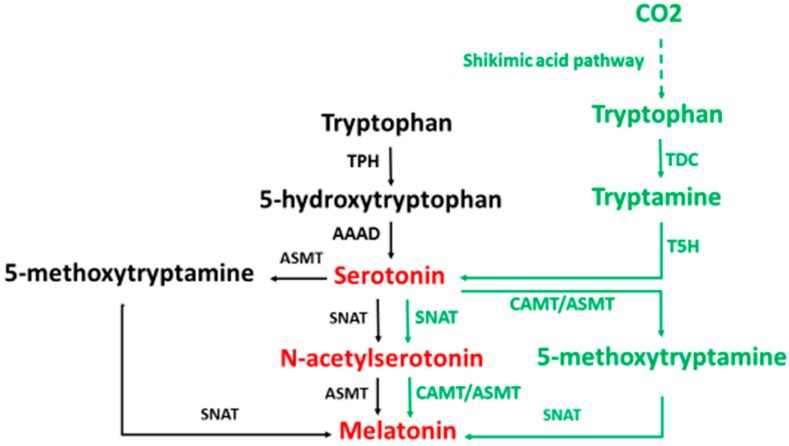
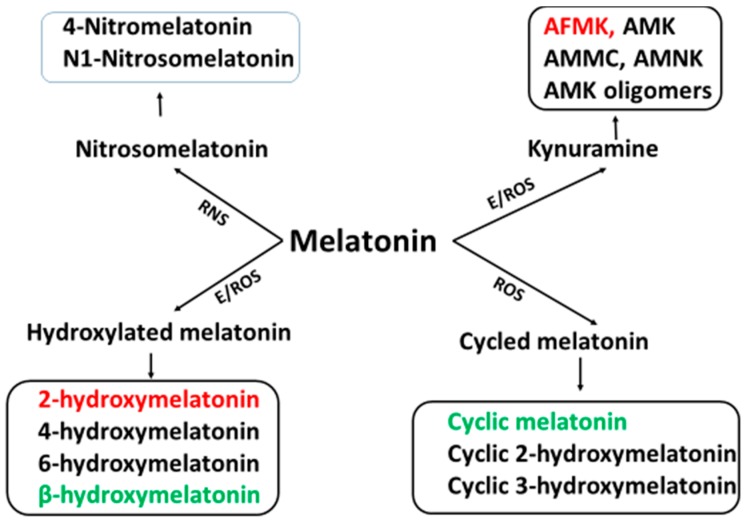
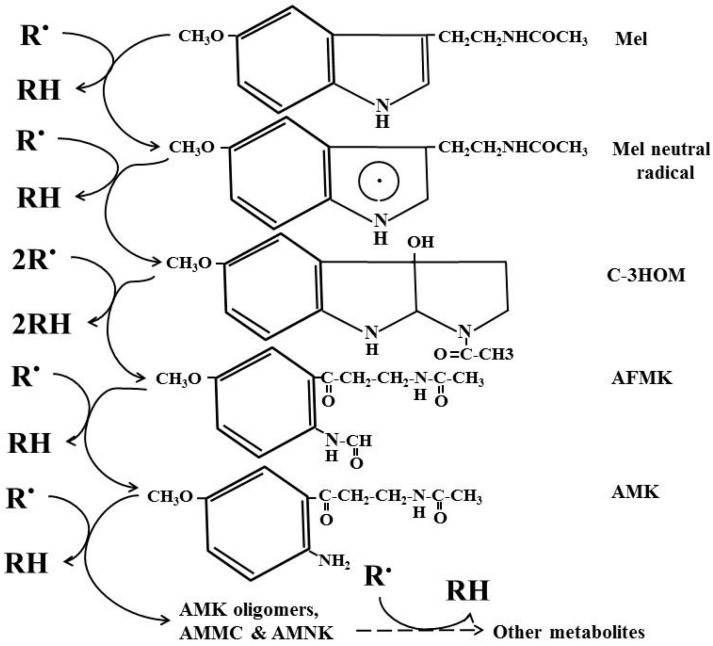
Melatonin is a tryptophan-derived molecule with pleiotropic activities. It is present in almost all or all organisms. Its synthetic pathway depends on the species in which it is measured. For example, the tryptophan to melatonin pathway differs in plants and animals. It is speculated that the melatonin synthetic machinery in eukaryotes was inherited from bacteria as a result of endosymbiosis. However, melatonin's synthetic mechanisms in microorganisms are currently unknown. Melatonin metabolism is highly complex with these enzymatic processes having evolved from cytochrome C. In addition to its enzymatic degradation, melatonin is metabolized via pseudoenzymatic and free radical interactive processes. The metabolic products of these processes overlap and it is often difficult to determine which process is dominant. However, under oxidative stress, the free radical interactive pathway may be featured over the others. Because of the complexity of the melatonin degradative processes, it is expected that additional novel melatonin metabolites will be identified in future investigations. The original and primary function of melatonin in early life forms such as in unicellular organisms was as a free radical scavenger and antioxidant. During evolution, melatonin was selected as a signaling molecule to transduce the environmental photoperiodic information into an endocrine message in multicellular organisms and for other purposes as well. As an antioxidant, melatonin exhibits several unique features which differ from the classic antioxidants. These include its cascade reaction with free radicals and its capacity to be induced under moderate oxidative stress. These features make melatonin a potent endogenously-occurring antioxidant that protects organisms from catastrophic oxidative stress.
Keywords: antioxidant; melatonin; metabolism; oxidative stress; plants; synthesis.
Conflict of interest statement
The authors declare no conflicts of interest.
Figures
References
-
- Lerner A.B., Case J.D., Takahashi Y. Isolation of melatonin, a pineal factor that lightens melanocytes. J. Am. Soc. 1958;80:2587. doi: 10.1021/ja01543a060. - DOI
Publication types
MeSH terms
Substances
LinkOut - more resources
Full Text Sources
Other Literature Sources
Medical
Research Materials
