


On transcending the impasse of respiratory motion correction applications in routine clinical imaging - a consideration of a fully automated data driven motion control framework
- PMID: 26501450
- PMCID: PMC4673082
- DOI: 10.1186/2197-7364-1-8
On transcending the impasse of respiratory motion correction applications in routine clinical imaging - a consideration of a fully automated data driven motion control framework
Abstract
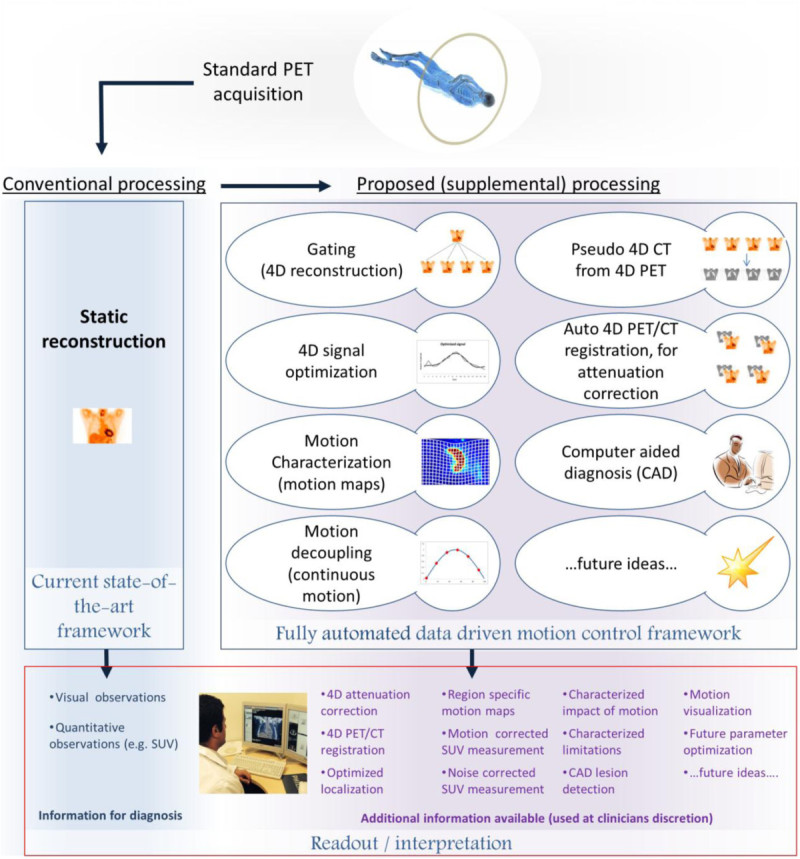
Positron emission tomography (PET) is increasingly used for the detection, characterization, and follow-up of tumors located in the thorax. However, patient respiratory motion presents a unique limitation that hinders the application of high-resolution PET technology for this type of imaging. Efforts to transcend this limitation have been underway for more than a decade, yet PET remains for practical considerations a modality vulnerable to motion-induced image degradation. Respiratory motion control is not employed in routine clinical operations. In this article, we take an opportunity to highlight some of the recent advancements in data-driven motion control strategies and how they may form an underpinning for what we are presenting as a fully automated data-driven motion control framework. This framework represents an alternative direction for future endeavors in motion control and can conceptually connect individual focused studies with a strategy for addressing big picture challenges and goals.
Keywords: Data-driven gating; Motion control framework; Motion correction; PET; Respiratory gating; Signal optimization.
Figures
References
-
- Sureshbabu W, Mawlawi O. PET/CT imaging artifacts. J Nucl Med Technol. 2005;33:156–161. - PubMed
-
- Guerra L, De Ponti E, Elisei F, Bettinardi V, Landoni C, Picchio M, Gilardi MC, Versari A, Fioroni F, Dziuk M, Koza M, Ahond-Vionnet R, Collin B, Messa C. Respiratory gated PET/CT in a European multicentre retrospective study: added diagnostic value in detection and characterization of lung lesions. Eur J Nucl Med Mol Imaging. 2012;39:1381–1390. doi: 10.1007/s00259-012-2148-2. - DOI - PubMed
LinkOut - more resources
Full Text Sources
Other Literature Sources
