Hypoglycemia and Risk Factors for Death in 13 Years of Pediatric Admissions in Mozambique
- PMID: 26503282
- PMCID: PMC4710433
- DOI: 10.4269/ajtmh.15-0475
Hypoglycemia and Risk Factors for Death in 13 Years of Pediatric Admissions in Mozambique
Abstract
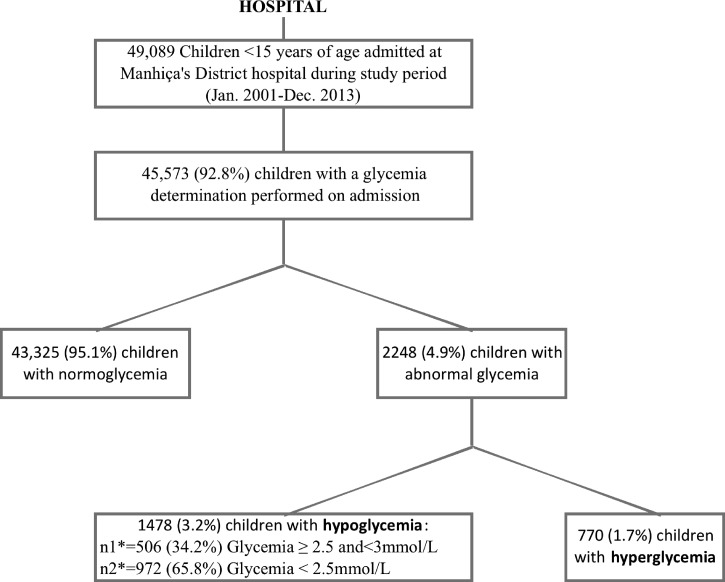
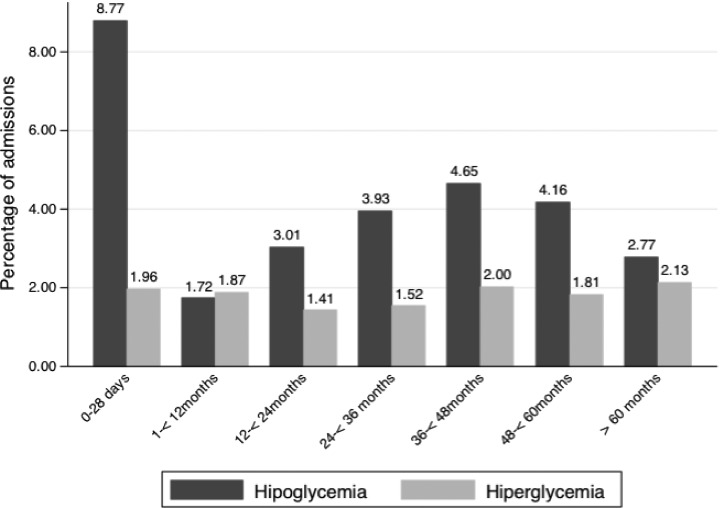
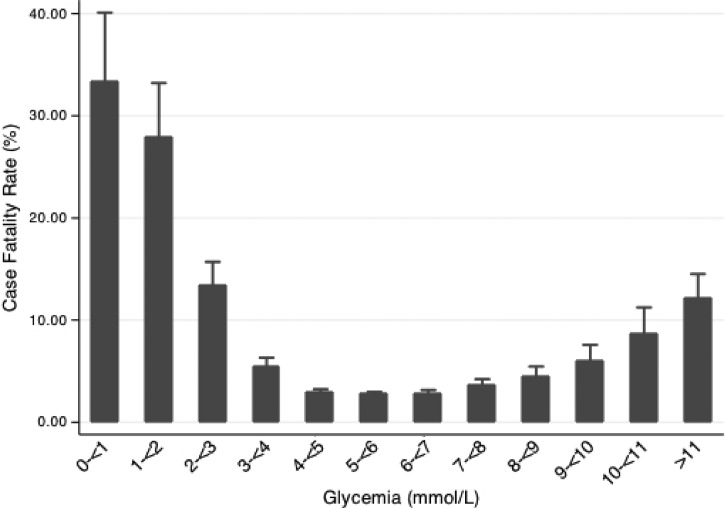
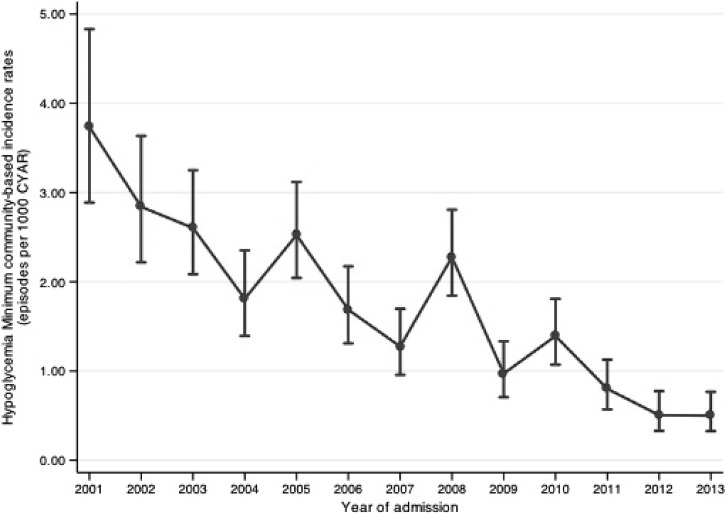
Hypoglycemia is a life-threatening complication of several diseases in childhood. We describe the prevalence and incidence of hypoglycemia among admitted Mozambican children, establishing its associated risk factors. We retrospectively reviewed clinical data of 13 years collected through an ongoing systematic morbidity surveillance in Manhiça District Hospital in rural Mozambique. Logistic regression was used to identify risk factors for hypoglycemia and death. Minimum community-based incidence rates (MCBIRs) for hypoglycemia were calculated using data from the demographic surveillance system. Of 49,089 children < 15 years hospitalized in Manhiça District Hospital, 45,573 (92.8%) had a glycemia assessment on admission. A total of 1,478 children (3.2%) presented hypoglycemia (< 3 mmol/L), of which about two-thirds (972) were with levels < 2.5 mmol/L. Independent risk factors for hypoglycemia on admission and death among hypoglycemic children included prostration, unconsciousness, edema, malnutrition, and bacteremia. Hypoglycemic children were significantly more likely to die (odds ratio [OR] = 7.11; P < 0.001), with an associated case fatality rate (CFR) of 19.3% (245/1,267). Overall MCBIR of hypoglycemia was 1.57 episodes/1,000 child years at risk (CYAR), significantly decreasing throughout the study period. Newborns showed the highest incidences (9.47 episodes/1,000 CYAR, P < 0.001). Hypoglycemia remains a hazardous condition for African children. Symptoms and signs associated to hypoglycemia should trigger the verification of glycemia and the implementation of life-saving corrective measures.
© The American Society of Tropical Medicine and Hygiene.
Figures
References
-
- Hirshberg E, Larsen G, Van Duker H. Alterations in glucose homeostasis in the pediatric intensive care unit: hyperglycemia and glucose variability are associated with increased mortality and morbidity. Pediatr Crit Care Med. 2008;9:361–366. - PubMed
-
- Ognibene KL, Vawdrey DK, Biagas KV. The association of age, illness severity, and glycemic status in a pediatric intensive care unit. Pediatr Crit Care Med. 2011;12:e386–e390. - PubMed
-
- Zijlmans WC, van Kempen AA, Serlie MJ, Kager PA, Sauerwein HP. Adaptation of glucose metabolism to fasting in young children with infectious diseases: a perspective. J Pediatr Endocrinol Metab. 2013;27:5–13. - PubMed
Publication types
MeSH terms
Substances
LinkOut - more resources
Full Text Sources
Other Literature Sources
Medical