


Clinico-epidemiological analysis of Post kala-azar dermal leishmaniasis (PKDL) cases in India over last two decades: a hospital based retrospective study
- PMID: 26503551
- PMCID: PMC4621871
- DOI: 10.1186/s12889-015-2424-8
Clinico-epidemiological analysis of Post kala-azar dermal leishmaniasis (PKDL) cases in India over last two decades: a hospital based retrospective study
Abstract
Background: Patients with Post kala-azar dermal leishmaniasis (PKDL) are considered a reservoir of Leishmania donovani. It is imperative to identify and treat them early for control of visceral leishmaniasis (VL), a current priority in the Indian subcontinent. We explored trends in clinico-epidemiological features of PKDL cases over last two decades, for improving management of the disease.
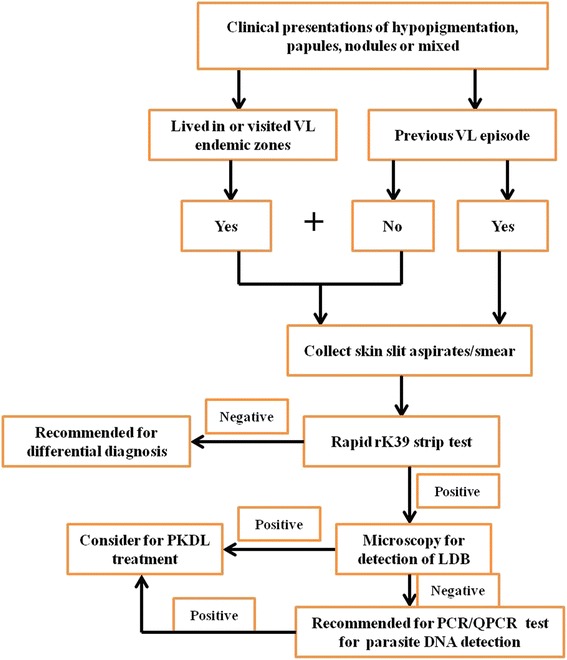
Methods: Clinically suspected cases were diagnosed with rK39 strip test followed by parasitological confirmation by microscopy and/or PCR/qPCR in skin tissue/slit aspirates. Patients were treated with antimonials till 2008 and subsequently with miltefosine.
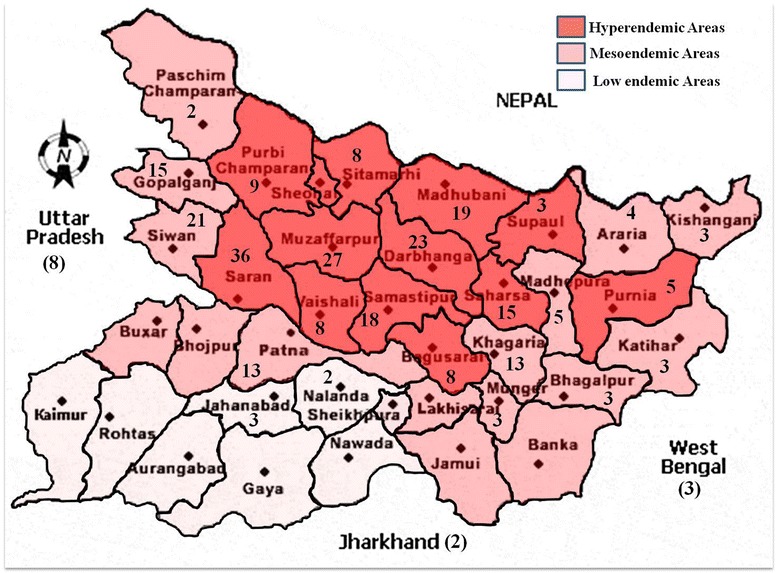
Results: The study indicated higher incidence of PKDL cases in areas of high endemicity for VL, with 20 % cases reporting no history of VL. Approximately 26 % cases of PKDL were initially misdiagnosed at primary health centers. Duration between onset of PKDL and diagnosis was above 12 months in 80 % cases. Diagnostic sensitivity was 32-36 % with microscopy and 96-100 % with PCR/qPCR. Compliance to treatment was over 85 % with miltefosine while 15 % with antimonials. Relapse rate with miltefosine was up to 13.2 %.
Conclusions: PKDL patients tend to delay reporting and are often misdiagnosed. Confirmatory diagnosis using minimally invasive skin slit aspirate samples would help overcome such issues. There was a paradigm shift in compliance with miltefosine; however, increasing relapse rate indicated the need for newer therapies with oral formulations.
Figures
References
-
- World Health Organization Control of the leishmaniases. World Health Organ Tech Rep Ser. 2010;949:22–6. - PubMed
MeSH terms
Substances
LinkOut - more resources
Full Text Sources
Other Literature Sources
