


Dementia priority setting partnership with the James Lind Alliance: using patient and public involvement and the evidence base to inform the research agenda
- PMID: 26504119
- PMCID: PMC4621237
- DOI: 10.1093/ageing/afv143
Dementia priority setting partnership with the James Lind Alliance: using patient and public involvement and the evidence base to inform the research agenda
Abstract
Background: The James Lind Alliance (JLA) created an approach to elicit the views of those under-represented in research priority exercises. Building on this, the JLA Dementia Priority Setting Partnership was set up as an independent and evidence-based project to identify and prioritise unanswered questions ('uncertainties') about prevention, diagnosis, treatment and care relating to dementia.
Methods: A survey was widely disseminated to stakeholders with an interest in the needs of the older population. Thematic analysis was used to identify themes from the large amount of questions collected from which research questions were developed using PICO framework (Population, Intervention, Comparator, Outcome). Each question was checked against an extensive evidence base of high-quality systematic reviews to verify whether they were true uncertainties.
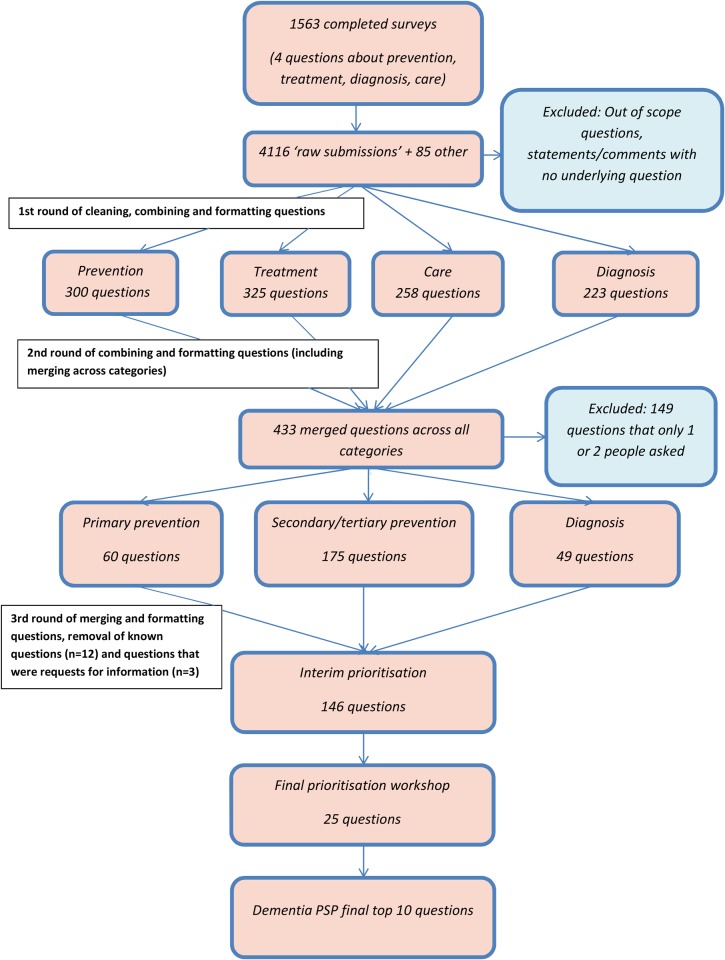
Findings: One thousand five hundred and sixty-three questionnaires were received, from people with dementia, carers/relatives, and health and care professionals; 85 uncertainties were identified from other sources. Questions were refined and formatted iteratively into 146 unique uncertainties. An interim prioritisation process involving diverse organisations identified the top 25 ranked questions. At a final face-to-face prioritisation workshop, 18 people representing the above constituencies arrived by consensus at the top 10 priority questions. The impact of patient and public involvement on the priorities is discussed.
Interpretation: The long (146 questions) and top 10 lists of dementia research priorities provide a focus for researchers, funders and commissioners. They highlight a need for more research into care for people with dementia and carers, and a need for high-quality effectiveness trials in all aspects of dementia research.
Keywords: James Lind Alliance; PPI; care; carer; dementia; diagnosis; older people; patient and public involvement; prevention; priority setting; public health; survey; treatment.
© The Author 2015. Published by Oxford University Press on behalf of the British Geriatrics Society.
Figures
References
-
- Lakey L, Chandaria K, Quince C, Kane M, Saunders T. Dementia 2012: A National Challenge. London: Alzheimer's Society, 2012.
-
- Department of Health. Living Well with Dementia: A National Dementia Strategy. London, UK: Department of Health, 2009.
-
- Prince M, Bryce R, Albanese E, Wimo A, Ribeiro W, Ferri CP. The global prevalence of dementia: a systematic review and metaanalysis. Alzheimers Dement 2013; 9: 63–75. - PubMed
-
- Alzheimer's Disease International. Global Impact of Dementia 2013–2050. London: Alzheimer's Disease International, 2013.
Publication types
MeSH terms
Grants and funding
LinkOut - more resources
Full Text Sources
Other Literature Sources
Medical
