


Muscle Activation of Vastus Medialis Oblique and Vastus Lateralis in Sling-Based Exercises in Patients with Patellofemoral Pain Syndrome: A Cross-Over Study
- PMID: 26504480
- PMCID: PMC4609425
- DOI: 10.1155/2015/740315
Muscle Activation of Vastus Medialis Oblique and Vastus Lateralis in Sling-Based Exercises in Patients with Patellofemoral Pain Syndrome: A Cross-Over Study
Abstract
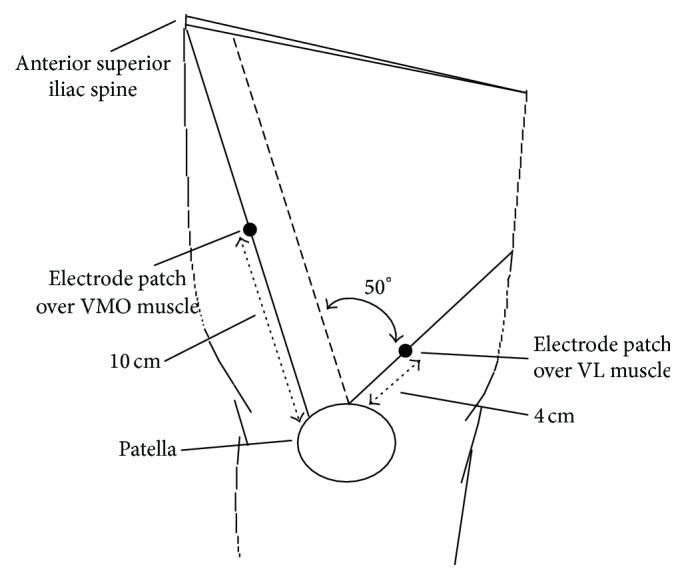
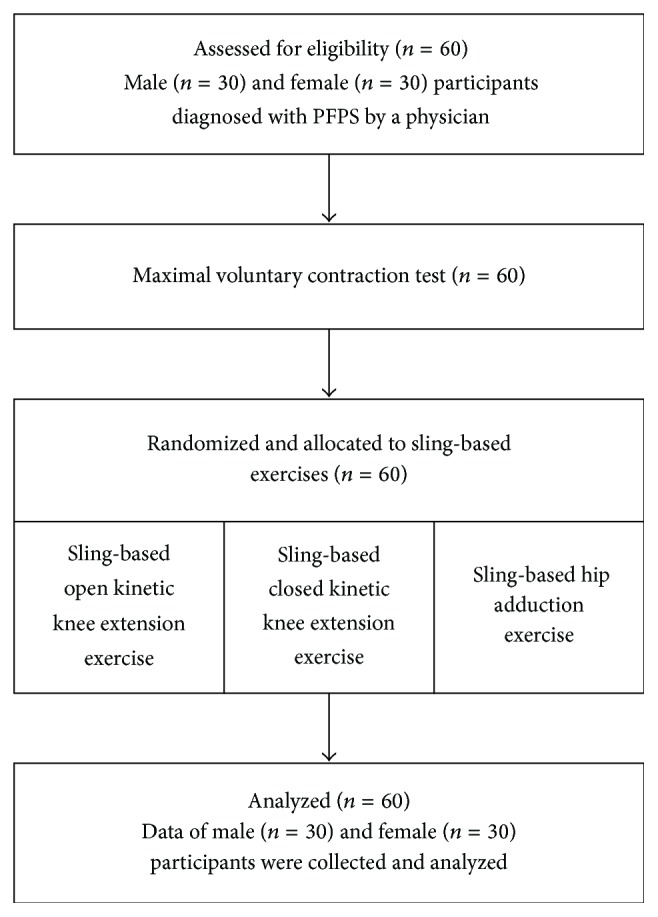
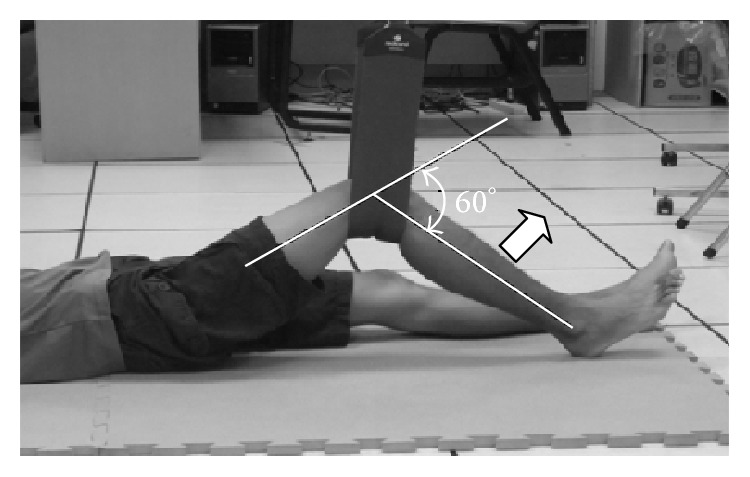
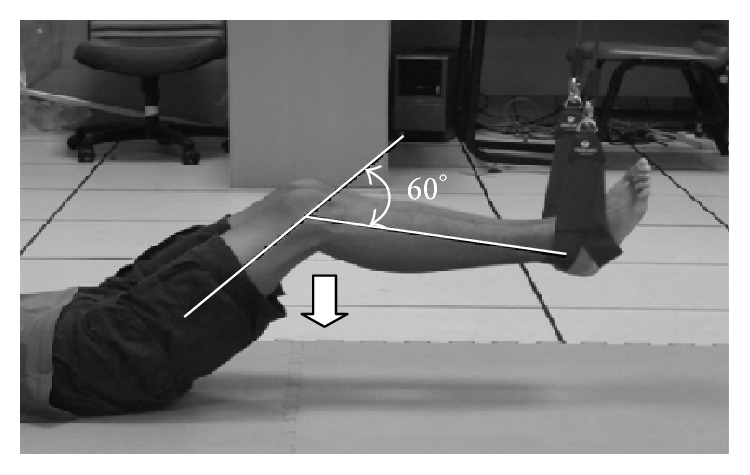
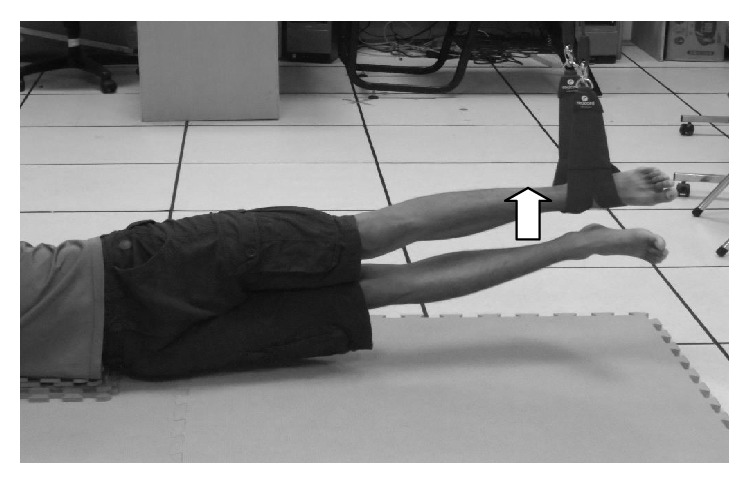
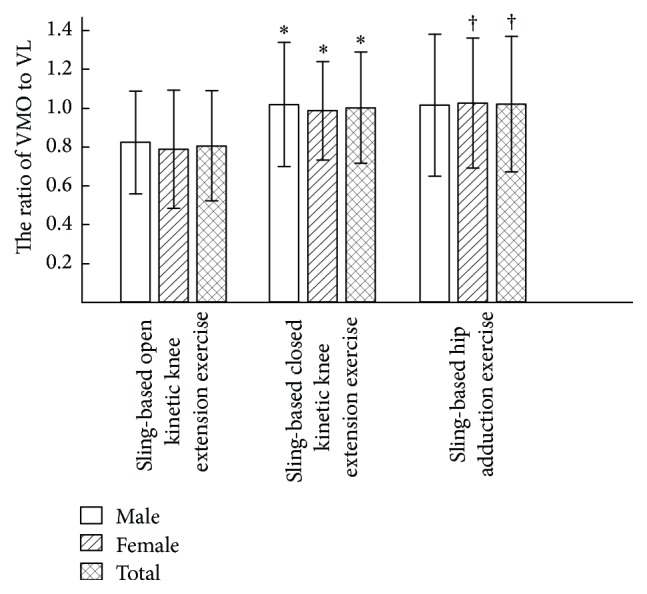
Objectives. To examine what changes are caused in the activity of the vastus medialis oblique (VMO) and vastus lateralis (VL) at the time of sling-based exercises in patients with patellofemoral pain syndrome (PFPS) and compare the muscular activations in patients with PFPS among the sling-based exercises. Methods. This was a cross-over study. Sling-based open and closed kinetic knee extension and hip adduction exercises were designed for PFPS, and electromyography was applied to record maximal voluntary contraction during the exercises. The VMO and VL activations and VMO : VL ratios for the three exercises were analyzed and compared. Results. Thirty male (age = 21.19 ± 0.68 y) and 30 female (age = 21.12 ± 0.74 y) patients with PFPS were recruited. VMO activations during the sling-based open and closed kinetic knee extension exercises were significantly higher (P = 0.04 and P = 0.001) than those during hip adduction exercises and VMO : VL ratio for the sling-based closed kinetic knee extension and hip adduction exercises approximated to 1. Conclusions. The sling-based closed kinetic knee extension exercise produced the highest VMO activation. It also had an appropriate VMO : VL ratio similar to sling-based hip adduction exercise and had beneficial effects on PFPS.
Figures
References
-
- Souza D. R., Gross M. T. Comparison of vastus medialis obliquus: vastus lateralis muscle integrated electromyographic ratios between healthy subjects and patients with patellofemoral pain. Physical Therapy. 1991;71(4):310–316. - PubMed
-
- Powers C. M. Patellar kinematics, part I: the influence of vastus muscle activity in subjects with and without patellofemoral pain. Physical Therapy. 2000;80(10):956–964. - PubMed
LinkOut - more resources
Full Text Sources
Other Literature Sources
Medical
