


Epidemiology of meniscal injuries in US high school athletes between 2007 and 2013
- PMID: 26506845
- PMCID: PMC5189670
- DOI: 10.1007/s00167-015-3814-2
Epidemiology of meniscal injuries in US high school athletes between 2007 and 2013
Abstract
Purpose: Knowledge of epidemiologic trends of meniscal injuries in young active populations is limited. Better awareness of injury patterns is a first step to lowering injury rates. Our hypothesis was that meniscal injuries in high school athletes would vary by gender, sport, and type of exposure.
Methods: During the 2007/2008 and 2012/2013 academic years, a large nationally disperse sample of US high schools reported athlete exposure and injury data for 22 sports by having certified athletic trainers complete an internet-based data collection tool.
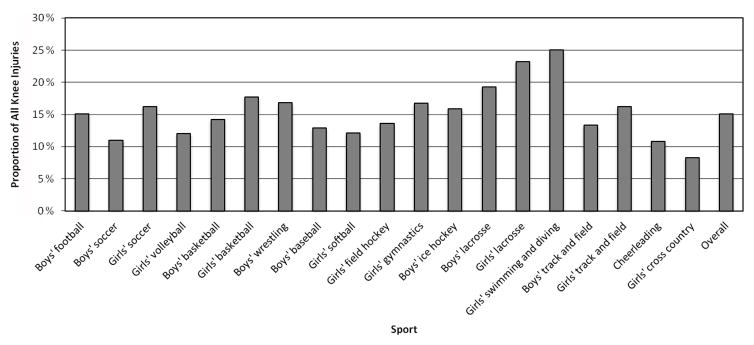
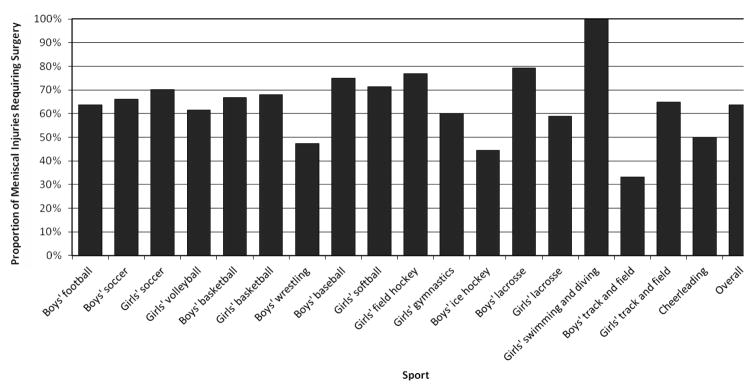
Results: One thousand and eighty-two meniscal injuries were reported during 21,088,365 athlete exposures for an overall injury rate of 5.1 per 100,000 athlete exposures. The overall rate of injury was higher in competition (11.9) than practice (2.7) (RR = 4.4; 95% CI 3.9-5.0), and 12/19 sports showed significantly higher injury rates in competition compared to practice. Of all injuries, 68.0% occurred in boys, yet among the gender-comparable sports of soccer, basketball, track and field, lacrosse, and baseball/softball injury rates were higher for girls than boys (5.5 and 2.5, respectively, RR = 2.2; 95% CI 1.8-2.7). Contact injury represented the most common mechanism (55.9%). Surgery was performed for the majority of injuries (63.8%), and 54.0% of athletes had associated intra-articular knee pathology.
Conclusions: Meniscal injury patterns among high school athletes vary by gender, sport, and type of exposure. Our study is clinically relevant because recognition of distinct differences in these injury patterns will help drive evidence-based, targeted injury prevention strategies and efforts.
Level of evidence: III.
Keywords: Gender; High school athletes; Mechanism of injury; Meniscus.
Figures
References
-
- Abdon P, Bauer M. Incidence of meniscal lesions in children. Increase associated with diagnostic arthroscopy. Acta Orthop Scand. 1989;60:710–711. - PubMed
-
- Abrams GD, Frank RM, Gupta AK, et al. Trends in meniscus repair and meniscectomy in the United States, 2005–2011. Am J Sports Med. 2013;41:2333–2339. - PubMed
-
- Baker BE, Peckham AC, Pupparo F, et al. Review of meniscal injury and associated sports. Am J Sports Med. 1985;13:1–4. - PubMed
-
- Baker P, Coggon D, Reading I, et al. Sports injury, occupational physical activity, joint laxity, and meniscal damage. J Rheumatol. 2002;29:557–563. - PubMed
Publication types
MeSH terms
Grants and funding
LinkOut - more resources
Full Text Sources
Other Literature Sources
Medical
