Non-surgical management of knee osteoarthritis: where are we now and where do we need to go?
- PMID: 26509057
- PMCID: PMC4613167
- DOI: 10.1136/rmdopen-2014-000027
Non-surgical management of knee osteoarthritis: where are we now and where do we need to go?
Abstract
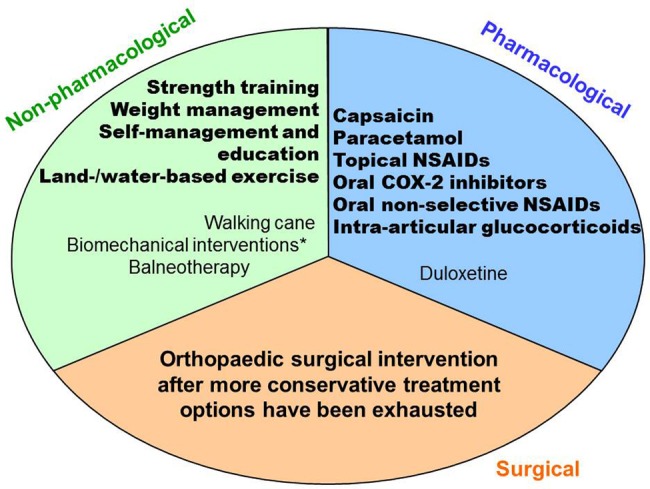
After the successful treatment of inflammatory rheumatic diseases with targeted therapies, the greatest challenge in rheumatic diseases remains the treatment of the most common chronic joint disorder, osteoarthritis. Osteoarthritis (OA) commonly affects the knee, with an age-standardised and sex-standardised incidence of 240 per 100.000 person-years. With the aging of the population and rising obesity throughout the world, it is anticipated that the burden of OA will increase and become a major problem for health systems globally. Given this background, proper guidance on the management of OA is needed. This issue has been addressed over recent months in updated guidelines or recommendations detailing three treatment modalities: non-pharmacological, pharmacological and surgical. It should be noted, that OA is not a uniform disease entity. In some patients, progression of the disease seems to be driven by cartilage factors, in others by bone factors or by inflammatory factors. Ongoing research aims to identify potential biomarkers for these different forms of OA. Research is also underway into disease modifying OA drugs (DMOADs) that target different aspects of the disease, treatments for OA pain, and cell-based therapies.
Keywords: Knee Osteoarthritis; NSAIDs; Occupational therapy; Osteoarthritis.
Figures
References
LinkOut - more resources
Full Text Sources
Other Literature Sources