


Ketamine, Transcranial Magnetic Stimulation, and Depression Specific Yoga and Mindfulness Based Cognitive Therapy in Management of Treatment Resistant Depression: Review and Some Data on Efficacy
- PMID: 26509083
- PMCID: PMC4609854
- DOI: 10.1155/2015/842817
Ketamine, Transcranial Magnetic Stimulation, and Depression Specific Yoga and Mindfulness Based Cognitive Therapy in Management of Treatment Resistant Depression: Review and Some Data on Efficacy
Abstract
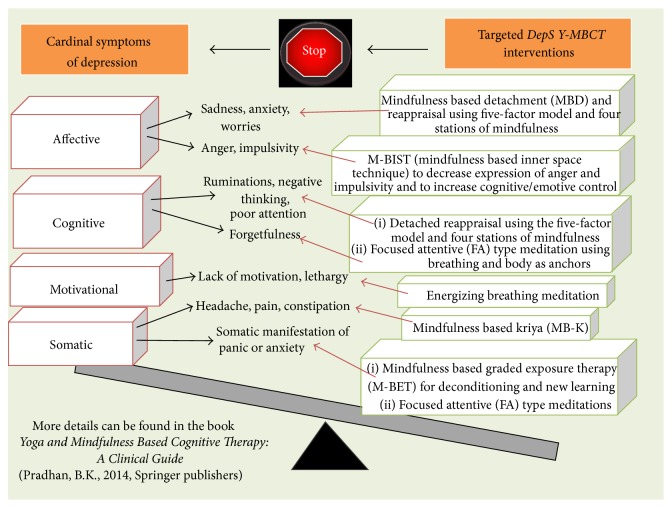
Depression affects about 121 million people worldwide and prevalence of major depressive disorder (MDD) in US adults is 6.4%. Treatment resistant depression (TRD) accounts for approximately 12-20% of all depression patients and costs $29-$48 billion annually. Ketamine and repetitive transcranial magnetic stimulation (rTMS) have useful roles in TRD, but their utility in long term is unknown. As per the latest literature, the interventions using Yoga and meditation including the mindfulness based cognitive therapy (MBCT) have been useful in treatment of depression and relapse prevention. We present a review of rTMS, ketamine, and MBCT and also report efficacy of a depression specific, innovative, and translational model of Yoga and mindfulness based cognitive therapy (DepS Y-MBCT), developed by the first author. DepS Y-MBCT as an adjunctive treatment successfully ameliorated TRD symptoms in 27/32 patients in an open label pilot trial in TRD patients. Considering the limitations of existing treatment options, including those of ketamine and rTMS when used as the sole modality of treatment, we suggest a "tiered approach for TRD" by combining ketamine and rTMS (alone or along with antidepressants) for rapid remission of acute depression symptoms and to use DepS Y-MBCT for maintaining remission and preventing relapse.
Figures
References
Publication types
LinkOut - more resources
Full Text Sources
Other Literature Sources
Medical
Research Materials
