


Environmentally Induced Epigenetic Transgenerational Inheritance of Reproductive Disease
- PMID: 26510870
- PMCID: PMC6058737
- DOI: 10.1095/biolreprod.115.134817
Environmentally Induced Epigenetic Transgenerational Inheritance of Reproductive Disease
Abstract
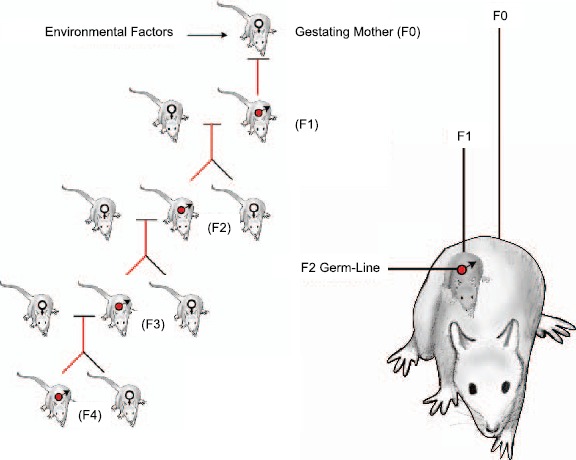
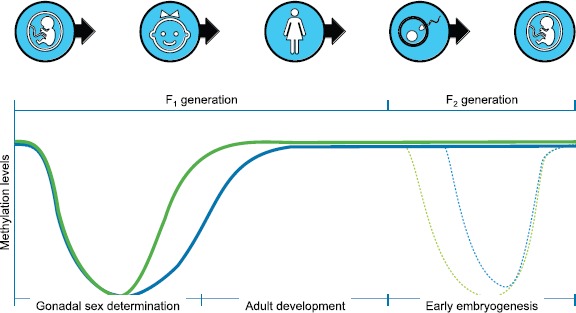
Reproductive disease and fertility issues have dramatically increased in the human population over the last several decades, suggesting environmental impacts. Epigenetics provides a mechanistic link by which an organism can respond to environmental factors. Interestingly, environmentally induced epigenetic alterations in the germ line can promote aberrant gene expression and disease generationally. Environmentally induced epigenetic transgenerational inheritance is defined as germ-line transmission of altered epigenetic information between generations in the absence of continued environmental exposures. This form of nongenetic inheritance has been shown to directly influence fertility and reproductive disease. This review describes the studies in a variety of species that impact reproductive disease and abnormalities. Observations suggest serious attention be paid to the possibility that ancestral exposures to environmental insults promotes transgenerational inheritance of reproductive disease susceptibility. Environmentally induced epigenetic transgenerational inheritance appears to be an important contributing factor to reproductive disease in many organisms, including humans.
Keywords: developmental biology; environment; epigenetics; genomics.
© 2015 by the Society for the Study of Reproduction, Inc.
Figures
References
-
- Skakkebaek NE. Rajpert-De Meyts E, Jorgensen N, Main KM, Leffers H, Andersson AM, Juul A, Jensen TK, Toppari J. Testicular cancer trends as “whistle blowers” of testicular developmental problems in populations. Int J Androl 2007; 30:198–204. - PubMed
Publication types
MeSH terms
Grants and funding
LinkOut - more resources
Full Text Sources
Other Literature Sources
Medical
