


Nonoperative Management of a Multi-Regional Epidural Abscess with Neurological Dysfunction
- PMID: 26512341
- PMCID: PMC4610323
- DOI: 10.14444/2047
Nonoperative Management of a Multi-Regional Epidural Abscess with Neurological Dysfunction
Abstract
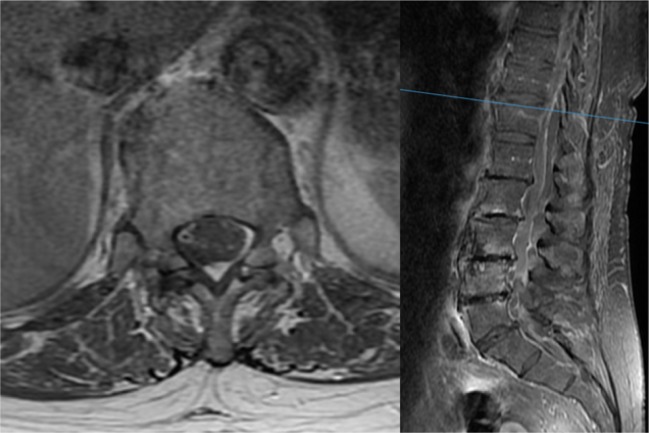
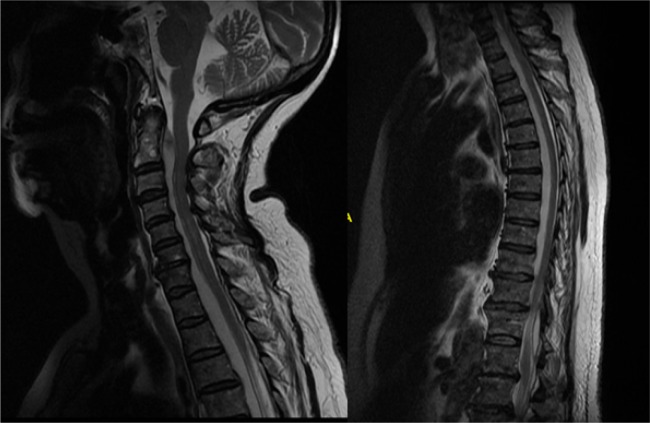
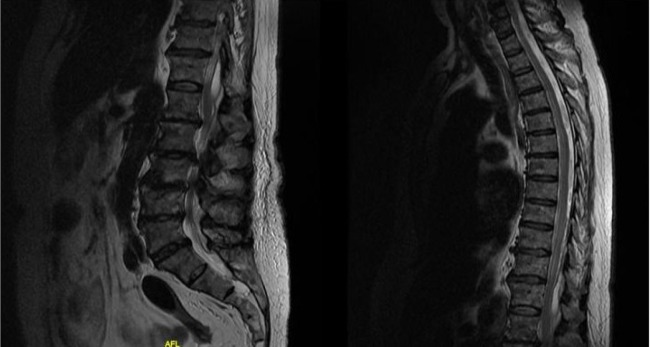
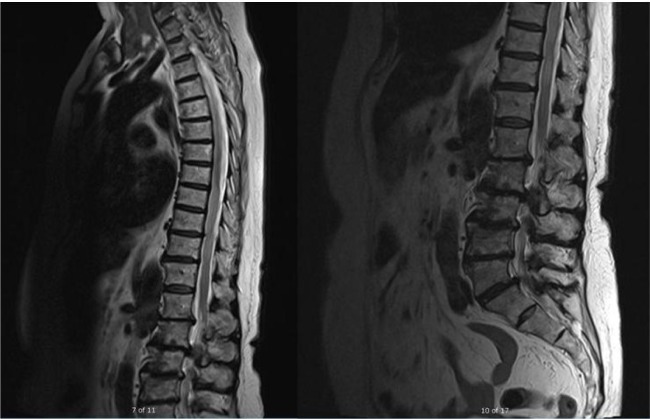
Spinal epidural abscesses are uncommon, but their incidence is increasing. They represent a collection of purulent material in the epidural space and most commonly occur in the lumbar spine, where they remain localised. Abscesses that affect all three spinal levels (holospinal or multiregional abscesses) are extremely rare, with only a few cases published in the literature. Epidural abscesses are particularly high risk infections as progressive neurological dysfunction can occur rapidly; early diagnosis and treatment is therefore essential to avoid long term neurological complications and reduce potential mortality. Given the uncommon nature of this condition, the treatment remains controversial with no definitive guidance on conservative versus surgical management. The literature mostly recommends surgical decompression along with intravenous antibiotics in patients with neurological abnormalities. We describe a case of a 77-year-old patient presenting with a delayed diagnosis of a multi-regional epidural abscess with associated upper motor neurone signs. The patient was successfully treated nonoperatively with a course of antibiotics resulting in complete radiological resolution of the abscess and full neurological recovery.
Keywords: Epidural; abscess; multi-regional; nonoperative.
Figures
References
-
- Fang WK, Chen SH, Huang DW, Huang KC. Post-traumatic osteomyelitis with spinal epidural abscess of cervical spine in a young man with no predisposing factor. J Chin Med Assoc. 2009;72:210–213. - PubMed
-
- Manickam A, Marshman L, Korah I. Panregional (cervico-thoraco-lumbo-sacral) spinal epidural abscess with multi-level discitis, vertebral body osteomyelitis and facet joint septic arthritis: complete resolution with nonoperative management. Interdisciplin neurosurg. 2014;1:69–72.
-
- Morgagni JB. The Seats and Causes of Diseases Investigated by Anatomy; in Five Books, Containing a Great Variety of Dissections, With Remarks. To Which Are Added Very Accurate and Copious Indexes of the Principal Things and Names Therein Contained. In: Alexander B, editor. London: Johnson and Payne; 1769.
-
- Darouiche RO. Spinal epidural abscess. N Engl J Med. 2006;355:2012–2020. - PubMed
LinkOut - more resources
Full Text Sources
Other Literature Sources
