Bone mineral density change during adjuvant chemotherapy in pediatric osteosarcoma
- PMID: 26512351
- PMCID: PMC4623343
- DOI: 10.6065/apem.2015.20.3.150
Bone mineral density change during adjuvant chemotherapy in pediatric osteosarcoma
Abstract
Purpose: Osteoporosis is currently receiving particular attention as a sequela in survivors of childhood osteosarcoma. The aim of this study was to evaluate bone mineral density (BMD) changes during methotrexate-based chemotherapy in children and adolescents with osteosarcoma.
Methods: Nine patients with osteosarcoma were included in this retrospective study and compared with eight healthy controls. BMD of the lumbar spine and unaffected femur neck of patients was serially measured by dual-energy x-ray absorptiometry (DXA) before and just after chemotherapy and compared with controls.
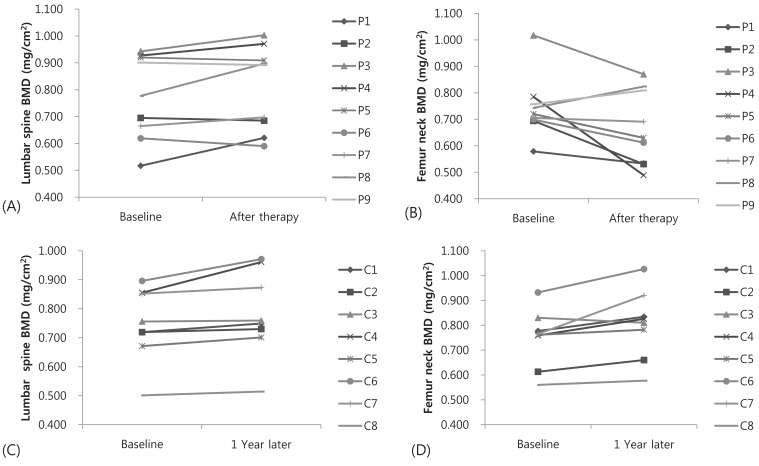
Results: Four patients (44%) showed decreased lumbar spine BMD and seven patients (78%) showed decreased femur neck BMD, while all controls showed increased lumbar and femur BMD (P=0.024 and P=0.023). The femur neck BMD z-scores decreased from -0.49±1.14 to -1.63±1.50 (P=0.032). At the end of therapy, five patients (56%) showed femur neck BMD z-scores below -2.0.
Conclusion: The bone metabolism is disturbed during therapy in children with osteosarcoma, resulting in a reduced BMD with respect to healthy controls. Since a reduced BMD predisposes to osteoporosis, specific attention and therapeutic interventions should be considered.
Keywords: Bone density; Korea; Osteoporosis; Osteosarcoma.
Conflict of interest statement
Figures
References
-
- Cooper C, Westlake S, Harvey N, Javaid K, Dennison E, Hanson M. Review: developmental origins of osteoporotic fracture. Osteoporos Int. 2006;17:337–347. - PubMed
-
- Mora S, Gilsanz V. Establishment of peak bone mass. Endocrinol Metab Clin North Am. 2003;32:39–63. - PubMed
-
- Pfeilschifter J, Diel IJ. Osteoporosis due to cancer treatment: pathogenesis and management. J Clin Oncol. 2000;18:1570–1593. - PubMed
-
- Children's Oncology Group. Long-term follow-up guidelines for survivors of childhood, adolescent, and young adult cancers, ver. 3.0 [Internet] Philadelphia: Children's Oncology Group; 2012. [cited 2012 Oct 15]. Available from: http://www.survivorshipguidelines.org.
LinkOut - more resources
Full Text Sources
Other Literature Sources