. 2015 Oct 29;10(10):e0141542.
doi: 10.1371/journal.pone.0141542. eCollection 2015.

Deficient and Null Variants of SERPINA1 Are Proteotoxic in a Caenorhabditis elegans Model of α1-Antitrypsin Deficiency

Affiliations

Deficient and Null Variants of SERPINA1 Are Proteotoxic in a Caenorhabditis elegans Model of α1-Antitrypsin Deficiency

Erin E Cummings et al. PLoS One. .

Abstract

α1-antitrypsin deficiency (ATD) predisposes patients to both loss-of-function (emphysema) and gain-of-function (liver cirrhosis) phenotypes depending on the type of mutation. Although the Z mutation (ATZ) is the most prevalent cause of ATD, >120 mutant alleles have been identified. In general, these mutations are classified as deficient (<20% normal plasma levels) or null (<1% normal levels) alleles. The deficient alleles, like ATZ, misfold in the ER where they accumulate as toxic monomers, oligomers and aggregates. Thus, deficient alleles may predispose to both gain- and loss-of-function phenotypes. Null variants, if translated, typically yield truncated proteins that are efficiently degraded after being transiently retained in the ER. Clinically, null alleles are only associated with the loss-of-function phenotype. We recently developed a C. elegans model of ATD in order to further elucidate the mechanisms of proteotoxicity (gain-of-function phenotype) induced by the aggregation-prone deficient allele, ATZ. The goal of this study was to use this C. elegans model to determine whether different types of deficient and null alleles, which differentially affect polymerization and secretion rates, correlated to any extent with proteotoxicity. Animals expressing the deficient alleles, Mmalton, Siiyama and S (ATS), showed overall toxicity comparable to that observed in patients. Interestingly, Siiyama expressing animals had smaller intracellular inclusions than ATZ yet appeared to have a greater negative effect on animal fitness. Surprisingly, the null mutants, although efficiently degraded, showed a relatively mild gain-of-function proteotoxic phenotype. However, since null variant proteins are degraded differently and do not appear to accumulate, their mechanism of proteotoxicity is likely to be different to that of polymerizing, deficient mutants. Taken together, these studies showed that C. elegans is an inexpensive tool to assess the proteotoxicity of different AT variants using a transgenic approach.


Conflict of interest statement

Competing Interests: The authors have declared that no competing interests exist.

Figures

Fig 1
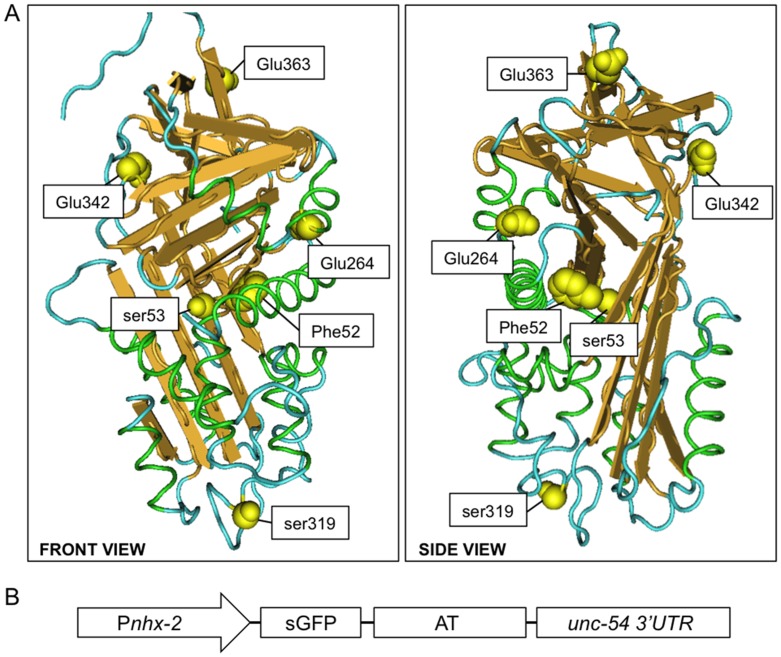
Fig 1. AT variants and transgenic constructs.
A ribbon diagram of α1-antitrypsin (PBD, 3NE4) highlighting the positions of the amino acid residues associated with deficient and null alleles (A). A schematic depicting the C. elegans expression construct (B). Pnhx-2, intestine-specific promoter; sGFP, green fluorescent protein with an N-terminal signal peptide; AT, α1-antitrypsin.
Fig 2
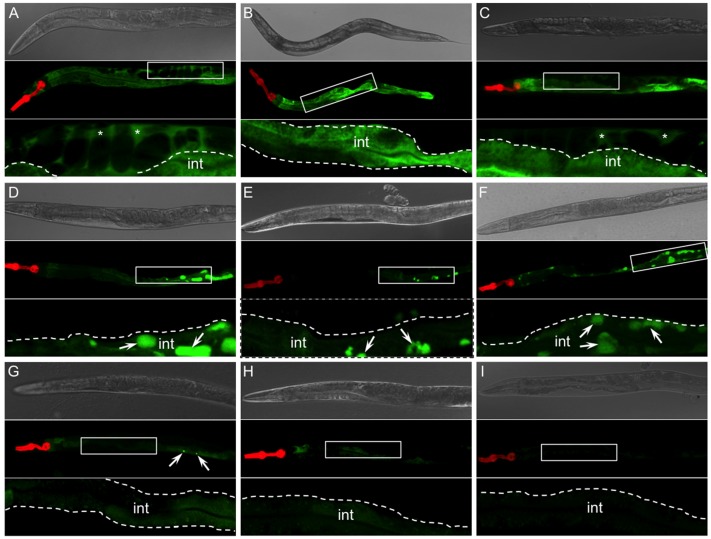
Fig 2. Confocal images of AT variant lines.
Representative images of adult animals expressing various AT transgenes. Each panel shows a widefield DIC image of the entire worm (upper panel), corresponding fluorescence image (middle panel), and 2.5 x magnification of the region outline by a white box (lower panel, inset). Animals expressing the sGFP control protein efficiently secrete GFP out of the intestine (int) into the pseudocelomic space (A, asterisks). However, animals expressing sGFP::KDEL (ER-retention signal) control retain GFP in the ER (B).sGFP::ATM is efficiently secreted into the pseudocoelomic space (C, asterisks) similar to that observed in sGFP expressing controls. Animals expressing the deficient alleles, sGFP::ATZ (D), sGFP::Siiyama (E) and sGFP::Mmalton (F) accumulate protein in the ER as large globules (arrows) and show no evidence of secretion. Animals expressing sGFP::ATS accumulate very low steady-state levels of fusion protein with an occasional small globule detected near the tail (G, arrows). Animals expressing the null alleles, sGFP::Saar (H) and sGFP::NHK (I) accumulate barely detectable levels of protein in the ER.
Fig 3
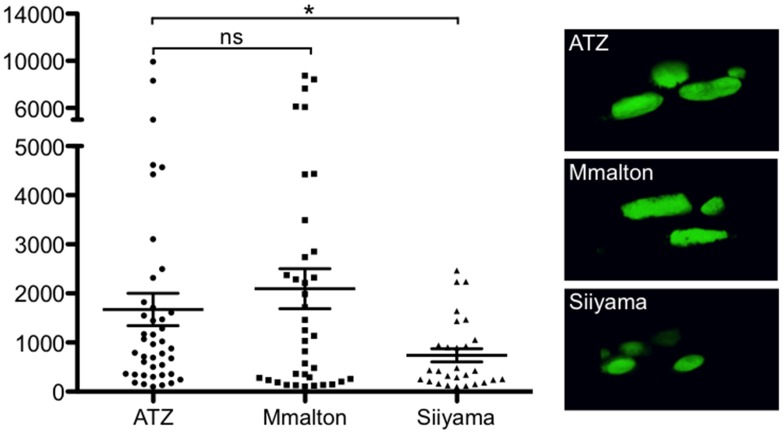
Fig 3. Quantification of aggregate size.
Aggregate sizes accumulating in animals expressing deficient alleles. GFP-positive globules were imaged using confocal microscopy and rendered in 3D. Aggregate volumes were calculated using Volocity software. Representative images of globules from sGFP::ATZ, sGFP::Mmalton and sGFP::Siiyama are shown. Statistical significance of average size compared against ATZ was determined using two-tailed student's t-test, with the probabilities of results reported as *P<0.05. ns, not significant.
Fig 4
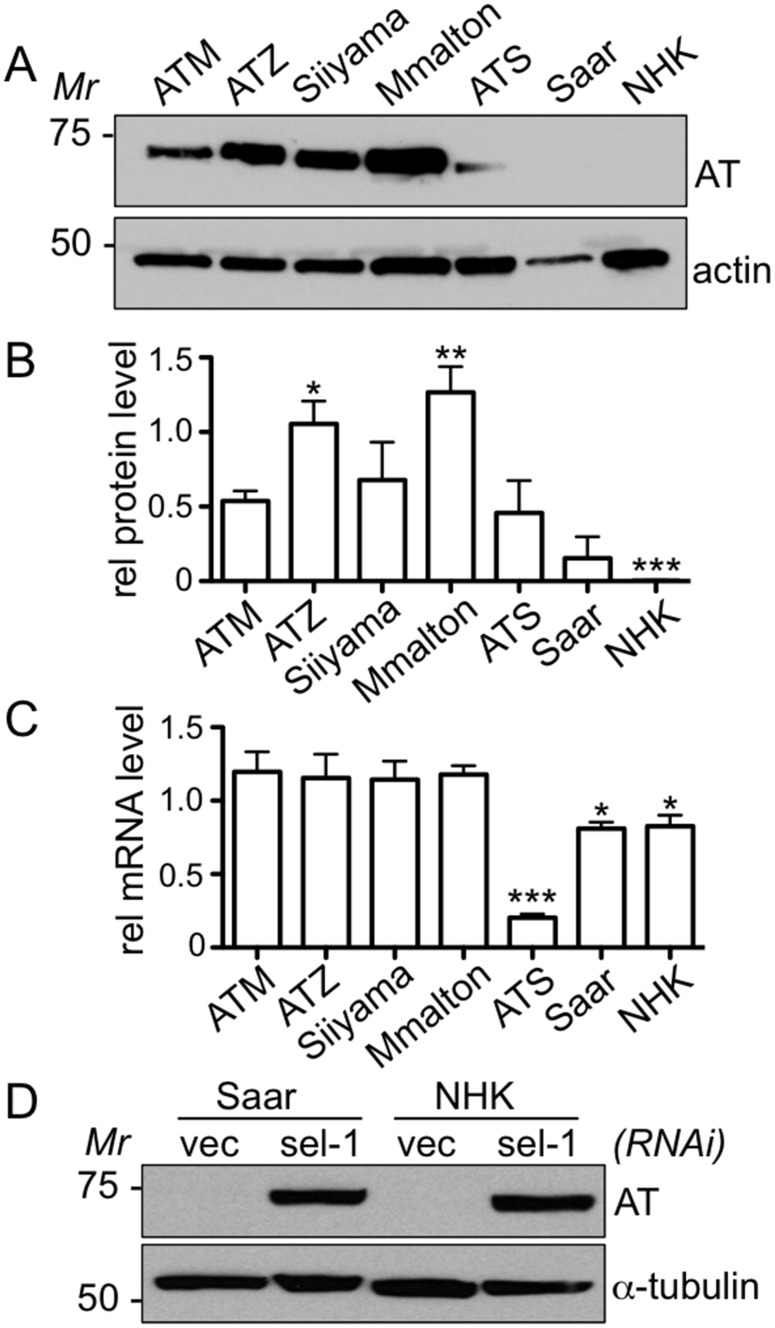
Fig 4. Immunoblots of AT variant transgenic lines.
Western blot analysis of lysates from animals expressing different AT variant transgenes. The steady-state levels of WT and mutant sGFP::AT fusion proteins under denaturing conditions (A, upper panel). Actin serves as a loading control (A, lower panel). Relative AT protein levels as determined by densitometry (B). Statistical significance was determined using two-tailed student's t-test, comparing each AT variant line to ATM. Relative mRNA levels as determined by qPCR (C). Statistical significance was determined using two-tailed student's t-test, comparing each AT variant line to ATM. Lysates from null mutants sGFP::Saar and sGFP::NHK, exposed to vector(RNAi) or sel-1(RNAi) probed with GFP (D, upper panel) or α-tubulin (D, lower panel).
Fig 5
Fig 5. Proteostasis pathways used to clear AT variant proteins.
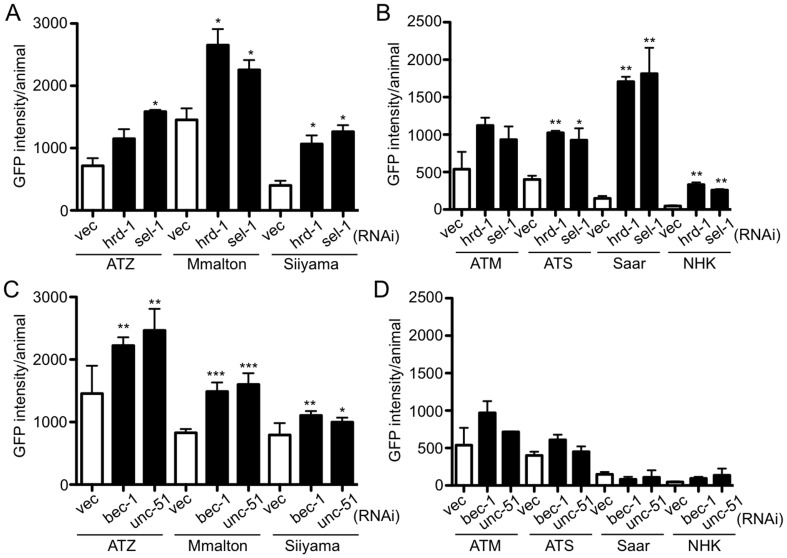
Effect of ERAD (hrd-1 or sel-1) RNAis on clearance of deficient (A) and null variants (B). Effect of autophagy (bec-1 or unc-51) RNAis on clearance of deficient (C) and null variants (D). The data is representative of 6 experiments. Statistical significance was determined by comparing treatments to their respective vec(RNAi) controls using an unpaired, two-tailed students t-test, *P<0.05, **P<0.01, and ***P<0.001.
Fig 6
Fig 6. Effect of AT variant protein expression on longevity.
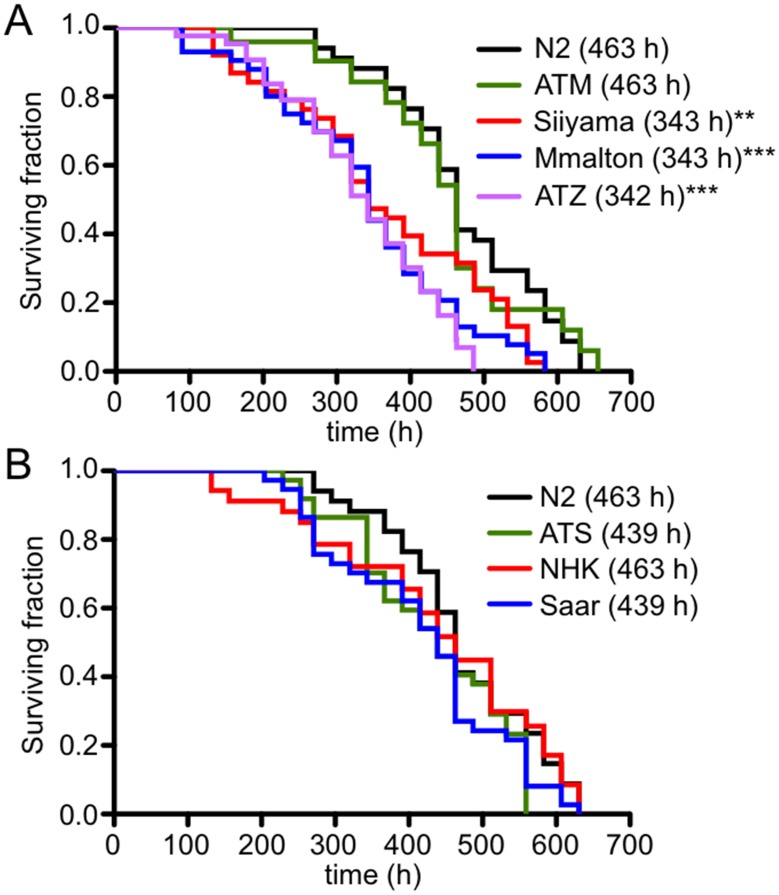
Representative Kaplan-Meier curves of deficient mutants (A). N2 (black), ATM (green), Siiyama (red), Mmalton (blue) and ATZ (lavender). Median survival times (in parenthesis). Representative Kaplan-Meier curves of ATS and null alleles (B). N2 (black), ATS (green), NHK (red) and Saar (blue). Statistical significance determined using the Log-Rank (Mantel-Cox) test, with probabilities of results reported as **P<0.001, or ***P<0.0001.
Fig 7
Fig 7. Effect of AT variant protein expression on larval growth and brood sizes.
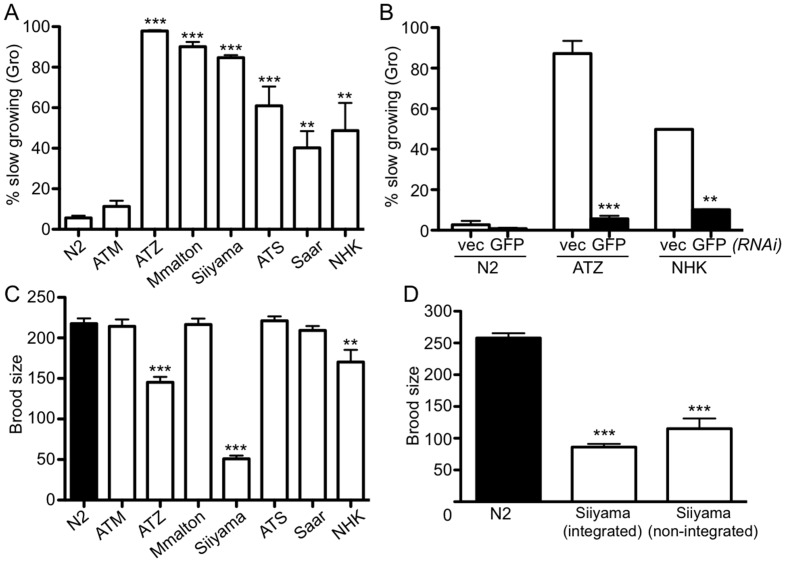
Assessment of slow growth (Gro) phenotype during post-embryonic development (A). Statistical significance was determined comparing Gro phenotypes of AT variants to wild-type ATM-expressing lines using an unpaired, two-tailed students t-test. Reversal of Gro phenotype by GFP(RNAi) (B). Statistical significance was determined by comparing treatments to their respective vec(RNAi) controls using an unpaired, two-tailed students t-test. Brood size assessment of AT variant lines (C). Statistical significance was determined comparing brood size of AT variants compared to wild-type ATM-expressing lines using an unpaired, two-tailed students t-test. Brood size comparison between integrated and non-integrated Siiyama expressing lines (D). Statistical significance was determined comparing brood size of AT variants was compared to wild-type ATM-expressing lines using an unpaired, two-tailed students t-test. In all experiments, the probabilities of results were reported as *P<0.05, **P<0.01, or ***P<0.001.

References

    1. Olsen GN, Harris JO, Castle JR, Waldman RH, Karmgard HJ. Alpha-1-antitrypsin content in the serum, alveolar macrophages, and alveolar lavage fluid of smoking and nonsmoking normal subjects. J Clin Invest. 1975;55(2):427–30. 10.1172/JCI107947 - DOI - PMC - PubMed
    1. Travis J, Salvesen GS. Human plasma proteinase inhibitors. Annu Rev Biochem. 1983;52:655–709. 10.1146/annurev.bi.52.070183.003255 . - DOI - PubMed
    1. Gadek JE, Fells GA, Zimmerman RL, Rennard SI, Crystal RG. Antielastases of the human alveolar structures. Implications for the protease-antiprotease theory of emphysema. J Clin Invest. 1981;68(4):889–98. - PMC - PubMed
    1. Duranton J, Adam C, Bieth JG. Kinetic mechanism of the inhibition of cathepsin G by alpha 1-antichymotrypsin and alpha 1-proteinase inhibitor. Biochemistry. 1998;37(32):11239–45. . - PubMed
    1. Stoller JK, Aboussouan LS. Alpha1-antitrypsin deficiency. Lancet. 2005;365(9478):2225–36. . - PubMed

Publication types