Review
. 2016:56:123-40.
doi: 10.1146/annurev-pharmtox-010715-103910. Epub 2015 Oct 22.

Approaches to Validate and Manipulate RNA Targets with Small Molecules in Cells

Affiliations
Review

Approaches to Validate and Manipulate RNA Targets with Small Molecules in Cells

Jessica L Childs-Disney et al. Annu Rev Pharmacol Toxicol. 2016.

Abstract

RNA has become an increasingly important target for therapeutic interventions and for chemical probes that dissect and manipulate its cellular function. Emerging targets include human RNAs that have been shown to directly cause cancer, metabolic disorders, and genetic disease. In this review, we describe various routes to obtain bioactive compounds that target RNA, with a particular emphasis on the development of small molecules. We use these cases to describe approaches that are being developed for target validation, which include target-directed cleavage, classic pull-down experiments, and covalent cross-linking. Thus, tools are available to design small molecules to target RNA and to identify the cellular RNAs that are their targets.

Keywords: Inforna; RNA; antibacterials; antisense oligonucleotides; genetic disease; nucleic acids; orphan disease; rational design; target identification.


Figures
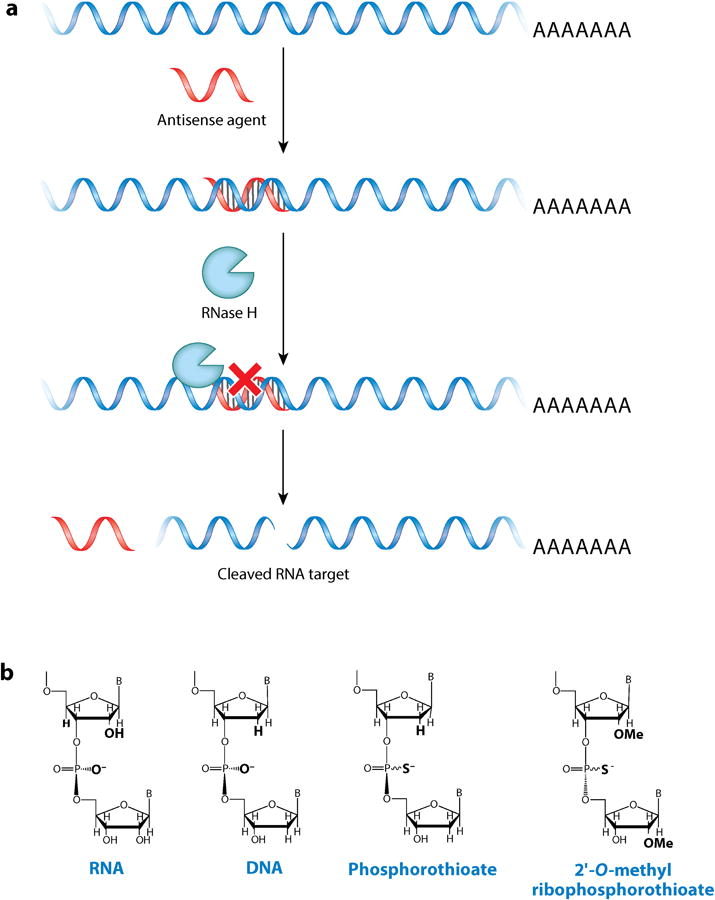
Figure 1
Figure 1
Antisense oligonucleotides and their general mode of action in cells. (a) An antisense oligonucleotide recruits ribonuclease H (RNase H), which cleaves the RNA strand and decreases RNA abundance. (b) RNA sugar and backbone modifications have been used to enhance the effect of oligonucleotides in cells. Note that phosphorothioate backbones are chiral.
Figure 2
Figure 2
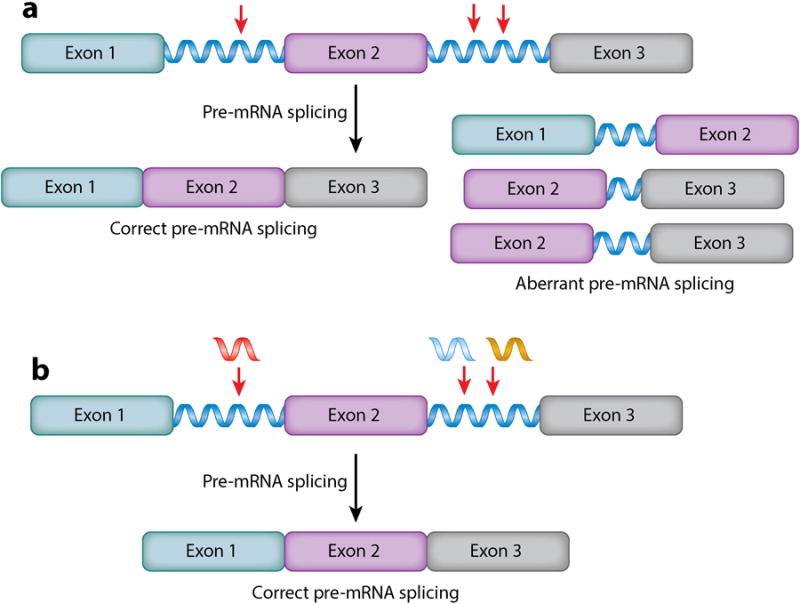
Modulation of RNA function by oligonucleotides that do not recruit ribonuclease H (RNase H). Such oligonucleotides can be potently bioactive, affecting precursor messenger RNA (pre-mRNA) splicing outcomes, for example. 2′-O-methyl phosphorothioates do not induce RNase H–dependent cleavage of their RNA targets; however, they can be used to target single nucleotide polymorphisms (SNPs) that cause pre-mRNA splicing defects. (a) Normal pre-mRNA splicing of β-globin pre-mRNA and aberrant pre-mRNA splicing when SNPs are present. Red arrows indicate positions of SNPs that activate cryptic splice sites. (b) Oligonucleotides that bind SNPs cover up cryptic splice sites and direct splicing patterns back to wild type.
Figure 3
Figure 3
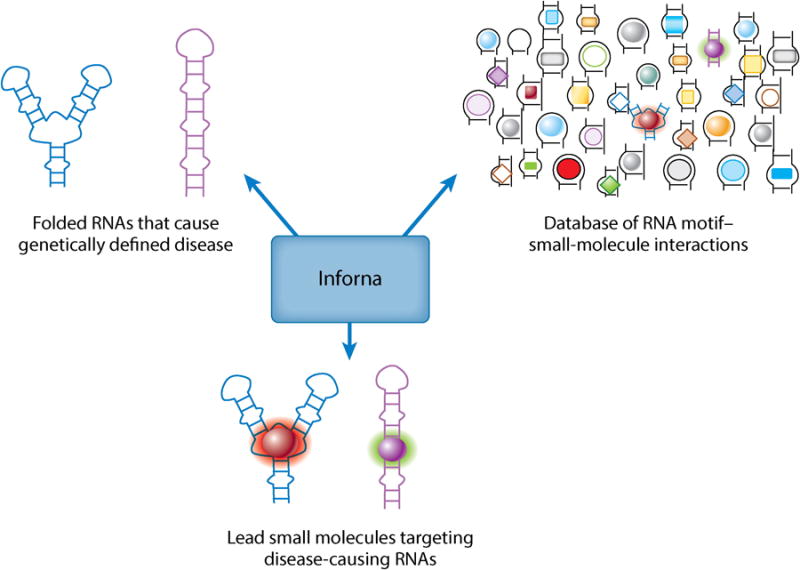
Inforna facilitates the design of small molecules to target RNA. This approach uses RNA secondary structure to inform rational design of small molecules. Lead small molecules are generated by computationally mining the motifs in an RNA target and comparing them to an annotated database of RNA motif–small-molecule interactions. These leads serve as starting points for chemical probe and lead therapeutic design.
Figure 4
Figure 4
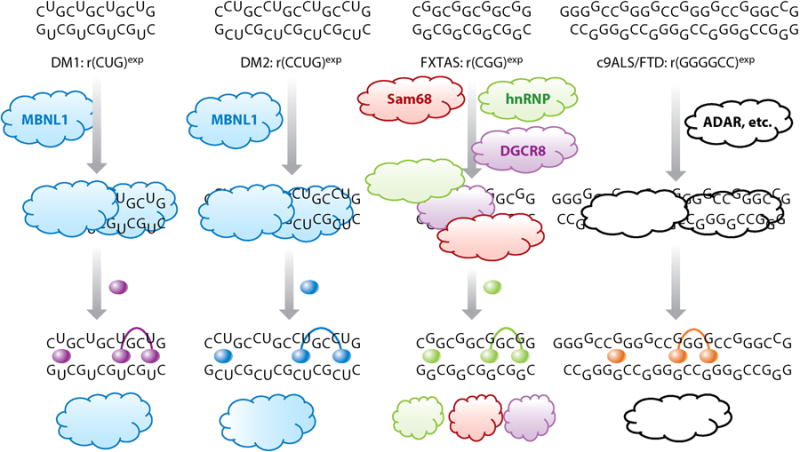
RNA repeat expansions cause microsatellite disorders. The secondary structures of these RNAs are typically extended hairpins that bind to and sequester proteins involved in RNA biogenesis (clouds). Small-molecule leads (spheres) that target motifs within these expanded RNA structures can be used to design monomeric or multivalent compounds that displace or inhibit protein binding. Release of sequestered proteins improves disease-associated defects, including alternative precursor messenger RNA splicing defects, formation of inclusions, production of toxic repeat-associated non-ATG (RAN) proteins, and RNA-mediated DNA silencing. Abbreviations: ADAR, adenosine deaminase acting on RNA; c9ALS/FTD, C9ORF72-related amyotrophic lateral sclerosis and frontal temporal dementia; DGCR8, DiGeorge syndrome chromosomal region 8; hnRNP, heterogeneous nuclear ribonucleoprotein; MBNL1, muscleblind-like 1 protein; Sam68, Src-associated substrate in mitosis of 68 kDa.
Figure 5
Figure 5
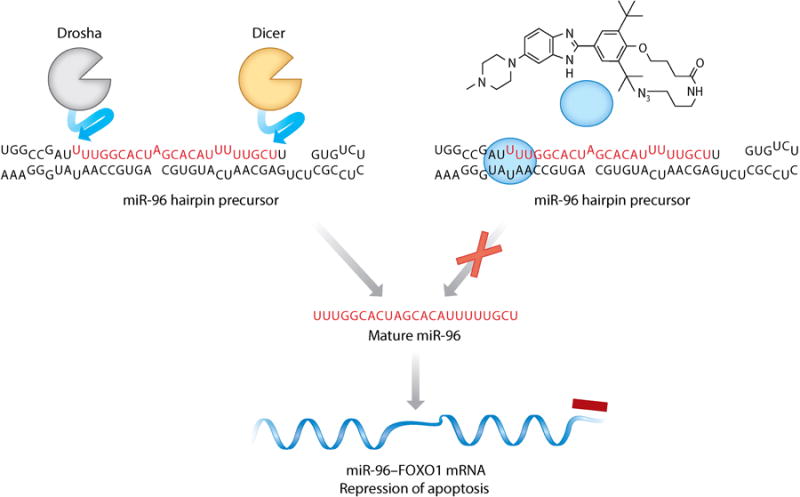
Inforna can be used to design small molecules that target microRNA (miRNA) precursors. A target agnostic approach was used in which the results of two-dimensional combinatorial screening determine the optimal target. This approach has identified multiple bioactive partners, including a small-molecule benzimidazole (blue sphere) that binds to the Drosha nuclease processing site in the microRNA-96 (miR-96) hairpin precursor. The small molecule selectively modulates the activity of this RNA, increases production of forkhead box protein O1 (FOXO1), and triggers apoptosis.
Figure 6
Figure 6
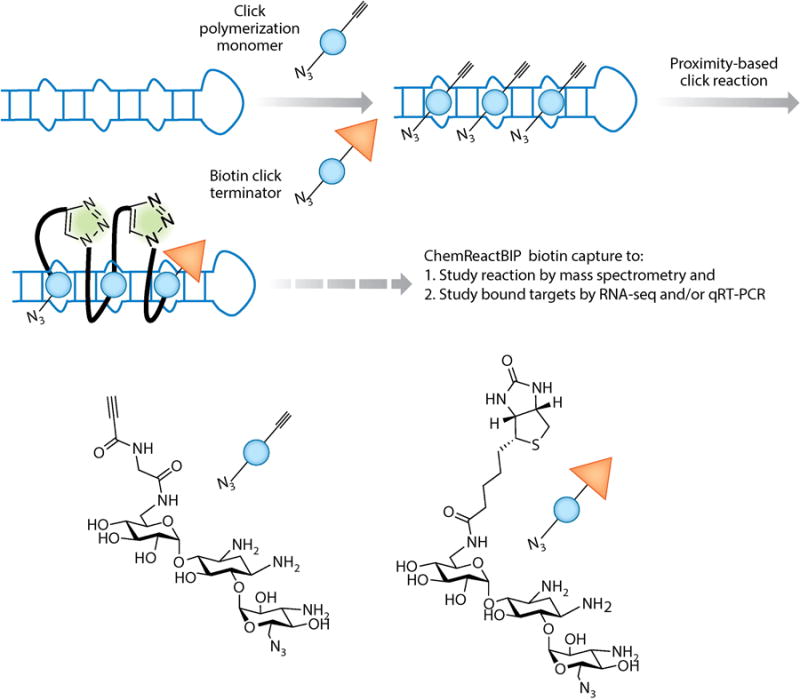
Using a disease-affected cell to synthesize its own drug at the required site of action. This approach is enabled by using click chemistry in which azide and alkyne modules are added to a compound (blue spheres) at positions that are brought into close proximity upon binding to a cellular target, thereby affording a multivalent compound. Here, we illustrate the approach using r(CCUG)exp, the causative agent of myotonic dystrophy type 2 (DM2). ChemReactBIP uses a biotin terminator to identify the cellular catalyst(s) of the click polymerization reaction by qRT-PCR and the extent of polymerization by mass spectrometry. The biotin terminator terminates the click reaction and allows pull down of the bound catalyst with streptavidin beads. Abbreviations: ChemReactBIP, chemical reactivity and binding isolated by pull down; qRT-PCR, quantitative real-time polymerase chain reaction.
Figure 7
Figure 7
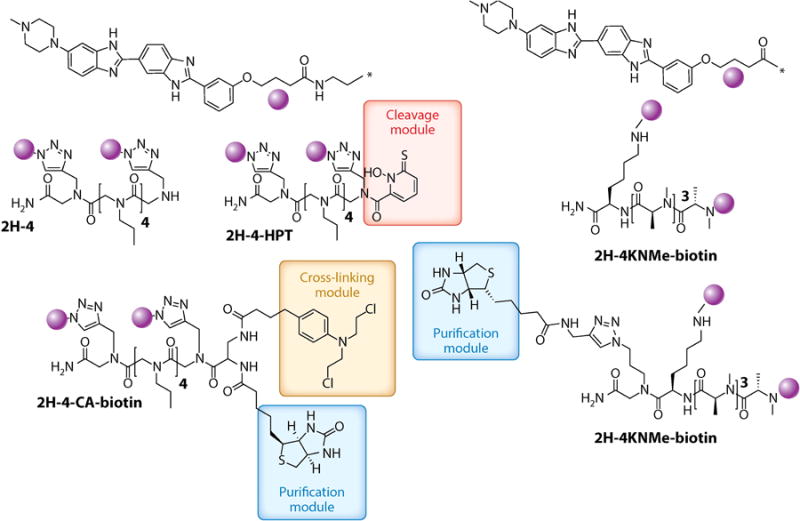
Structures of multivalent compounds that have been designed to target the expanded r(CUG) repeat RNA [r(CUG)exp] that causes myotonic dystrophy type 1 (purple spheres). The RNA-binding modules were identified by querying a database of RNA motif–small-molecule interactions to identify r(CUG)exp-binding modules. These modules were then systematically assembled onto various polyvalent scaffolds, such as peptoids (2H-4) or N-methyl peptides (2H-4KNMe), which allow precise control of RNA-binding module spacing and valency. Because of their modular nature, these compounds can be easily functionalized for target identification, for example, biotin, cross-linking agents [chlorambucil (CA)], and hydroxyl radical–producing moieties that cleave RNA such as N-hydroxylthiopyridine (HPT).
Figure 8
Figure 8
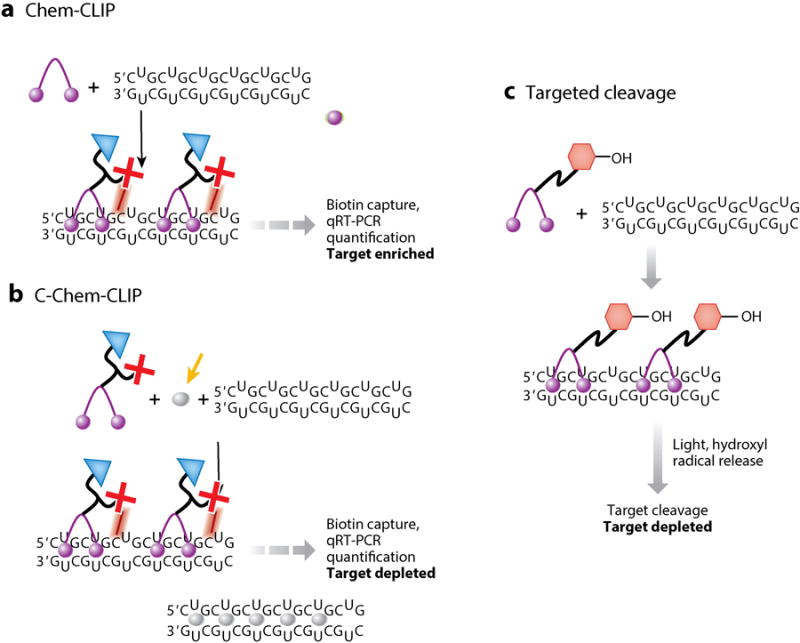
Schemes of chemical approaches used for target validation in cellulo. (a) In Chem-CLIP, a small molecule (purple sphere) is appended with a nucleic acid–reactive moiety, which cross-links to targets that it binds in cellulo, and biotin for facile isolation of small-molecule–RNA adducts. (b) In C-Chem-CLIP, a Chem-CLIP experiment is completed in the presence of an unreactive small molecule (gray sphere), which competes with the covalent probe for RNA binding, to infer the cellular targets of the small molecule in question. (c) In direct cleavage of RNA targets, small molecules are appended with modules that allow the targeted destruction of RNA in cellulo to validate a target. One example module is HPT (hexagons), which generates hydroxyl radicals that cleave RNA targets to which the small molecules bind. Abbreviations: Chem-CLIP, chemical cross-linking and isolation by pull down; C-Chem-CLIP, competitive chemical cross-linking and isolation by pull down; HPT, hydroxylthiopyridine; qRT-PCR, quantitative real-time polymerase chain reaction.

References

    1. Batey RT, Rambo RP, Doudna JA. Tertiary motifs in RNA structure and folding. Angew Chem Int Ed Engl. 1999;38:2326–43. - PubMed
    1. Doudna JA. Structural genomics of RNA. Nat Struct Biol. 2000;7(Suppl):954–56. - PubMed
    1. Sicot G, Gomes-Pereira M. RNA toxicity in human disease and animal models: from the uncovering of a new mechanism to the development of promising therapies. Biochim Biophys Acta. 2013;1832:1390–409. - PubMed
    1. Visone R, Croce CM. MiRNAs and cancer. Am J Pathol. 2009;174:1131–38. - PMC - PubMed
    1. Swayze EE, Bhat B. The medicinal chemistry of oligonucleotides. In: Crooke ST, editor. Antisense Drug Technology: Principles, Strategies, and Applications. Boca Raton, FL: CRC; 2008. pp. 143–82.

Publication types