


Principles of immunology and its nuances in the central nervous system
- PMID: 26516224
- PMCID: PMC4625893
- DOI: 10.1093/neuonc/nov175
Principles of immunology and its nuances in the central nervous system
Abstract
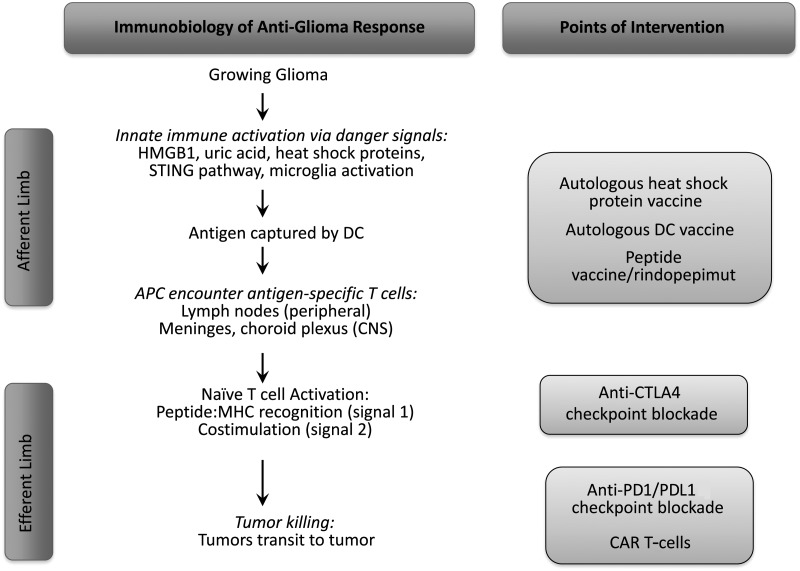
Cancer immunotherapy represents the biggest change in the cancer treatment landscape in the last several years. Indeed, the clinical successes in several cancer types have generated widespread enthusiasm that immune-based treatments may influence the management of patients with malignant brain tumors as well. A number of promising clinical trials in this area are currently ongoing in neuro-oncology, and a wave of additional efforts are sure to follow. However, the basic immunology underlying immunotherapy-and the nuances unique to the immunobiology in the central nervous system-is often not in the daily lexicon of the practicing neuro-oncologist and neurosurgeon. To this end, here we provide a timely and working overview of key principles of fundamental immunology as a pragmatic context for understanding where therapeutic efforts may act in the cellular dynamics of the immune response. Moreover, we review the issues of lymphatic drainage, antigen presentation, and the blood-brain barrier as considerations that are germane to thinking about immunity to tumors arising in the brain. Together, these topics will provide a foundation for the exciting efforts in immune-based treatments that will hopefully provide real benefit to brain tumor patients.
Keywords: adaptive immunity; antigen presentation; blood-brain barrier; immunology; immunotherapy; innate immunity.
© The Author(s) 2015. Published by Oxford University Press on behalf of the Society for Neuro-Oncology. All rights reserved. For permissions, please e-mail: journals.permissions@oup.com.
Figures
References
Publication types
MeSH terms
LinkOut - more resources
Full Text Sources
Other Literature Sources
Medical
