


The economic impact of failed back surgery syndrome
- PMID: 26516490
- PMCID: PMC4590097
- DOI: 10.1177/2049463712470887
The economic impact of failed back surgery syndrome
Abstract
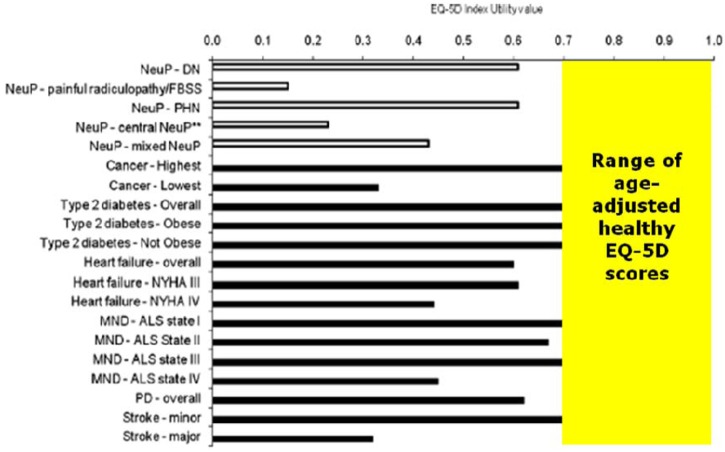
Failed back surgery syndrome (FBSS) is a generalised disorder that is characterised by chronic pain in the lower back and/or legs that persists or recurs following anatomically successful spinal surgery. This paper aims to (1) assess the burden of failed back surgery in terms of its epidemiology, impact on health outcomes and costs and (2) summarise the evidence base for the cost-effectiveness of interventions for the management of FBSS. A narrative review based on a search of MEDLINE (PubMed) up to August 2012 was undertaken. Despite advances in technology and surgical techniques and increasing rates of spine surgery, a proportion of individuals continue to suffer from FBSS. Estimates from randomised controlled trials indicate that 5-50% of patients may have an unsuccessful outcome following lumbar spinal surgery. The understanding of the epidemiology and burden of FBSS remains poor and further research is needed in this area. The impact of FBSS on an individual's health-related quality of life and its economic cost to society are considerable and more disabling than other common chronic pain and chronic medical conditions, such as heart failure and motor neuron disease. There is a substantive body of evidence in FBSS patients showing spinal cord stimulation (SCS) to be cost-effective (<£10,000 per quality-adjusted life year). In 2008, the National Institute for Health and Clinical Excellence recommended SCS as a treatment option for FBSS, either as an alternative to further lumbar surgery or as an adjunct to conservative medical management. The clinical and cost-effectiveness of SCS in the subgroup of those with FBSS receiving workers' compensation remains less clear. Intrathecal morphine pumps may also be a potentially cost-effective strategy for FBSS. The findings of this review emphasise the importance of identifying strategies to prevent the development of FBSS and effective guidelines for the management of established FBSS. The continued development and application of new neuromodulation therapies and technological innovations in the field of FBSS need to be accompanied by the collection of clinical and economic data in order to demonstrate to healthcare policy makers and payers that such innovations provide benefit to the patient at good value for money.
Keywords: Costs; chronic low back pain; cost-effectiveness; epidemiology; failed back surgery syndrome; quality of life.
Conflict of interest statement
Figures
References
-
- Wilkinson HA. The Failed Back Syndrome: Etiology and Therapy. 2nd ed. Philadelphia: Harper & Row, 1991.
-
- North RB, Campbell J, James CS, et al. Failed back surgery syndrome: 5-year follow-up in 102 patients undergoing repeated operation. Neurosurgery 1991; 28: 685–691. - PubMed
-
- Waguespack A, Schofferman J, Slosar P, Reynold J. Etiology of long-term failures of lumbar spine surgery. Pain Med 2002; 3: 18–22. - PubMed
-
- Samuelson P. Economics. Columbus, OH: McGraw-Hill, 1948.
-
- Hoy D, Brooks P, Blyth F, Buchbinder R. The Epidemiology of low back pain. Best Pract Res Clin Rheumatol 2010; 24: 769–781. - PubMed
LinkOut - more resources
Full Text Sources
Medical