


Growth Trajectories of Health Behaviors from Adolescence through Young Adulthood
- PMID: 26516889
- PMCID: PMC4661609
- DOI: 10.3390/ijerph121113711
Growth Trajectories of Health Behaviors from Adolescence through Young Adulthood
Abstract
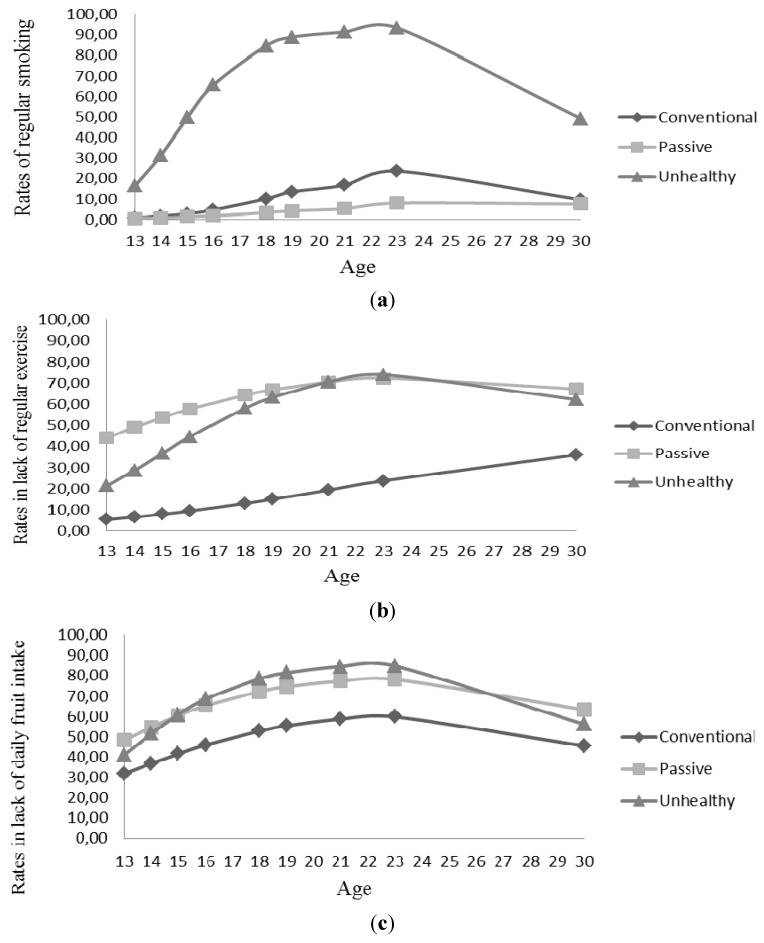
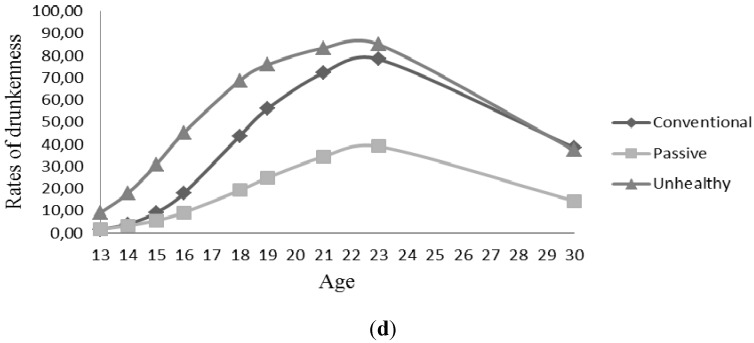
Based on nine waves of data collected during a period of 17 years (1990-2007), the present study explored different developmental trajectories of the following unhealthy behaviors: regular smoking, lack of regular exercise, lack of daily fruit intake, and drunkenness. A baseline sample of 1195 13-year-old pupils was from 22 randomly selected schools in the Hordaland County in western Norway. Latent class growth analysis revealed three developmental trajectories. The first trajectory was a conventional trajectory, comprising 36.3% of participants, who showed changes in smoking, physical exercise, fruit intake, and drunkenness consistent with the prevailing age specific norms of these behaviors in the Norwegian society at the time. The second trajectory was a passive trajectory, comprising 25.5% of participants, who reported low levels of both healthy and unhealthy behaviors during the 17-year period. The third trajectory was an unhealthy trajectory, comprising 38.2% of participants, who had high levels of unhealthy behaviors over time. Several covariates were examined, but only sex and mother's and father's educational levels were found to be significantly associated with the identified trajectories. While these findings need to be replicated in future studies, the identification of the different trajectories suggests the need to tailor intervention according to specific needs.
Keywords: drunkenness; fruit intake; latent class growth analysis; physical activity; smoking.
Figures
References
-
- Preventing Chronic Diseases: A Vital Investment: WHO Global Report. [(accessed on 12 June 2015)]. Available online: http://apps.who.int/iris/handle/10665/43314.
-
- Diet, Nutrition and the Prevention of Chronic Diseases. [(accessed on 12 June 2015)]. Available online: http://www.who.int/dietphysicalactivity/publications/trs916/en/gsfao_int....
-
- Youth Risk Behavior Surveillance—United States, 2009. [(accessed on 12 June 2015)]; Available online: http://www.cdc.gov/mmwr/preview/mmwrhtml/ss5905a1.htm.
-
- World Health Organization Programming for Adolescent Health and Development. [(accessed on 12 June 2015)]. Available online: http://www.who.int/maternal_child_adolescent/documents/trs_886/en/
MeSH terms
LinkOut - more resources
Full Text Sources
Other Literature Sources
Medical
