


Reproducibility and Temporal Structure in Weekly Resting-State fMRI over a Period of 3.5 Years
- PMID: 26517540
- PMCID: PMC4627782
- DOI: 10.1371/journal.pone.0140134
Reproducibility and Temporal Structure in Weekly Resting-State fMRI over a Period of 3.5 Years
Abstract
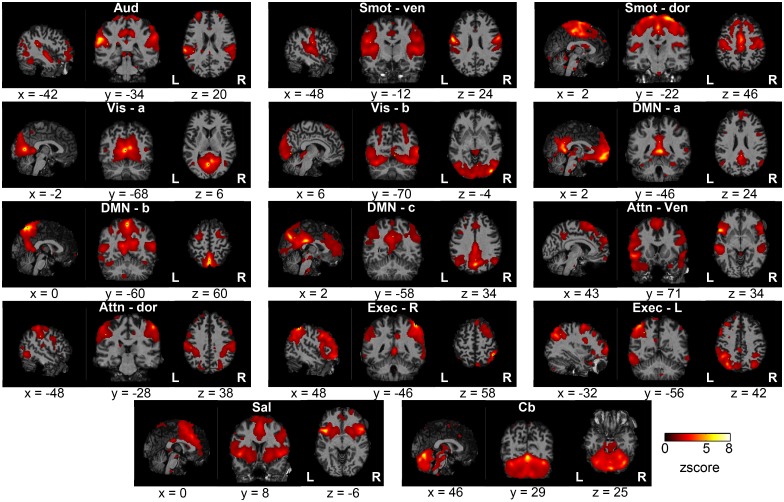
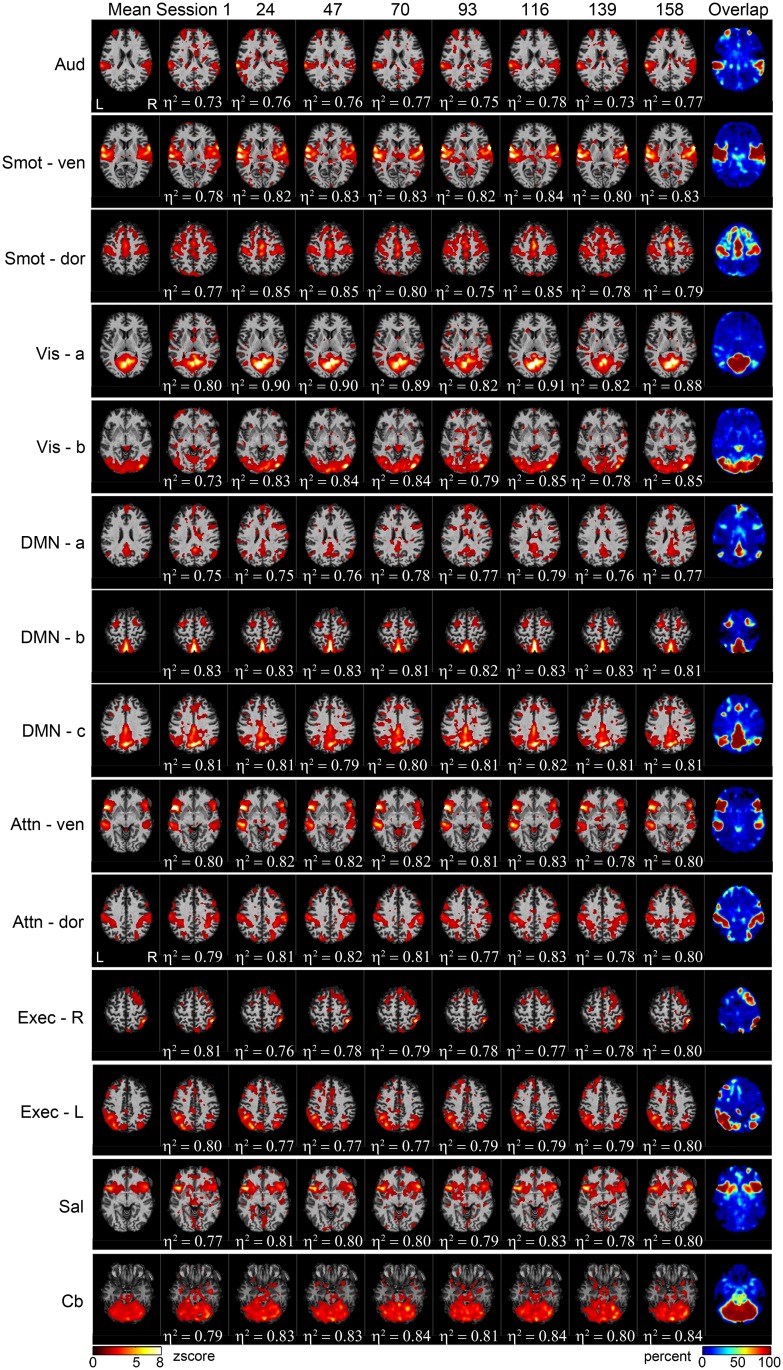
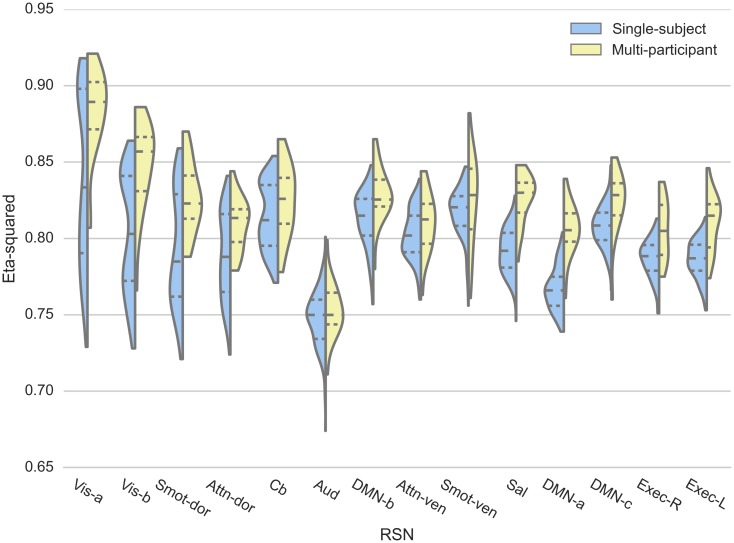
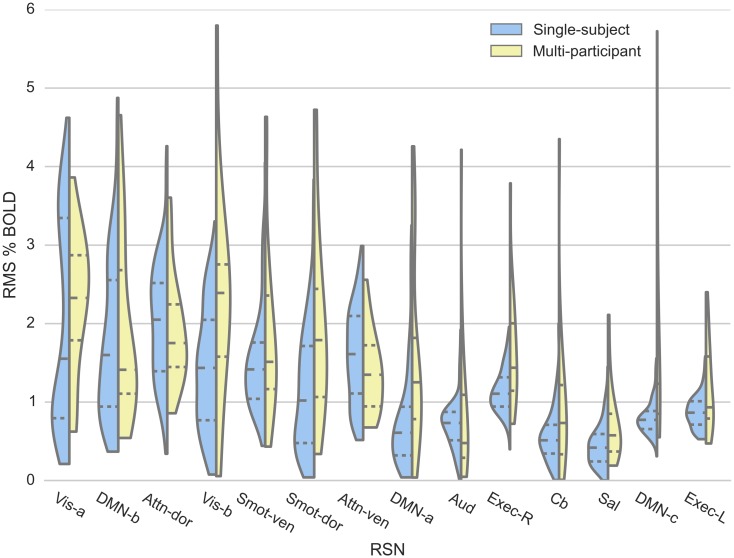
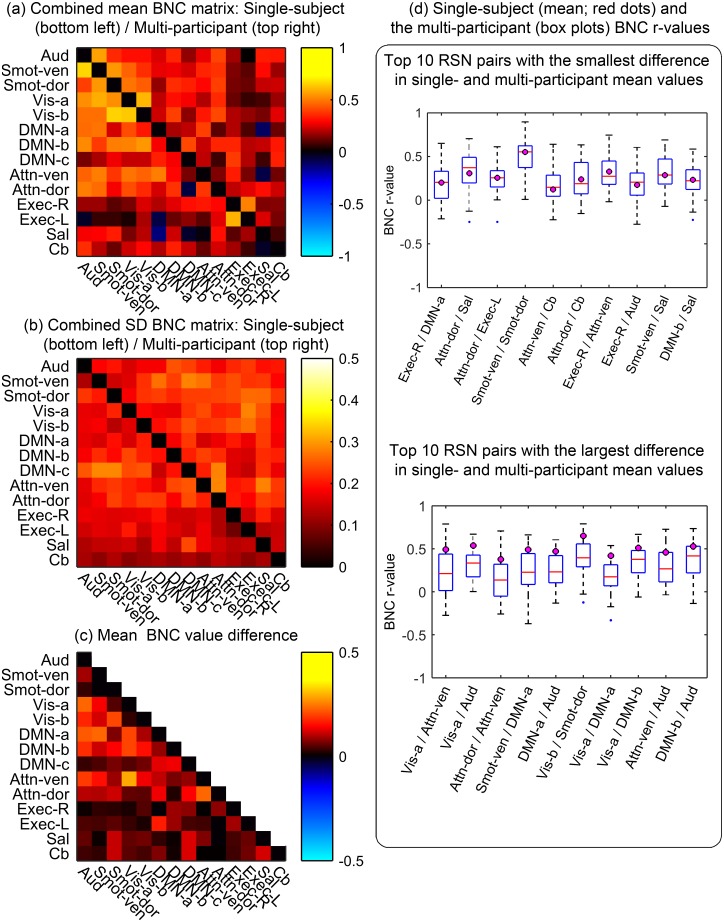
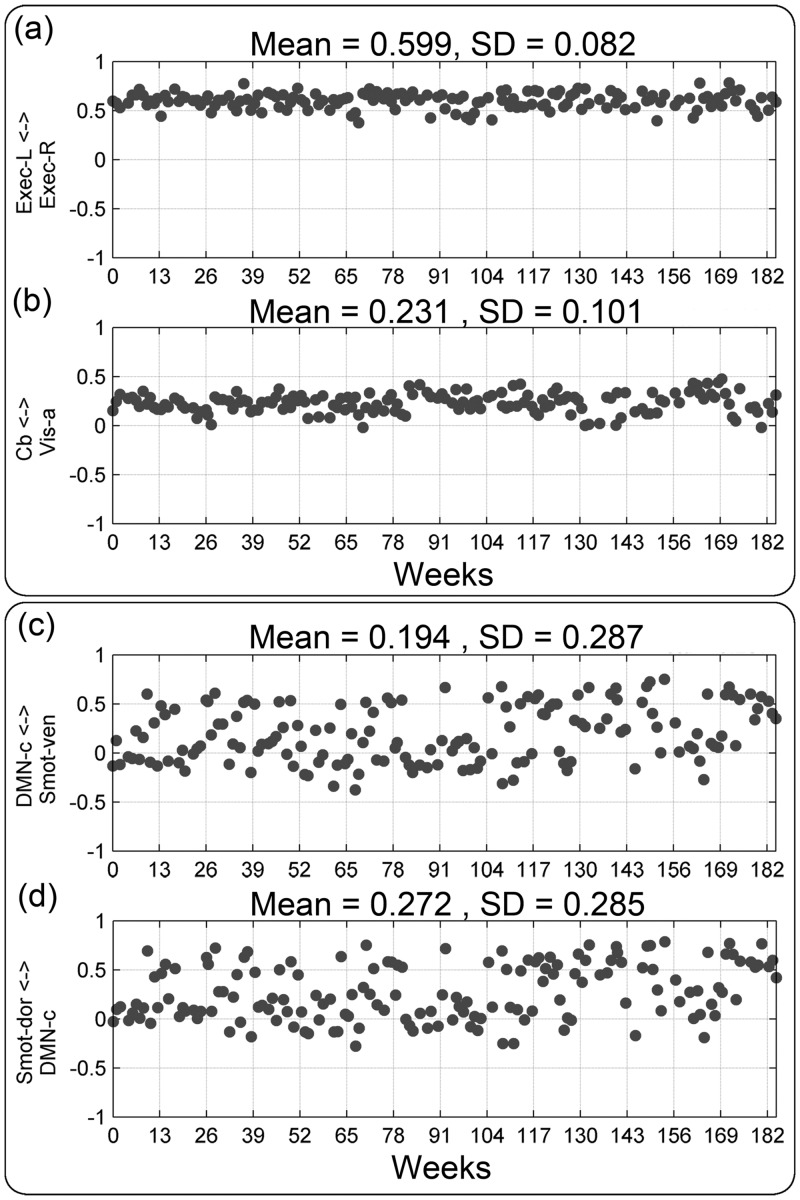
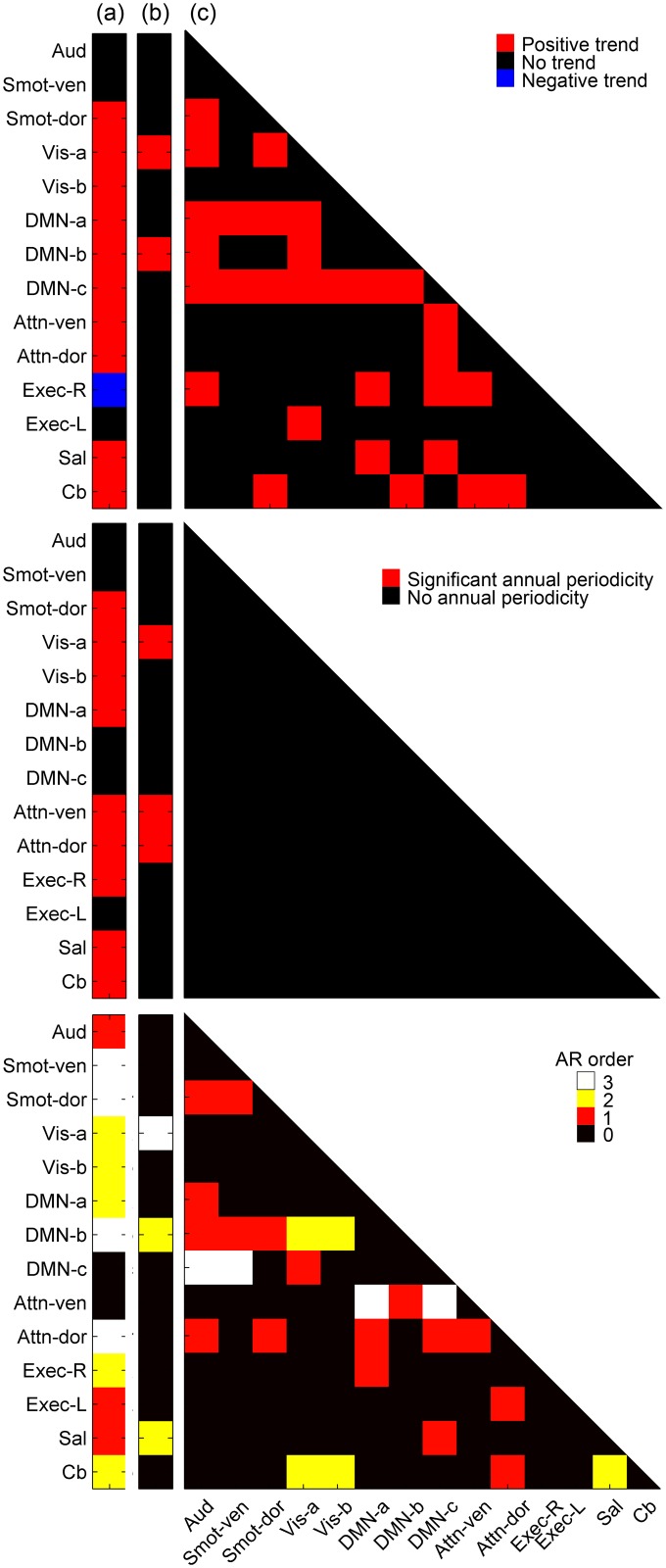
Resting-state functional MRI (rs-fMRI) permits study of the brain's functional networks without requiring participants to perform tasks. Robust changes in such resting state networks (RSNs) have been observed in neurologic disorders, and rs-fMRI outcome measures are candidate biomarkers for monitoring clinical trials, including trials of extended therapeutic interventions for rehabilitation of patients with chronic conditions. In this study, we aim to present a unique longitudinal dataset reporting on a healthy adult subject scanned weekly over 3.5 years and identify rs-fMRI outcome measures appropriate for clinical trials. Accordingly, we assessed the reproducibility, and characterized the temporal structure of, rs-fMRI outcome measures derived using independent component analysis (ICA). Data was compared to a 21-person dataset acquired on the same scanner in order to confirm that the values of the single-subject RSN measures were within the expected range as assessed from the multi-participant dataset. Fourteen RSNs were identified, and the inter-session reproducibility of outcome measures-network spatial map, temporal signal fluctuation magnitude, and between-network connectivity (BNC)-was high, with executive RSNs showing the highest reproducibility. Analysis of the weekly outcome measures also showed that many rs-fMRI outcome measures had a significant linear trend, annual periodicity, and persistence. Such temporal structure was most prominent in spatial map similarity, and least prominent in BNC. High reproducibility supports the candidacy of rs-fMRI outcome measures as biomarkers, but the presence of significant temporal structure needs to be taken into account when such outcome measures are considered as biomarkers for rehabilitation-style therapeutic interventions in chronic conditions.
Conflict of interest statement
Figures
References
-
- Biswal B, Yetkin FZ, Haughton VM, Hyde JS. Functional connectivity in the motor cortex of resting human brain using echo-planar MRI. Magn Reson Med. 1995;34: 537–541. - PubMed
-
- Belegu V, Oudega M, Gary DS, McDonald JW. Restoring function after spinal cord injury: Promoting spontaneous regeneration with stem cells and activity-based therapies. Neurosurg Clin N Am. 2007;18: 143–68, xi - PubMed
-
- Damiano DL. Activity, activity, activity: Rethinking our physical therapy approach to cerebral palsy. Phys Ther. 2006;86: 1534–1540. - PubMed
Publication types
MeSH terms
Grants and funding
LinkOut - more resources
Full Text Sources
Other Literature Sources
Medical
Miscellaneous
