


Psychosis, Delusions and the "Jumping to Conclusions" Reasoning Bias: A Systematic Review and Meta-analysis
- PMID: 26519952
- PMCID: PMC4838082
- DOI: 10.1093/schbul/sbv150
Psychosis, Delusions and the "Jumping to Conclusions" Reasoning Bias: A Systematic Review and Meta-analysis
Abstract
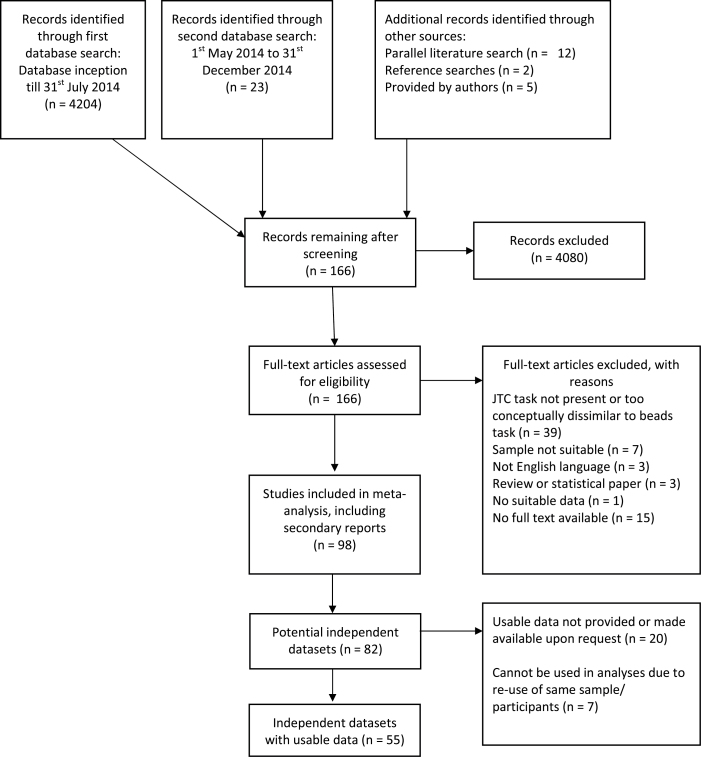
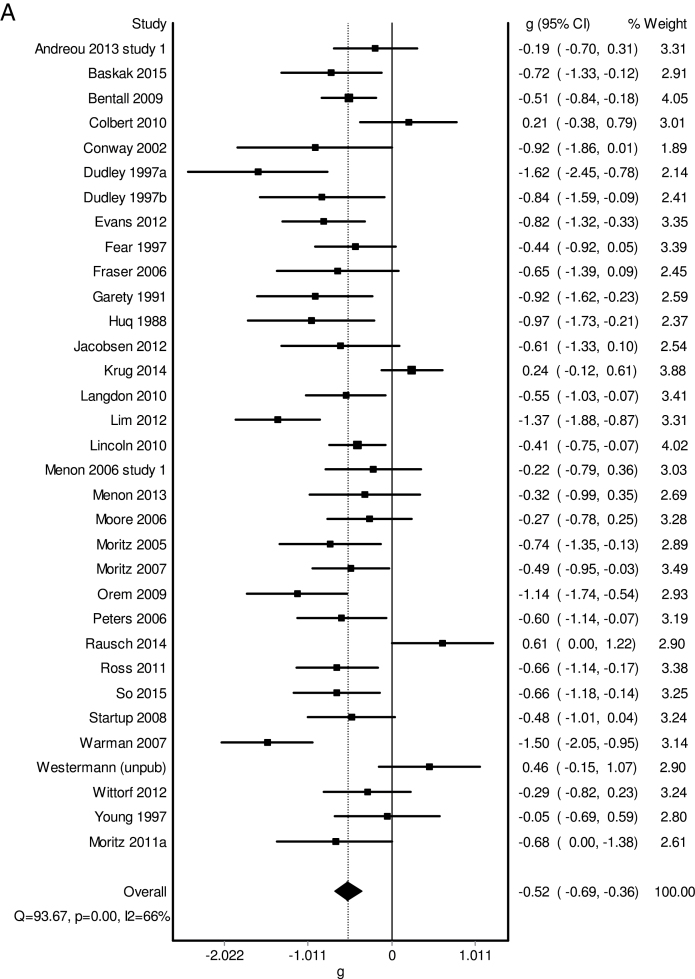
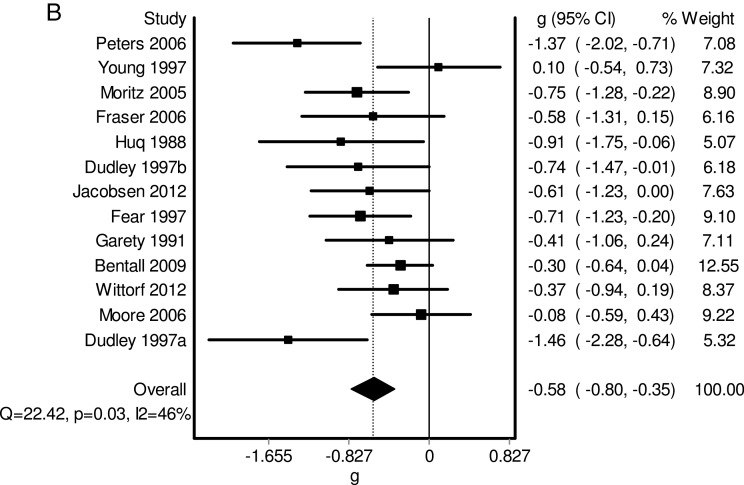
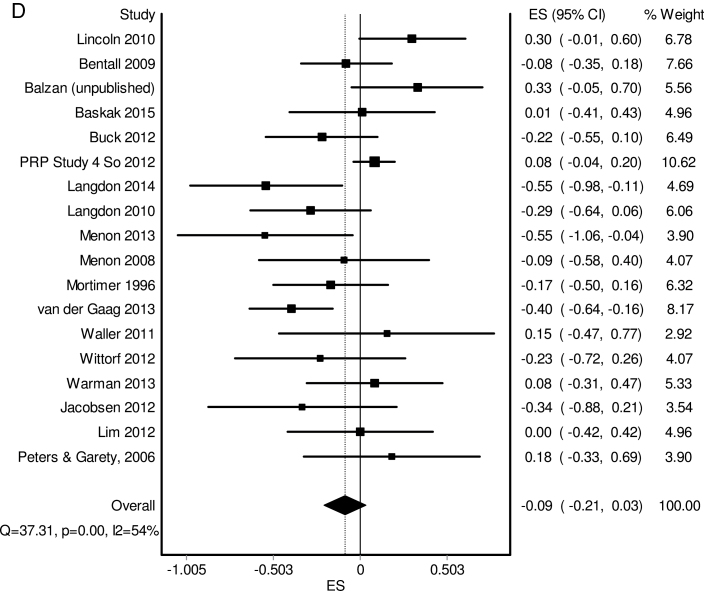
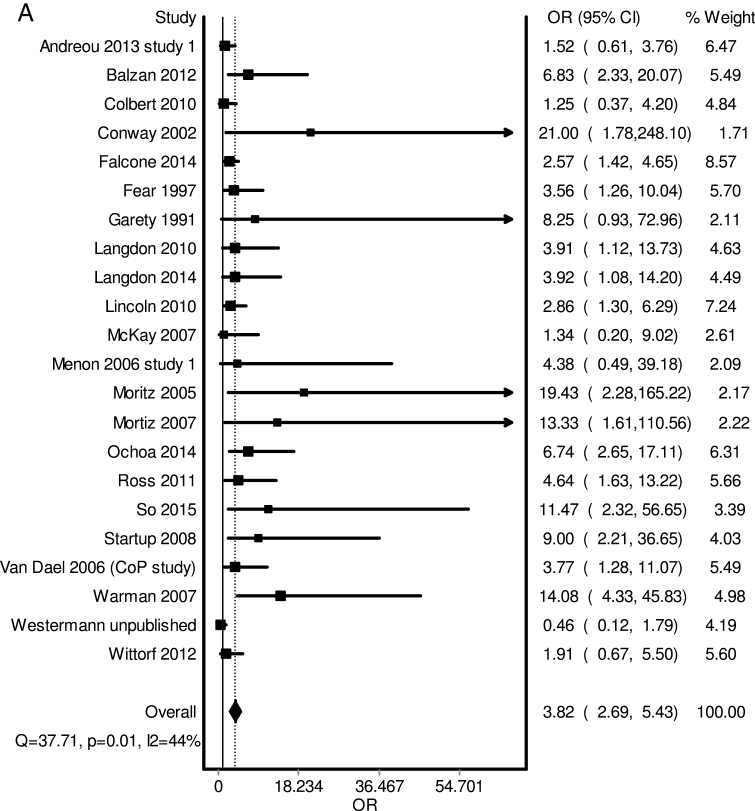
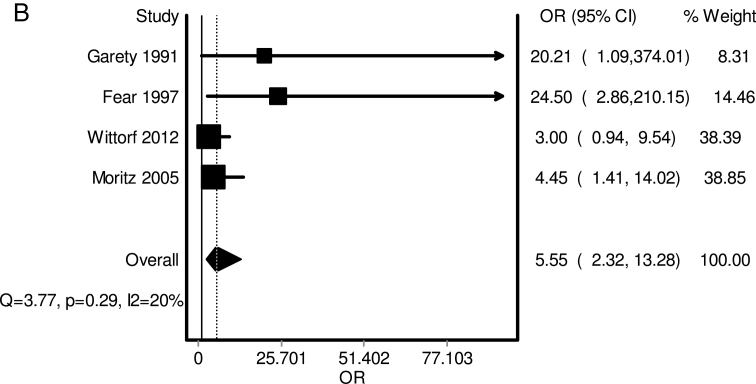
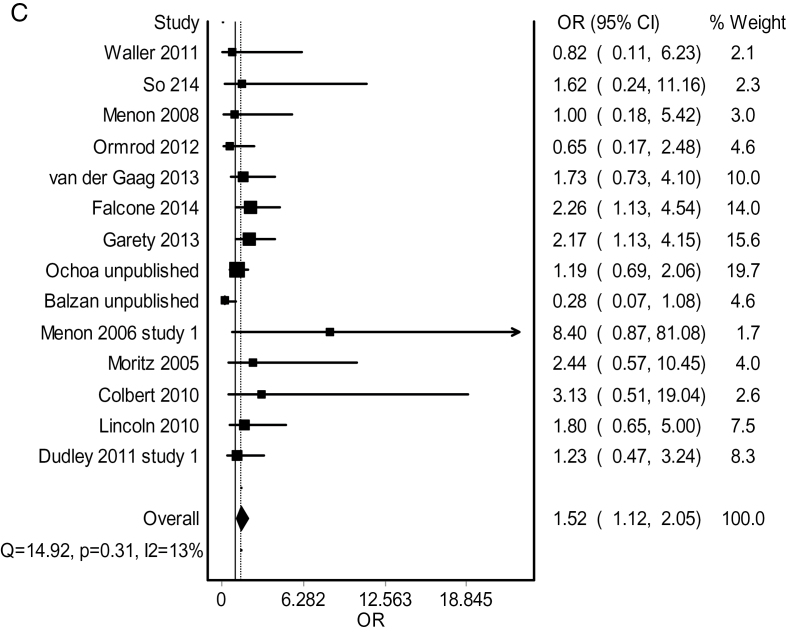
We did a systematic review and meta-analysis to investigate the magnitude and specificity of the "jumping to conclusions" (JTC) bias in psychosis and delusions. We examined the extent to which people with psychosis, and people with delusions specifically, required less information before making decisions. We examined (1) the average amount of information required to make a decision and (2) numbers who demonstrated an extreme JTC bias, as assessed by the "beads task." We compared people with psychosis to people with and without nonpsychotic mental health problems, and people with psychosis with and without delusions. We examined whether reduced data-gathering was associated with increased delusion severity. We identified 55 relevant studies, and acquired previously unpublished data from 16 authors. People with psychosis required significantly less information to make decisions than healthy individuals (k= 33,N= 1935,g= -0.53, 95% CI -0.69, -0.36) and those with nonpsychotic mental health problems (k= 13,N= 667,g= -0.58, 95% CI -0.80, -0.35). The odds of extreme responding in psychosis were between 4 and 6 times higher than the odds of extreme responding by healthy participants and participants with nonpsychotic mental health problems. The JTC bias was linked to a greater probability of delusion occurrence in psychosis (k= 14,N= 770, OR 1.52, 95% CI 1.12, 2.05). There was a trend-level inverse association between data-gathering and delusion severity (k= 18;N= 794;r= -.09, 95% CI -0.21, 0.03). Hence, nonaffective psychosis is characterized by a hasty decision-making style, which is linked to an increased probability of delusions.
Keywords: beads task; delusions; jumping to conclusions; reasoning; schizophrenia.
© The Author 2015. Published by Oxford University Press on behalf of the Maryland Psychiatric Research Center.
Figures
References
-
- Freeman D. Suspicious minds: the psychology of persecutory delusions. Clin Psychol Rev. 2007;27:425–457. - PubMed
-
- Leucht S, Arbter D, Engel RR, Kissling W, Davis JM. How effective are second-generation antipsychotic drugs? A meta-analysis of placebo-controlled trials. Mol Psychiatry. 2009;14:429–447. - PubMed
-
- Turner DT, van der Gaag M, Karyotaki E, Cuijpers P. Psychological interventions for psychosis: a meta-analysis of comparative outcome studies. Am J Psychiatry. 2014;171:523–538. - PubMed
-
- Dudley R, Over DE. People with delusions jump to conclusions: a theoretical account ofresearch findings on the reasoning of people with delusions. Clin Psychol Psychother. 2003;10:263–274.
-
- Warman DM, Lysaker PH, Martin JM, Davis L, Haudenschield SL. Jumping to conclusions and the continuum of delusional beliefs. Behav Res Ther. 2007;45:1255–1269. - PubMed
Publication types
MeSH terms
LinkOut - more resources
Full Text Sources
Other Literature Sources
Medical
Molecular Biology Databases
