Incidence of Patients With Knee Strain and Sprain Occurring at Sports or Recreation Venues and Presenting to United States Emergency Departments
- PMID: 26523662
- PMCID: PMC4732399
- DOI: 10.4085/1062-6050-50.11.06
Incidence of Patients With Knee Strain and Sprain Occurring at Sports or Recreation Venues and Presenting to United States Emergency Departments
Abstract
Context: Knee injuries account for a substantial percentage of all athletic injuries. The relative rates of knee injury for a variety of sports by sex and age need to be understood so we can better allocate resources, such as athletic trainers, to properly assess and treat injuries and reduce injury risk.
Objective: To describe the epidemiology of patients with sport-related knee strain and sprain presenting to US emergency departments from 2002 to 2011.
Design: Cross-sectional study.
Setting: Using the Consumer Products Safety Commission's National Electronic Injury Surveillance System and the US Census Bureau, we extracted raw data to estimate national rates of patients with knee strain and sprain presenting to emergency departments.
Patients or other participants: Participants were individuals sustaining a knee strain or sprain at sports or recreation venues and presenting to local emergency departments for treatment. We included 12 popular sports for males and 11 for females. Ages were categorized in six 5-year increments for ages 5 to 34 years and one 10-year increment for ages 35 to 44 years.
Main outcome measure(s): Incidence rates were calculated using weights provided by the National Electronic Injury Surveillance System and reported with their 95% confidence intervals for sport, sex, and age.
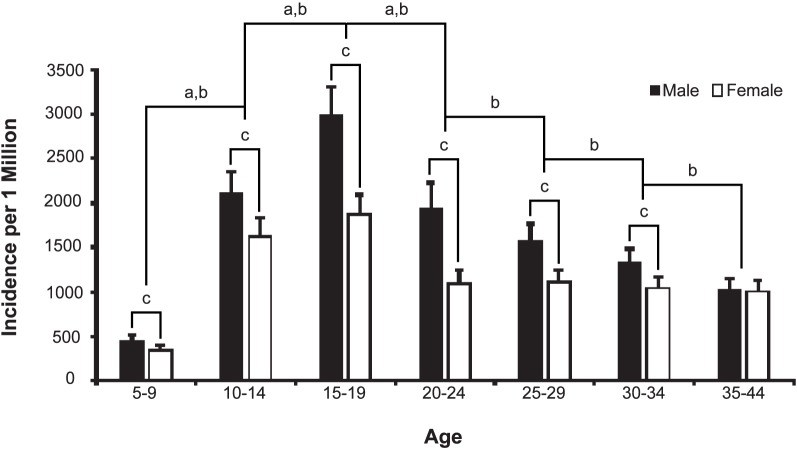
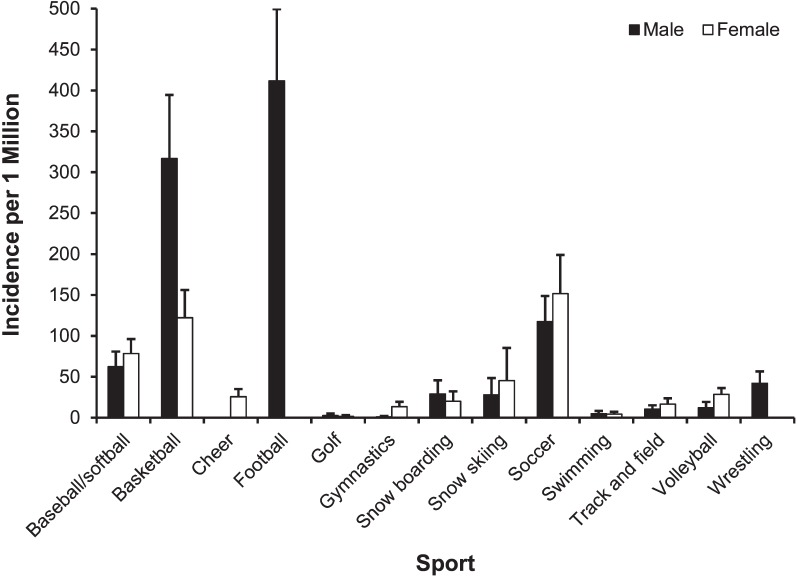
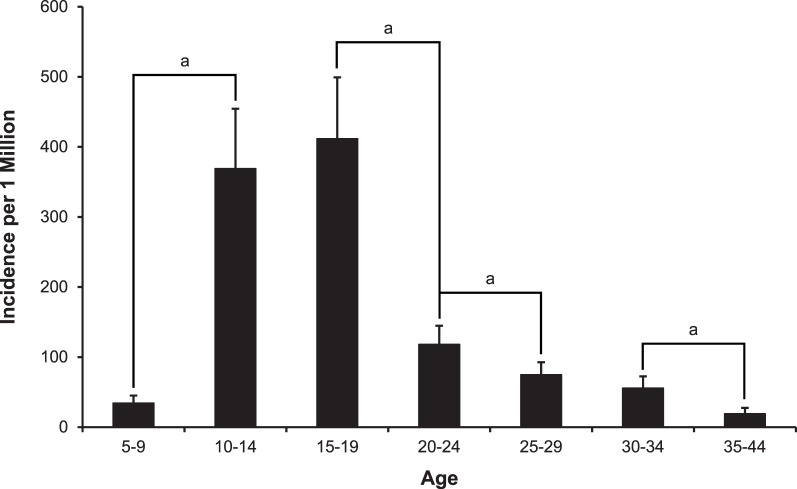
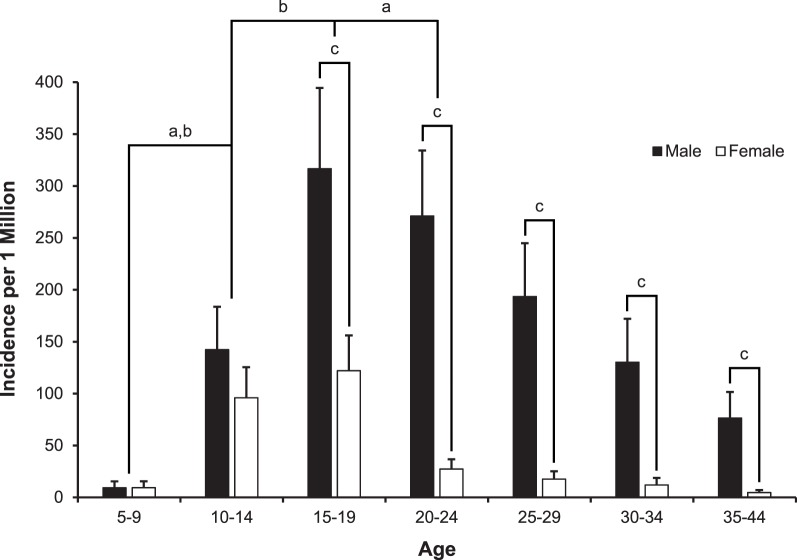
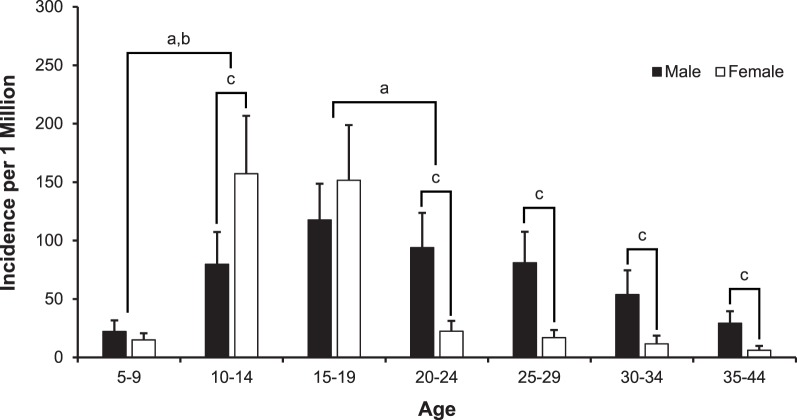
Results: Strain and sprain injury rates varied greatly by sport, sex, and age group. The highest injury rates occurred in football and basketball for males and in soccer and basketball for females. The most at-risk population was 15 to 19 years for both sexes.
Conclusions: Athletes experience different rates of knee strain and sprain according to sport, sex, and age. Increased employment of athletic trainers to care for the highest-risk populations, aged 10 to 19 years, is recommended to reduce emergency department use and implement injury-prevention practices.
Keywords: athletic injuries; athletics; epidemiology; sex differences.
Figures
References
-
- Gage BE, McIlvain NM, Collins CL, Fields SK, Comstock RD. Epidemiology of 6.6 million knee injuries presenting to United States emergency departments from 1999 through 2008. Acad Emerg Med. 2012;19(4):378–385. - PubMed
-
- de Loës M, Dahlstedt LJ, Thomée R. A. 7-year study on risks and costs of knee injuries in male and female youth participants in 12 sports. Scand J Med Sci Sports. 2000;10(2):90–97. - PubMed
-
- Rechel JA, Collins CL, Comstock RD. Epidemiology of injuries requiring surgery among high school athletes in the United States, 2005 to 2010. J Trauma. 2011;71(4):982–989. - PubMed
Publication types
MeSH terms
LinkOut - more resources
Full Text Sources
Other Literature Sources
Medical