


Age-related associative memory deficits in value-based remembering: The contribution of agenda-based regulation and strategy use
- PMID: 26523692
- PMCID: PMC4679653
- DOI: 10.1037/a0039818
Age-related associative memory deficits in value-based remembering: The contribution of agenda-based regulation and strategy use
Abstract
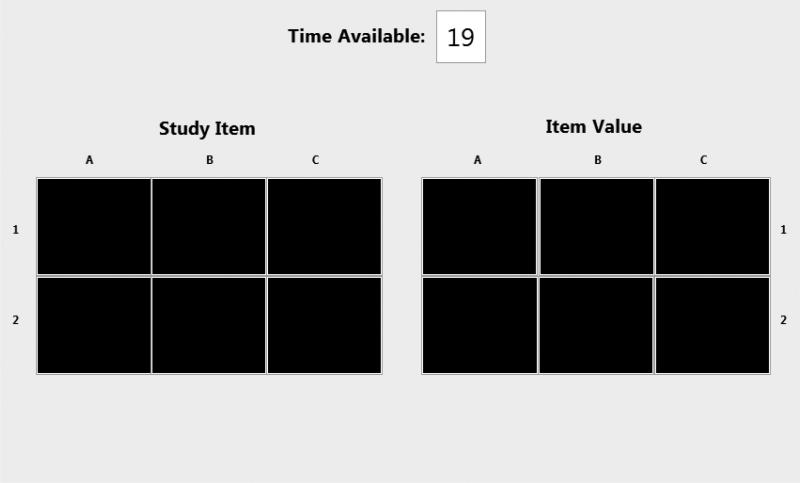
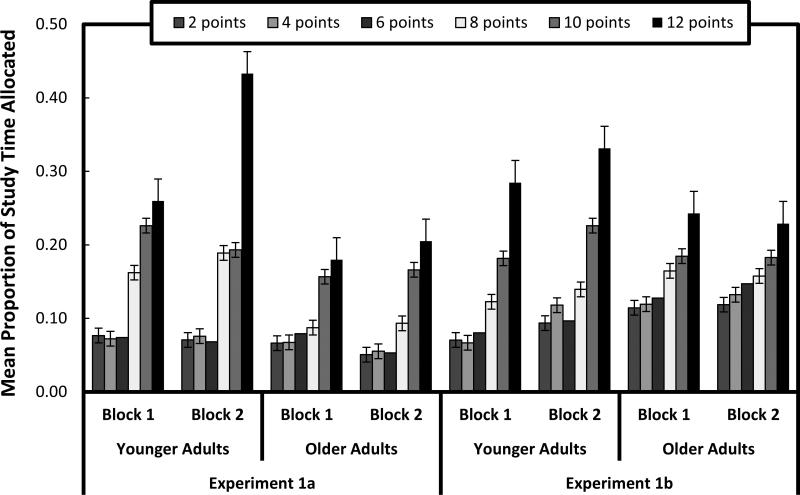
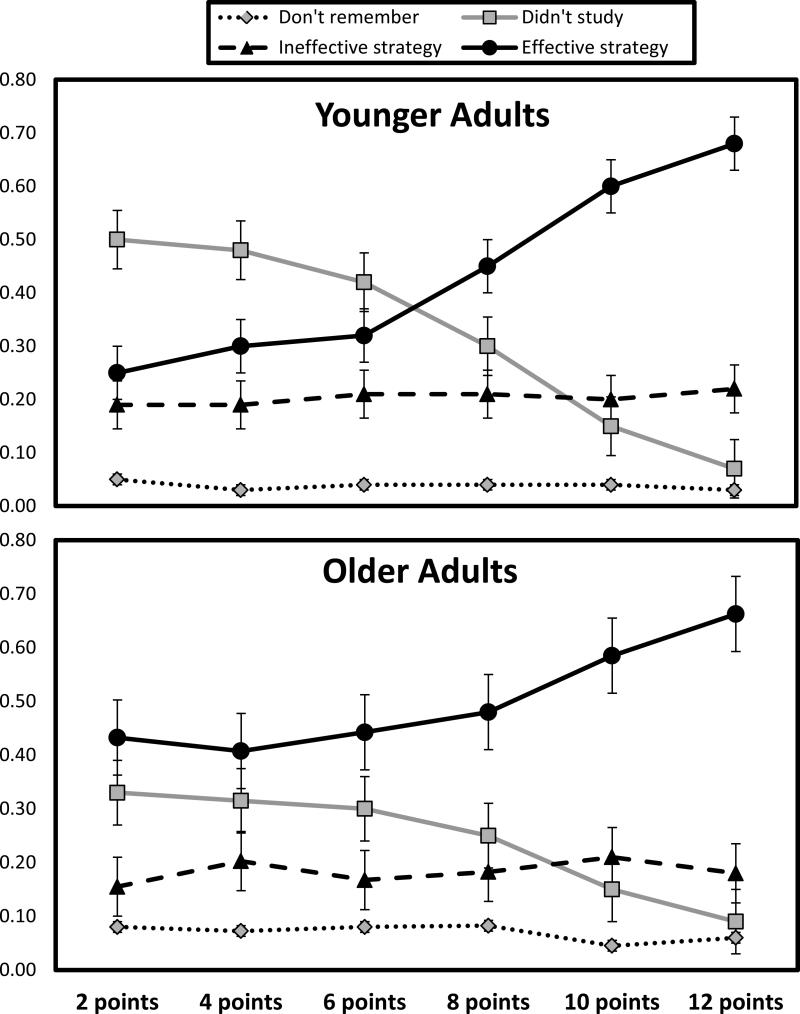
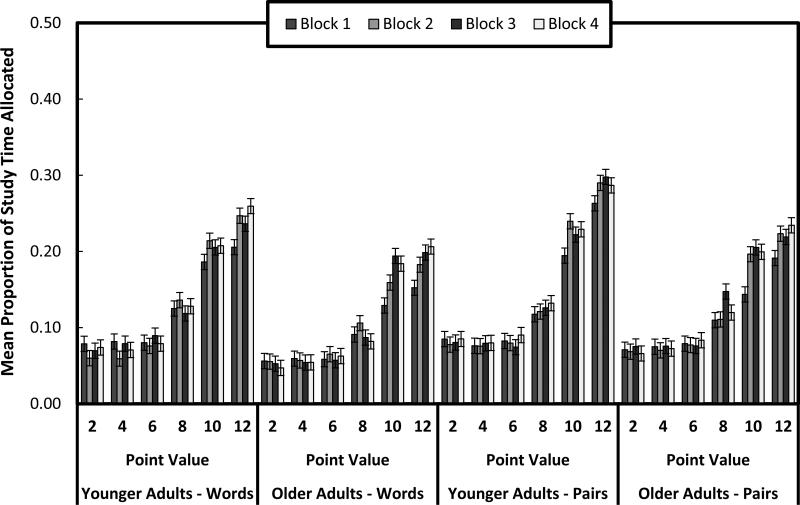
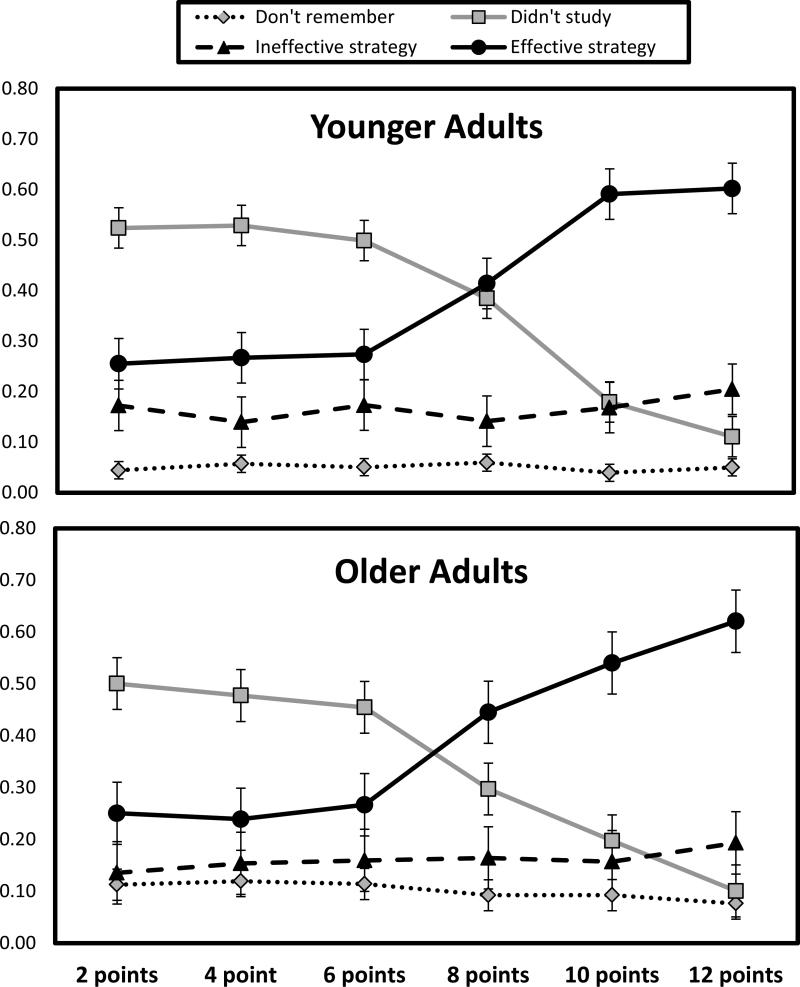
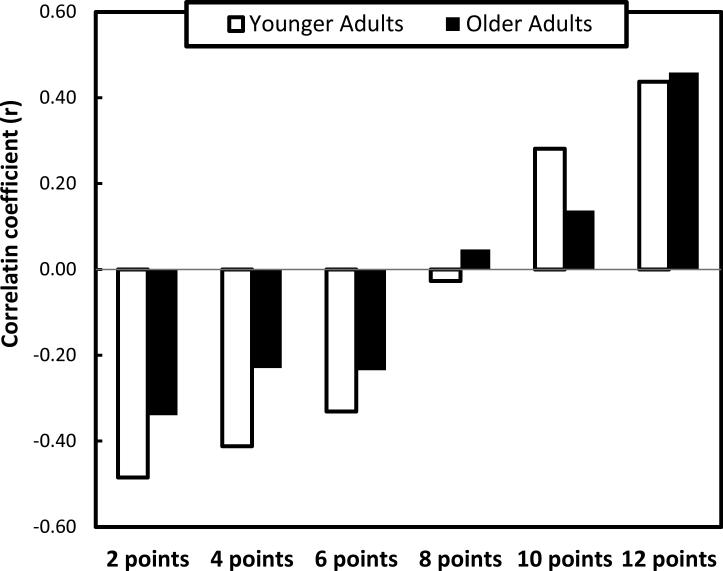
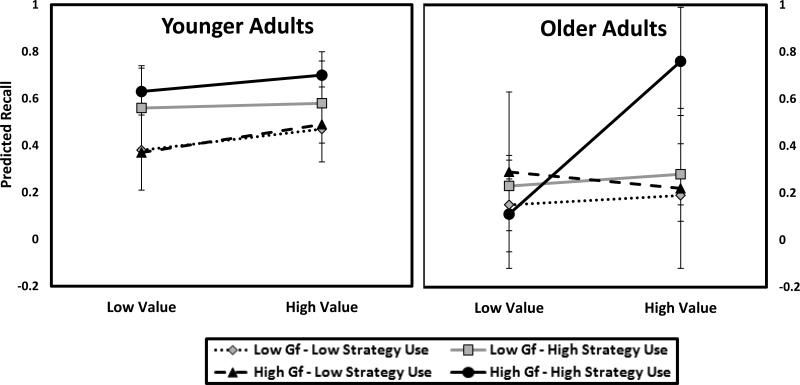
Value-based remembering in free-recall tasks may be spared from the typical age-related cognitive decline observed for episodic memory. However, it is unclear whether value-based remembering for associative information is also spared from age-related cognitive decline. The current experiments evaluated the contribution of agenda-based based regulation and strategy use during study to age differences and similarities in value-based remembering of associative information. Participants studied word pairs (Experiments 1-2) or single words (Experiment 2) slated with different point values by moving a mouse controlled cursor to different spatial locations to reveal either items for study or the point value associated with remembering each item. Some participants also provided strategy reports for each item. Younger and older adults allocated greater time to studying high- than low-valued information, reported using normatively effective encoding strategies to learn high-valued pairs, and avoided study of low-valued pairs. As a consequence, both age groups selectively remembered more high- than low-valued items. Despite nearly identical regulatory behavior, an associative memory deficit for older adults was present for high-valued pairs. Age differences in value-based remembering did not occur when the materials were word lists. Fluid intelligence also moderated the effectiveness of older adults' strategy use for high-valued pairs (Experiment 2). These results suggest that age differences in associative value-based remembering may be due to some older adults' gleaning less benefit from using normatively effective encoding strategies rather than age differences in metacognitive self-regulation per se.
(c) 2015 APA, all rights reserved).
Figures
References
-
- Ariel R, Al-Harthy IS, Was CA, Dunlosky J. Habitual reading biases in the allocation of study time. Psychonomic Bulletin & Review. 2011;18:1015–1021. - PubMed
-
- Ariel R, Dunlosky J. When do learners shift from habitual to agenda-based processes when selecting items for study? Memory & Cognition. 2013;41:416–428. - PubMed
-
- Ariel R, Dunlosky J, Bailey H. Agenda-based regulation of study-time allocation: When agendas override item-based monitoring. Journal of Experimental Psychology: General. 2009;138:432–447. - PubMed
Publication types
MeSH terms
Grants and funding
LinkOut - more resources
Full Text Sources
Other Literature Sources
Medical
Research Materials
