. 2015 Nov 10;13(6):1194-1205.
doi: 10.1016/j.celrep.2015.09.078. Epub 2015 Oct 29.

TRIM28 Controls Genomic Imprinting through Distinct Mechanisms during and after Early Genome-wide Reprogramming

Affiliations

TRIM28 Controls Genomic Imprinting through Distinct Mechanisms during and after Early Genome-wide Reprogramming

Katherine A Alexander et al. Cell Rep. .

Abstract

Genomic imprinting depends on the establishment and maintenance of DNA methylation at imprinting control regions. However, the mechanisms by which these heritable marks influence allele-specific expression are not fully understood. By analyzing maternal, zygotic, maternal-zygotic, and conditional Trim28 mutants, we found that the transcription factor TRIM28 controls genomic imprinting through distinct mechanisms at different developmental stages. During early genome-wide reprogramming, both maternal and zygotic TRIM28 are required for the maintenance of methylation at germline imprints. However, in conditional Trim28 mutants, Gtl2-imprinted gene expression was lost despite normal methylation levels at the germline IG-DMR. These results provide evidence that TRIM28 controls imprinting after early embryonic reprogramming through a mechanism other than the maintenance of germline imprints. Additionally, our finding that secondary imprints were hypomethylated in TRIM28 mutants uncovers a requirement of TRIM28 after genome-wide reprogramming for interpreting germline imprints and regulating DNA methylation at imprinted gene promoters.


Figures

Figure 1
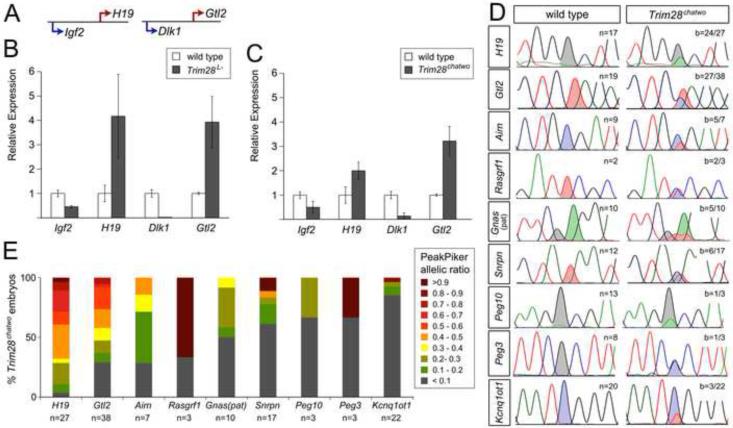
Figure 1. Imprinted gene expression in zygotic Trim28 mutants
(A) Diagram of the Igf2-H19 and Dlk1-Gtl2 clusters, indicating maternally (red) and paternally (blue) expressed genes. (B-C) Expression of imprinted genes in the Igf2-H19 and Dlk1-Gtl2 clusters as determined by qRT-PCR in pools of 3-4 E7.5 Trim28L- (B) and E8.5 Trim28chatwo (C) embryos. Data shown is normalized to ß-actin and relative to wild type controls. Error bars represent the standard deviation from two biological replicates. (D) Selected Sanger sequencing traces of cDNAs for H19, Gtl2, Airn, Rasgrf1, Gnas (paternal isoform), Snrpn, Peg10, Peg3, and Kcnq1ot1 in individual E8.5 wild type and Trim28chatwo embryos containing allele-specific SNPs (shaded peaks). All imprinted genes were analyzed in embryonic tissues, except for Rasgrf1, which is only imprinted in E8.5 extraembryonic tissues (Dockery et al., 2009). b = embryos with biallelic expression over the total number of embryos analyzed. (E) Percent of Trim28chatwo embryos with biallelic expression of imprinted genes as analyzed by Sanger sequencing and quantified using PeakPicker. Wild type embryos showed PeakPicker allelic ratios between 0-0.1. Values higher than 0.1 were considered biallelic. A value of 1 corresponds to equal expression from both alleles. n = total number of embryos analyzed.
Figure 2
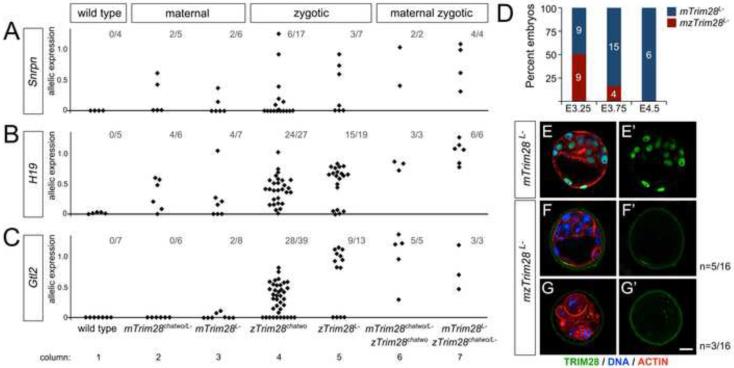
Figure 2. Analysis of maternal, zygotic, and maternal-zygotic Trim28 mutants
Allelic expression in wild type, maternal (mTrim28chatwo/L- and mTrim28L-), zygotic (zTrim28chatwo and zTrim28L-), and hypomorphic maternal-zygotic (mTrim28L- - zTrim28chatwo/L- and mTrim28chatwo/L- - zTrim28chatwo) Trim28 mutants was analyzed at Snrpn (A), H19 (B), and Gtl2 (C) by Sanger sequencing and quantified with PeakPicker. Each diamond represents a single embryo. The fractional numbers indicate the number of mutants with biallelic expression over the total number of embryos analyzed. All embryos were analyzed at E8.5 except for zTrim28L- and hypomorphic maternal-zygotic mutants, which were analyzed at E7.5. Analysis of wild type samples at E7.5 and E8.5 showed similar results (not shown). (D) Percentage of mTrim28L- (blue) and mzTrim28L- (red) mutants found in dissections at E3.25 (n=18), E3.75 (n=19), and E4.5 (n=6). (E-G) Fluorescence staining of TRIM28 (green), DNA (DAPI, blue), and ACTIN (phalloidin, red) in mTrim28L- (E) and mzTrim28L- (F-G) blastocysts. TRIM28 localization (green channel) is shown separately in E’-G’. Scale bar = 20µm.
Figure 3
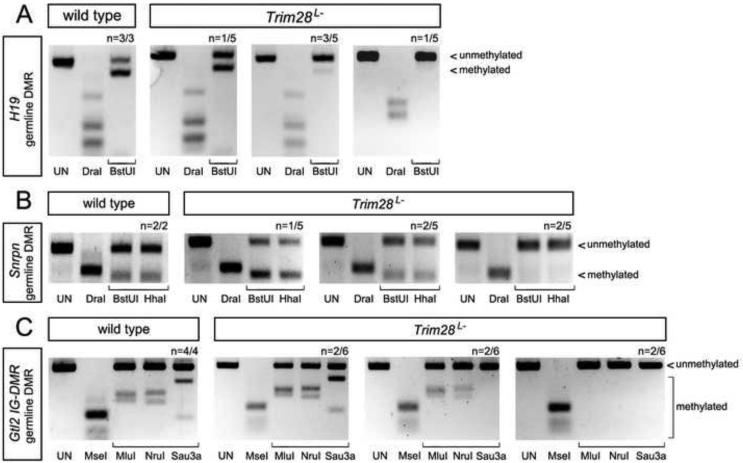
Figure 3. DNA methylation at the H19 and Gtl2 germline DMRs
DNA methylation at the H19 (A), Snrpn (B) and Gtl2 (C) germline DMRs was detected by combined restriction-bisulfite analysis (COBRA) in single E7.5 wild type and Trim28L- embryos. n = number of embryos showing results similar to the one shown, relative to the total number of embryos analyzed. Restriction with DraI (A-B) and MseI (C) measured the efficiency of bisulfite conversion. All other restriction enzymes (lanes with brackets) only cut if the original sample was methylated. UN-undigested.
Figure 4
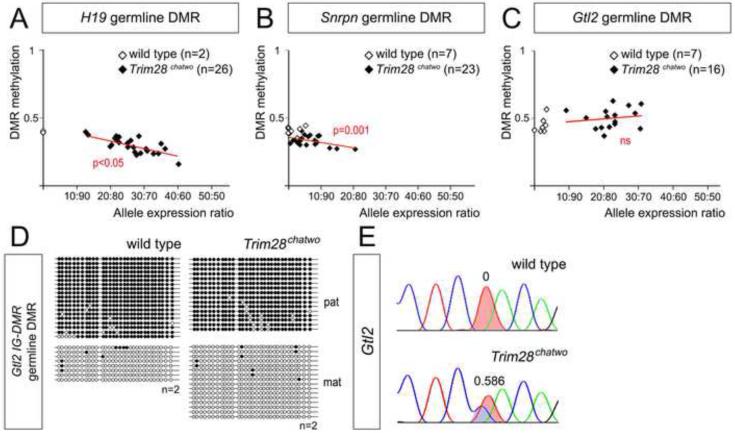
Figure 4. DNA methylation at germline DMRs
DNA methylation at the H19 (A), Snrpn (B) and Gtl2 (C-D) germline DMRs was measured in single E8.5 wild type and Trim28chatwo embryos through pyrosequencing (A-C) and bisulfite sequencing (D). Plots in A-C represent the allelic expression ratio versus DMR methylation as measured by pyrosequencing. Figure S2 illustrates the relationship between allelic expression ratios quantified by PeakPicker and pyrosequencing. Red lines show the linear regression model for Trim28chatwo embryos. P-values (red) indicate the correlation between biallelic expression and DNA methylation. n = toal embryos analyzed. (D) Representative bisulfite sequencing results for wild type and Trim28chatwo embryos, additional results are shown in Figure S3. Filled circles, methylated DNA. Empty circles, unmethylated DNA. Maternal (mat) and paternal (pat) chromosomes were identified by allele-specific SNPs. (E) Sanger sequencing traces of cDNAs for Gtl2 in the embryos analyzed in D. Numbers indicate the PeakPicker allelic expression ratio.
Figure 5
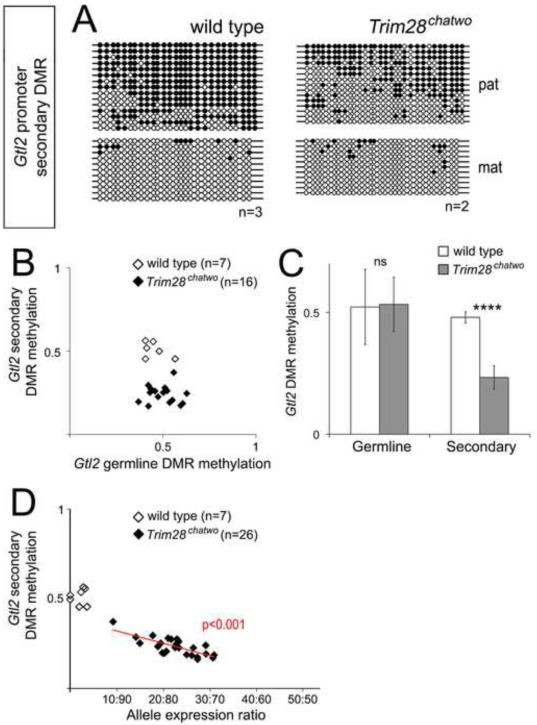
Figure 5. DNA methylation at the Gtl2 secondary DMR correlates with biallelic expression in Trim28chatwo mutants
DNA methylation at the Gtl2 secondary DMR was measured in single E8.5 wild type and Trim28chatwo embryos by bisulfite sequencing (A) and pyrosequencing (B-D). (A) Representative bisulfite sequencing results for wild type and Trim28chatwo embryos, additional results are shown in Figure S3. Bisulfite sequencing in A and Figure S3 shows results from Trim28chatwo embryos that biallelically expressed Gtl2. Filled circles, methylated DNA. Empty circles, unmethylated DNA. Maternal (mat) and paternal (pat) chromosomes were identified by allele-specific SNPs. (B) DNA methylation at the germline IG-DMR versus the Gtl2 secondary DMR as measured by pyrosequencing in single wild type and Trim28chatwo embryos. (C) Average DMR methylation for all wild type and Trim28chatwo embryos analyzed. (D) Gtl2 allele expression ratios versus Gtl2 secondary DMR methylation as measured by pyrosequencing in single wild type and Trim28chatwo embryos. The red line in D shows the linear regression model for Trim28chatwo embryos. The P-value (red) indicates the correlation between biallelic expression and DNA methylation. The data represented in B-D includes the same E8.5 wild type and Trim28chatwo embryos as shown in Figure 4C. n = number of embryos analyzed. Error bars represent standard deviation. Statistical significance was measured using a paired student’s t-test, ns-not significant, ****p<0.0001.
Figure 6
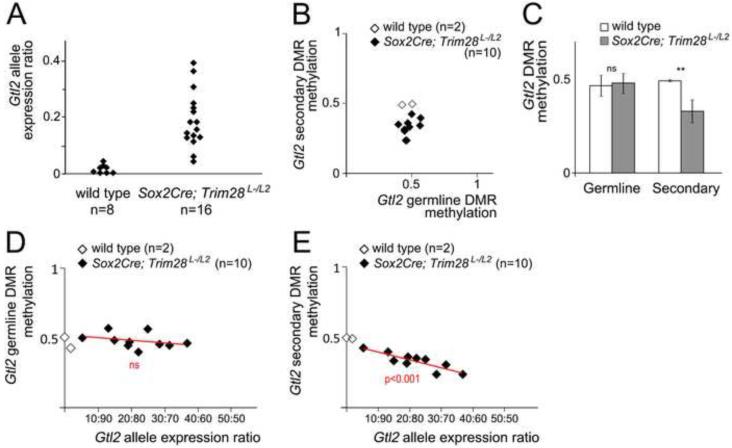
Figure 6. Gtl2 DMR methylation and imprinted gene expression in Sox2Cre;Trim28L-/L2 embryos
(A) PeakPicker allelic expression ratios for Gtl2 in single E8.5 wild type and Sox2Cre;Trim28L-/L2 embryonic tissues. (B) Germline IG-DMR methylation versus Gtl2 secondary DMR methylation in E8.5 wild type and Sox2Cre;Trim28L-/L2 embryonic tissues. (C) Average DMR methylation in wild type and Sox2Cre;Trim28L-/L2 embryos. Error bars represent standard deviation. Statistical significance was measured using a paired student’s t-test: ns-not significant, **p<0.01. (D-E) Gtl2 allele expression ratio versus Gtl2 germline DMR methylation (D) and Gtl2 secondary DMR methylation (E) in wild type and Sox2Cre;Trim28L-/L2 embryos. Red lines show the linear regression model for Sox2Cre;Trim28L-/L2 embryos. P-value indicates the correlation between biallelic expression and DNA methylation, ns-not significant. n = number of embryos analyzed.
Figure 7
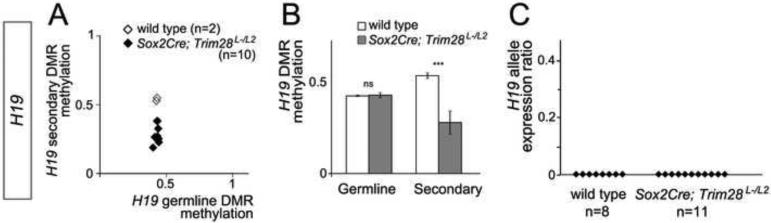
Figure 7. H19 DMR methylation and imprinted gene expression in Sox2Cre;Trim28L-/L2 embryos
DNA methylation and allelic expression was measured at the H19 imprinted clusters by pyrosequencing (A-B) and Sanger sequencing (C). (A) Germline DMR methylation versus secondary DMR methylation in E8.5 wild type and Sox2Cre;Trim28L-/L2 embryonic tissues. The same data is shown in (B) as the average DNA methylation levels at germline and secondary DMRs. Error bars represent standard deviation. Statistical significance was measured using a paired student’s t-test: ns-not significant, ***p<0.001. (C) Allele expression ratios as quantified using PeakPicker.

References

    1. Balmer D, Arredondo J, Samaco RC, LaSalle JM. MECP2 mutations in Rett syndrome adversely affect lymphocyte growth, but do not affect imprinted gene expression in blood or brain. Hum. Genet. 2002;110:545–552. - PubMed
    1. Bartolomei MS, Webber AL, Brunkow ME, Tilghman SM. Epigenetic mechanisms underlying the imprinting of the mouse H19 gene. Genes Dev. 1993;7:1663–1673. - PubMed
    1. Bell AC, Felsenfeld G. Methylation of a CTCF-dependent boundary controls imprinted expression of the Igf2 gene. Nature. 2000;405:482–485. - PubMed
    1. Bhogal B, Arnaudo A, Dymkowski A, Best A, Davis TL. Methylation at mouse Cdkn1c is acquired during postimplantation development and functions to maintain imprinted expression. Genomics. 2004;84:961–970. - PubMed
    1. Bian C, Yu X. PGC7 suppresses TET3 for protecting DNA methylation. Nucleic Acids Research. 2014;42:2893–2905. - PMC - PubMed

Publication types

LinkOut - more resources