Quotation accuracy in medical journal articles-a systematic review and meta-analysis
- PMID: 26528420
- PMCID: PMC4627914
- DOI: 10.7717/peerj.1364
Quotation accuracy in medical journal articles-a systematic review and meta-analysis
Abstract
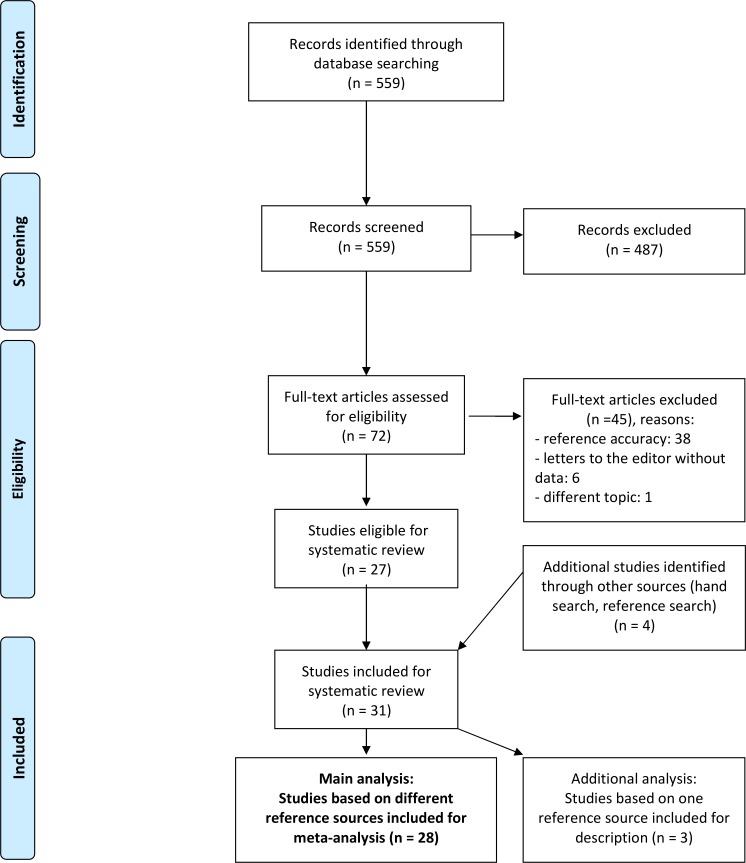
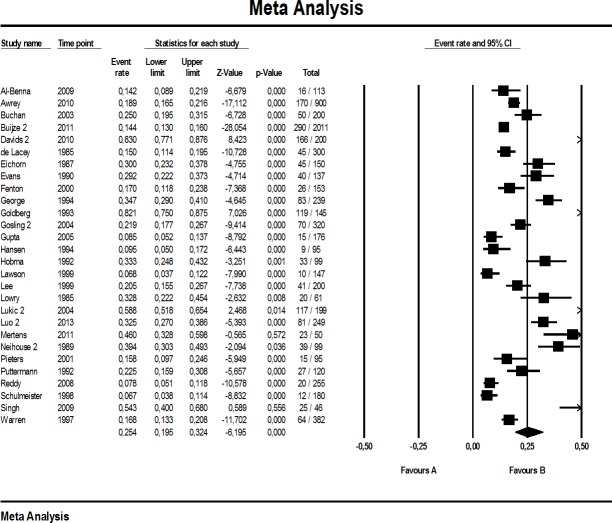
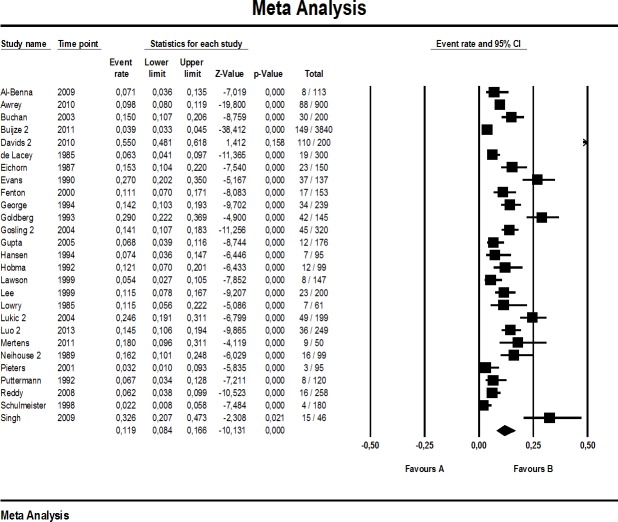
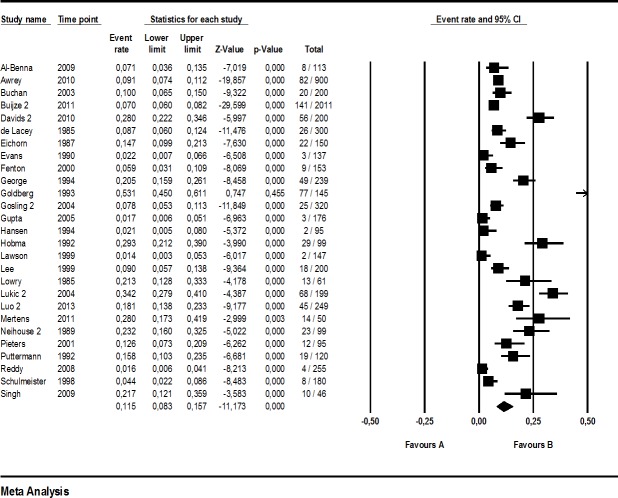
Background. Quotations and references are an indispensable element of scientific communication. They should support what authors claim or provide important background information for readers. Studies indicate, however, that quotations not serving their purpose-quotation errors-may be prevalent. Methods. We carried out a systematic review, meta-analysis and meta-regression of quotation errors, taking account of differences between studies in error ascertainment. Results. Out of 559 studies screened we included 28 in the main analysis, and estimated major, minor and total quotation error rates of 11,9%, 95% CI [8.4, 16.6] 11.5% [8.3, 15.7], and 25.4% [19.5, 32.4]. While heterogeneity was substantial, even the lowest estimate of total quotation errors was considerable (6.7%). Indirect references accounted for less than one sixth of all quotation problems. The findings remained robust in a number of sensitivity and subgroup analyses (including risk of bias analysis) and in meta-regression. There was no indication of publication bias. Conclusions. Readers of medical journal articles should be aware of the fact that quotation errors are common. Measures against quotation errors include spot checks by editors and reviewers, correct placement of citations in the text, and declarations by authors that they have checked cited material. Future research should elucidate if and to what degree quotation errors are detrimental to scientific progress.
Keywords: Bibliography; Citations; Impact factor; Journalology; Medical journals; Meta-analysis; Quotation accuracy; References; Systematic review.
Conflict of interest statement
Hannah Jergas has no competing interests to declare. Christopher Baethge is editor of Deutsches Ärzteblatt and Deutsches Ärzteblatt International and employee of the publishing house Deutscher Ärzte-Verlag. For this systematic review he has selected one of his own studies
Figures
References
LinkOut - more resources
Full Text Sources
Other Literature Sources