Review
. 2015 Dec 1;54(49):14638-58.
doi: 10.1002/anie.201505017. Epub 2015 Nov 4.

Quinone-Catalyzed Selective Oxidation of Organic Molecules

Affiliations
Review

Quinone-Catalyzed Selective Oxidation of Organic Molecules

Alison E Wendlandt et al. Angew Chem Int Ed Engl. .

Abstract

Quinones are common stoichiometric reagents in organic chemistry. Para-quinones with high reduction potentials, such as DDQ and chloranil, are widely used and typically promote hydride abstraction. In recent years, many catalytic applications of these methods have been achieved by using transition metals, electrochemistry, or O2 to regenerate the oxidized quinone in situ. Complementary studies have led to the development of a different class of quinones that resemble the ortho-quinone cofactors in copper amine oxidases and mediate the efficient and selective aerobic and/or electrochemical dehydrogenation of amines. The latter reactions typically proceed by electrophilic transamination and/or addition-elimination reaction mechanisms, rather than hydride abstraction pathways. The collective observations show that the quinone structure has a significant influence on the reaction mechanism and has important implications for the development of new quinone reagents and quinone-catalyzed transformations.

Keywords: amine oxidase; chloranil; dehydrogenation; oxidation; quinones.


Figures
Scheme 1
Scheme 1
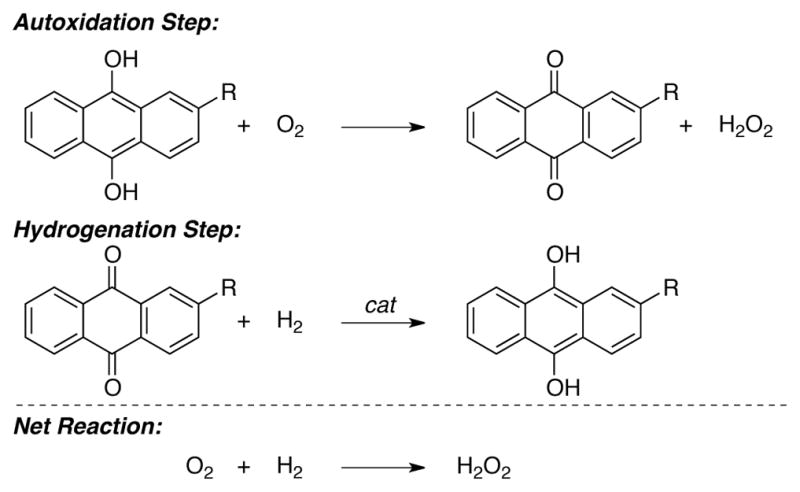
The anthraquinone oxidation (AO) process for industrial synthesis of H2O2, consisting of the sequential autoxidation and hydrogenation of a quinone mediator.
Scheme 2
Scheme 2
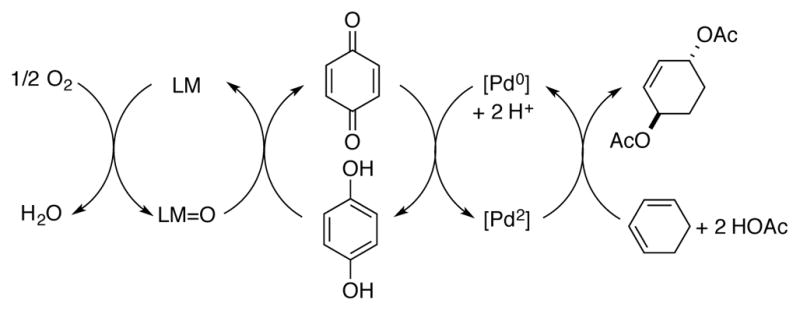
Use of quinones as redox shuttles in organic synthesis, represented here in Pd-catalyzed aerobic diacetoxylation of cyclohexadiene, involving Pd, quinone, and metal-macrocycle (LM)-coupled catalytic cycles.[6]
Scheme 3
Scheme 3
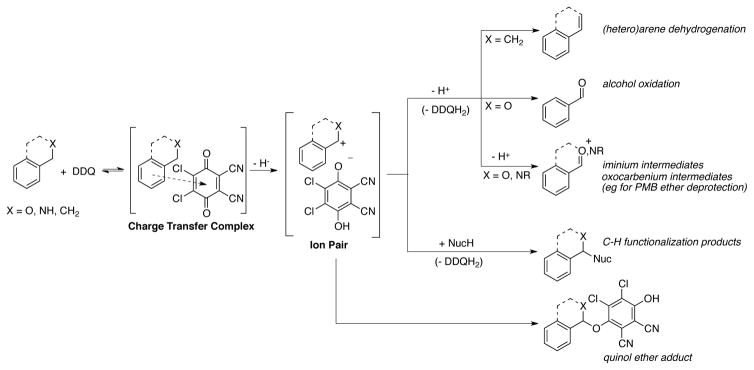
Hydride-transfer-initiated reaction pathways that accounts for the majority of known DDQ-mediated oxidation/dehydrogenation reactions.
Scheme 4
Scheme 4
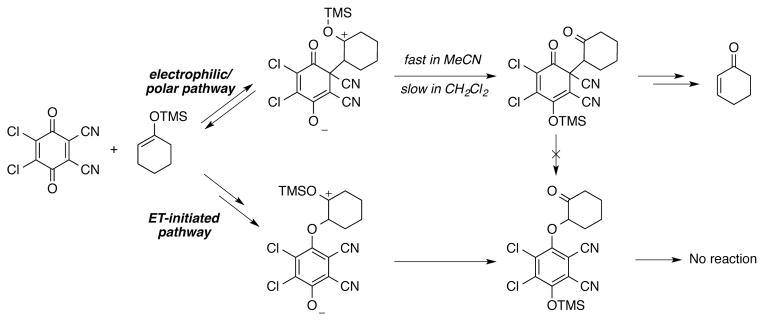
An electrophilic/polar pathway proposed for DDQ-mediated dehydrogenation of ketones and silyl enol ethers, together with an unproductive, competing electron-transfer (ET) pathway leading to a C–O coupled adduct. Scheme adapted from ref .
Scheme 5
Scheme 5
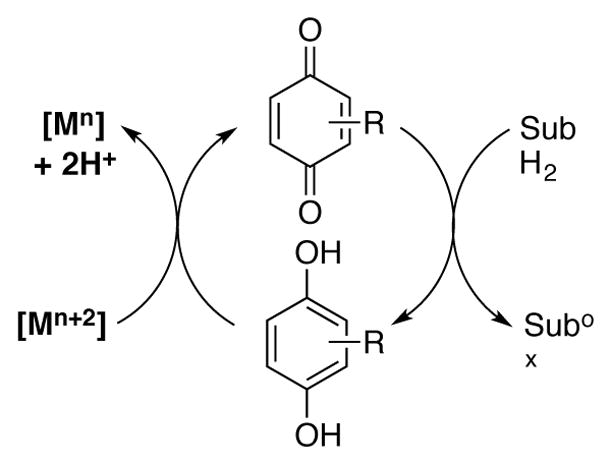
A generic representation of quinone-catalyzed substrate oxidation employing stoichiometric transition metal as the terminal oxidant.
Scheme 6
Scheme 6
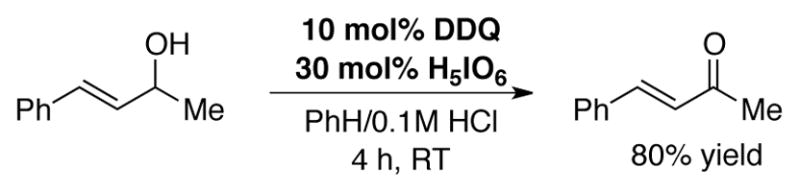
Catalytic oxidation of activated alcohols using catalytic DDQ with periodic acid under biphasic conditions.[40]
Scheme 7
Scheme 7
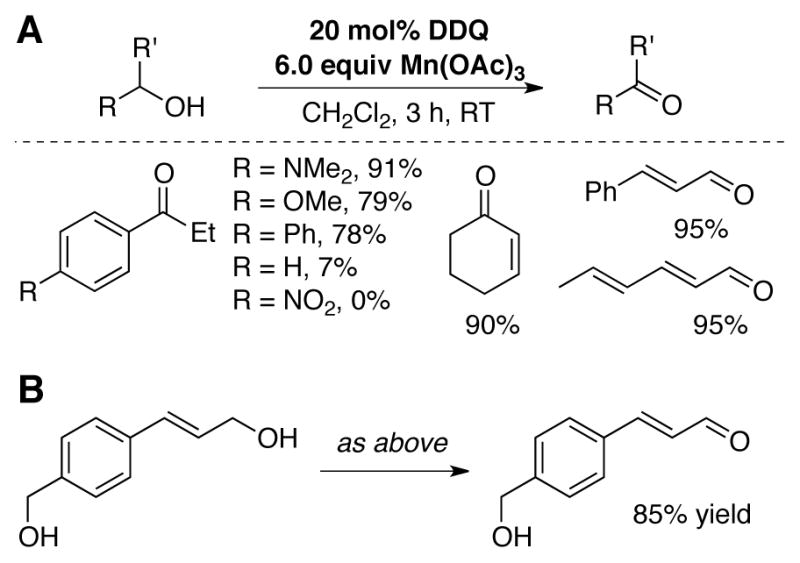
(A) Oxidation of activated alcohols using catalytic DDQ with Mn(OAc)3 as the terminal oxidant. (B) Selective oxidation of allylic alcohols over benzylic alcohols.[41]
Scheme 8
Scheme 8
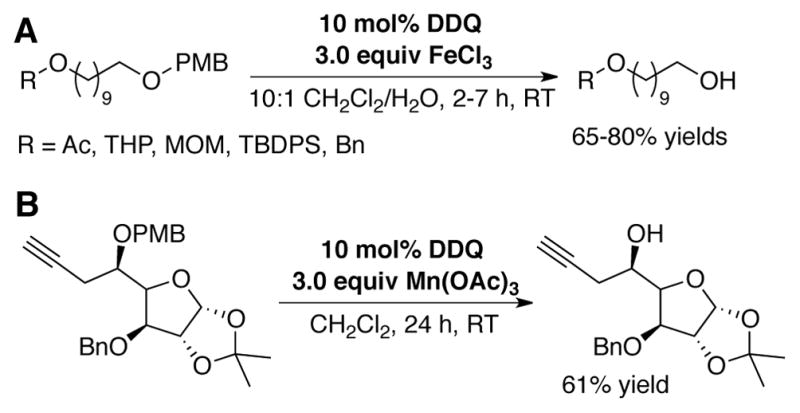
Catalytic deprotection of PMB ethers using DDQ in combination with (A) 3.0 equiv FeCl3, or (B) 3.0 equiv Mn(OAc)3 as the (super)stoichiometric terminal oxidant.[42]
Scheme 9
Scheme 9
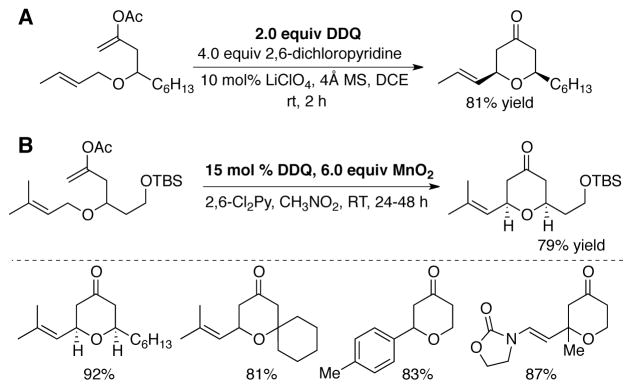
(A) Stoichometric DDQ-mediated oxidative intramolecular synthesis of tetrahydropyranone derivatives,[28k] and (B) subsequently-developed catalytic conditions for similar transformations.[44]
Scheme 10
Scheme 10
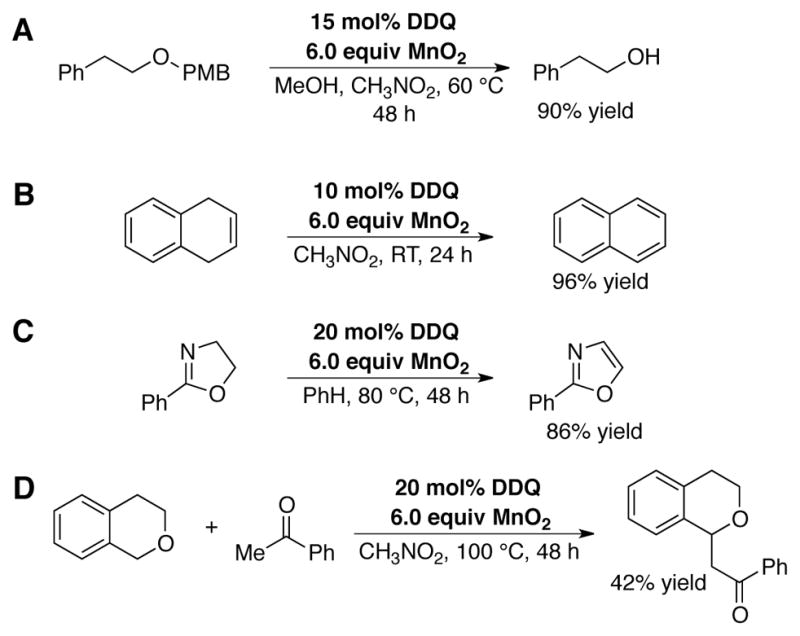
Examples of DDQ-catalyzed transformations with MnO2 as the terminal oxidant: (A) PMB deprotection, (B) arene and (C) heteroarene dehydrogenation reactions, as well as (D) CDC reaction of isochroman with acetophenone, based on reaction conditions developed for tetrahydropyranone synthesis.[44]
Scheme 11
Scheme 11
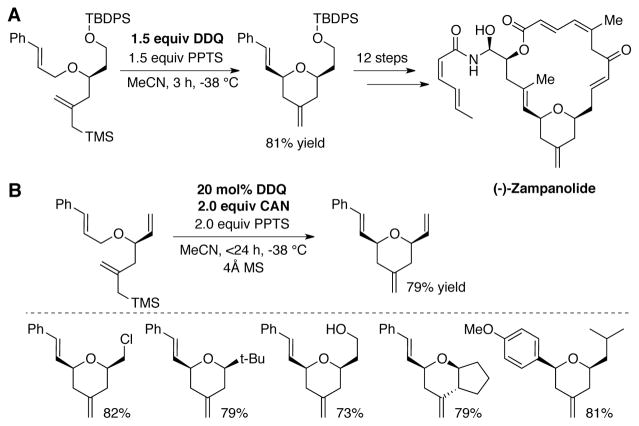
(A) Stoichiometric DDQ-mediated oxidative cyclization reaction towards the synthesis of Zampanolide,[45] and (B) subsequently developed DDQ-catalyzed conditions employing 2.0 equiv CAN as terminal oxidant.[46]
Scheme 12
Scheme 12
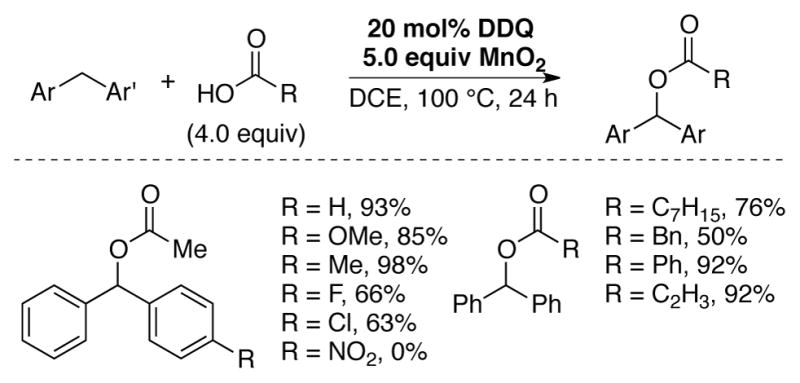
DDQ-catalyzed oxidative C-O coupling of diarylmethane C–H bonds employing MnO2 as the terminal oxidant.[47]
Scheme 13
Scheme 13
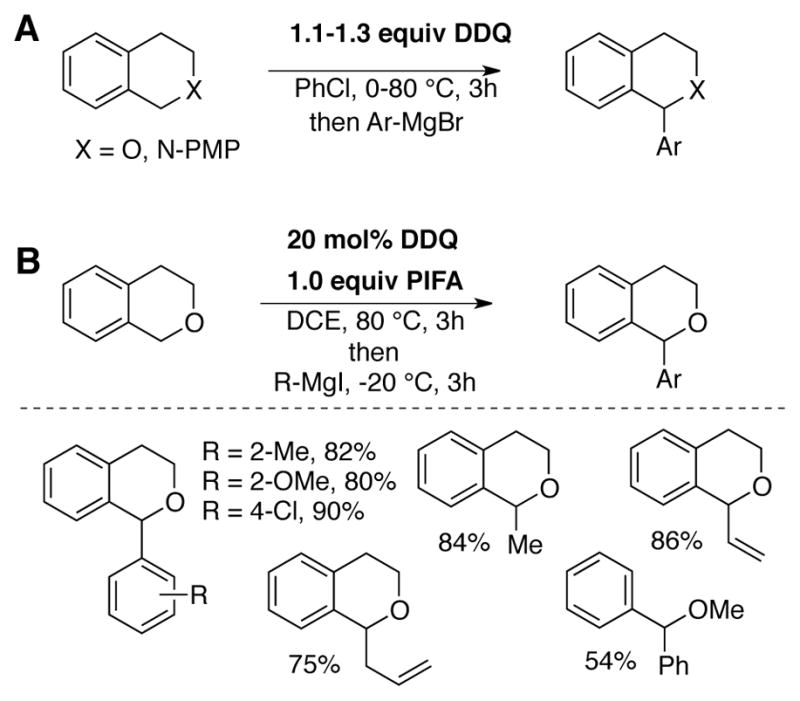
Cross-dehydrogenative coupling of activated C–H bonds with aryl Grignard reagents using (A) stoichiometric DDQ,[48] or (B) catalytic DDQ with [bis(trifluoroacetoxy)iodo]-benzene (PIFA) as stoichiometric oxidant.[49]
Scheme 14
Scheme 14
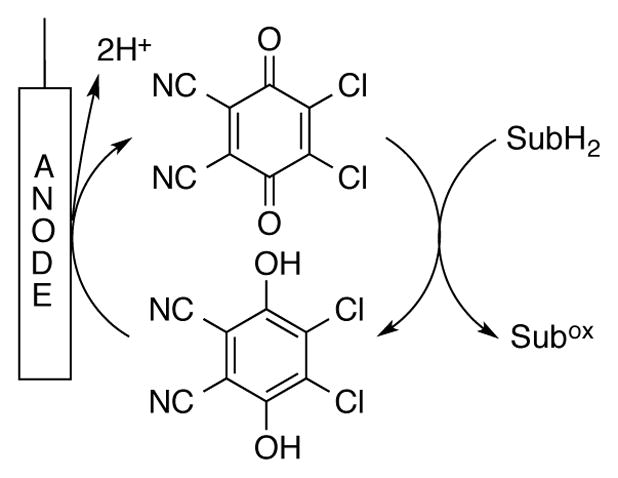
Generic representation of electrochemical quinone-catalyzed oxidation of organic substrates.
Scheme 15
Scheme 15
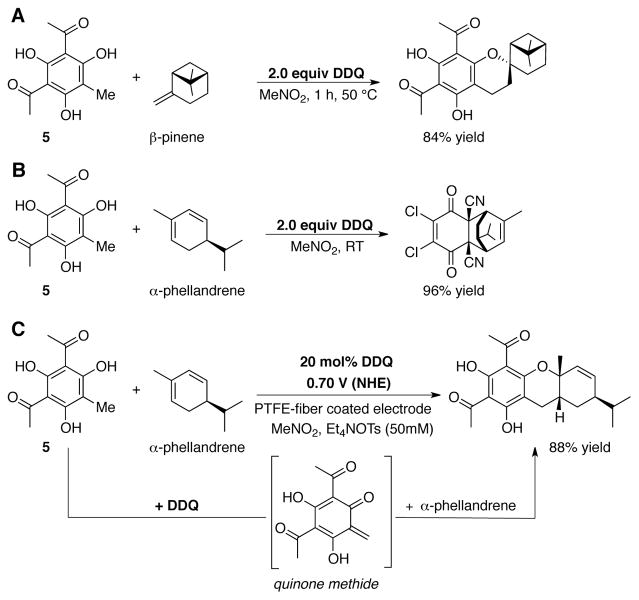
Stoichiometric DDQ-promoted Diels-Alder reaction of compound 5 leads to desired product with (A) β-pinene, but not with (B) α-phellandrene as the reaction partner.[52] (C) Reaction with α-phellandrene is successful when electrochemical catalytic DDQ conditions are employed.[53]
Scheme 16
Scheme 16
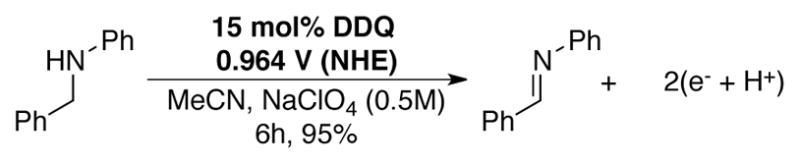
Electrochemical DDQ-catalyzed dehydrogenation of C–N bonds by controlled potential electrolysis at 0.964 V.[16]
Scheme 17
Scheme 17
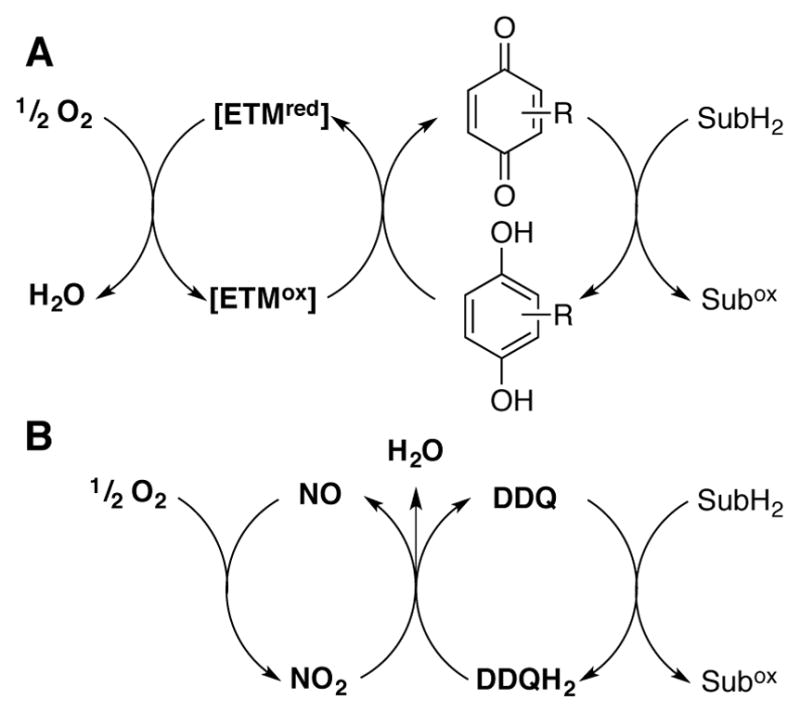
A generic representation of aerobic quinone-catalyzed substrate oxidation employing (A) an electron transfer mediator (ETM) or (B) NO/NO2 redox couple to facilitate hydroquinone reoxidation.
Scheme 18
Scheme 18
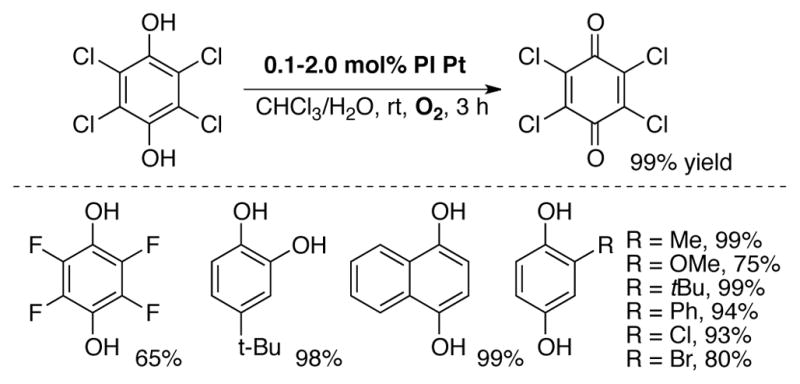
Aerobic oxidation of tetrachlorohydroquinone and other hydroquinone derivatives to corresponding quinones using polymer incarcerated Pt (PI Pt) nanoclusters.[60]
Scheme 19
Scheme 19
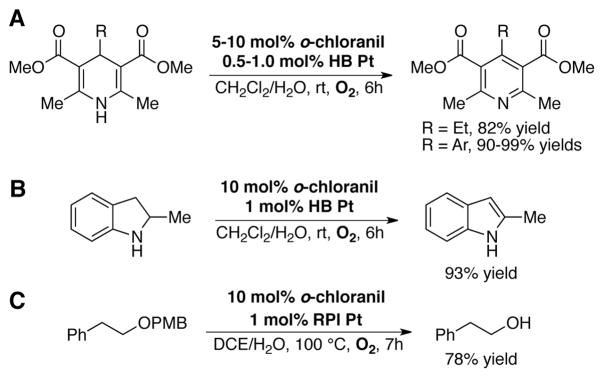
Aerobic o-chloranil-catalyzed dehydrogenation of (A) dihydropyridines to pyridines and (B) 2-methylindoline to 2-methylindole using co-catalytic hybrid organic/inorganic platinum nanocluster catalyst (HB Pt), and (C) PMB ether deprotection under similar conditions employing oxidation-resistant polymer-incarcerated Pt co-catalyst (RPI Pt).[61]
Scheme 20
Scheme 20
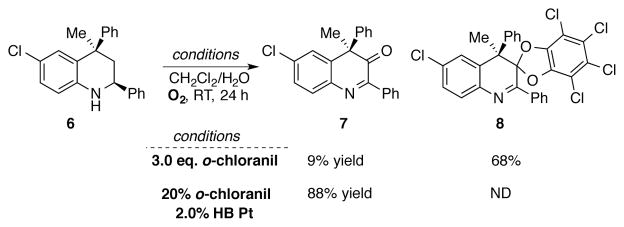
Stoichiometric oxidation of tetrahydroquinoline derivative 6, with 3.0 eq chloranil leads to substrate/chloranil ketal adduct 8. Desired product 7 can be obtained under previously-developed catalytic conditions.[61]
Scheme 21
Scheme 21
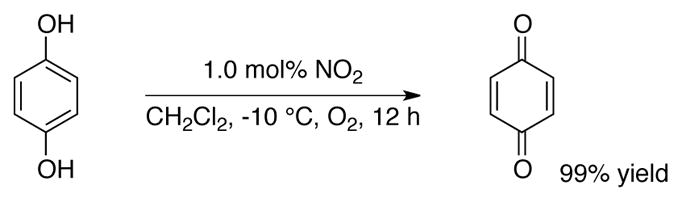
NO2-catalyzed aerobic oxidation of hydroquinones to quinones.[63]
Scheme 22
Scheme 22
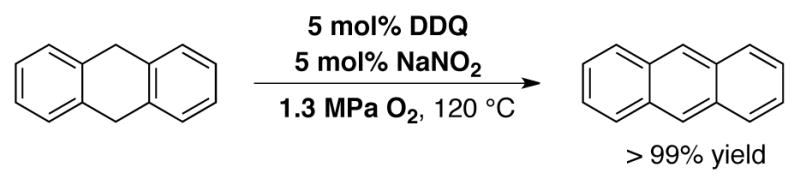
DDQ-catalyzed aerobic dehydrogenation of dihydroanthracene employing co-catalytic NaNO2 at elevated temperatures and pressures.[65]
Scheme 23
Scheme 23
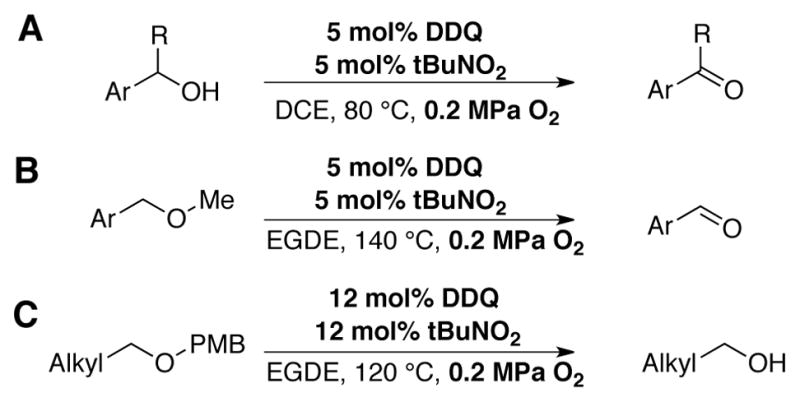
DDQ-catalyzed aerobic oxidation of (A) alcohols and (B) ethers, and (C) selective deprotection of PMB using tert-butylnitrite as a co-catalyst.[66]
Scheme 24
Scheme 24
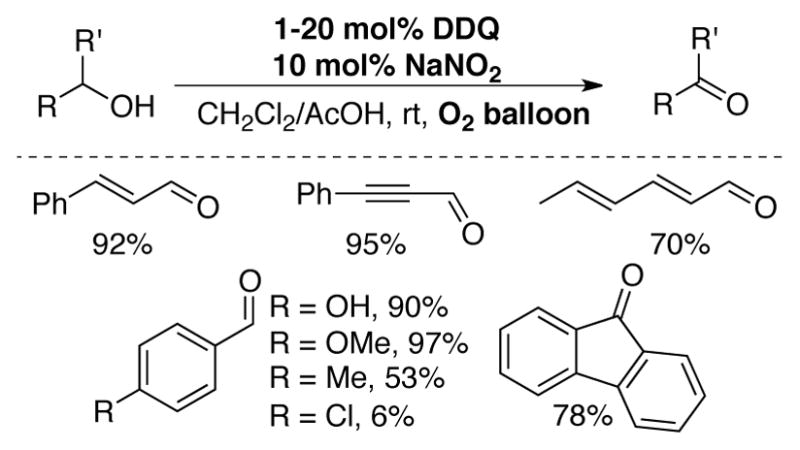
DDQ-catalyzed aerobic oxidation of activated alcohols to aldehydes employing co-catalytic NaNO2 under mild conditions.[67]
Scheme 25
Scheme 25
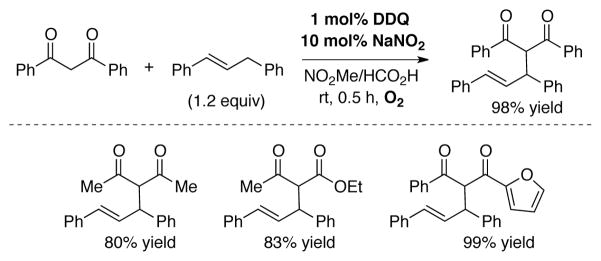
DDQ-catalyzed aerobic C-C coupling of diarylpropenes and 1,3-dicarbonyls employing co-catalytic NaNO2.[73]
Scheme 26
Scheme 26
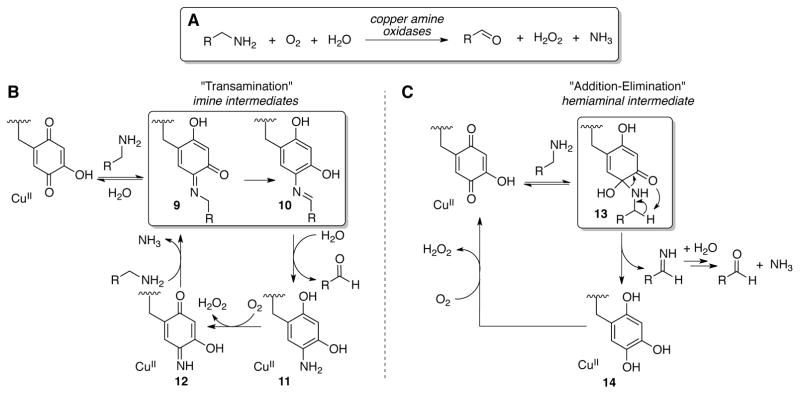
Copper amine oxidases carry out (A) the aerobic oxidation of primary amines in vivo. Two initially-proposed substrate oxidation mechanisms, the (B) transamination mechanism, and (C) addition-elimination mechanism. Scheme adapted from ref .
Scheme 27
Scheme 27
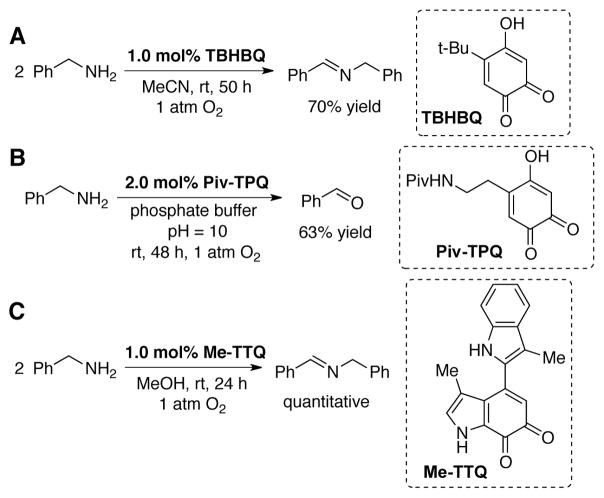
Aerobic primary amine oxidation catalyzed by model quinone cofactors (A) TBHBQ, developed by Klinman,[83] (B) Piv-TPQ, developed by Sayre,[84] and (C)Me-TTQ, developed by Itoh.[85]
Scheme 28
Scheme 28
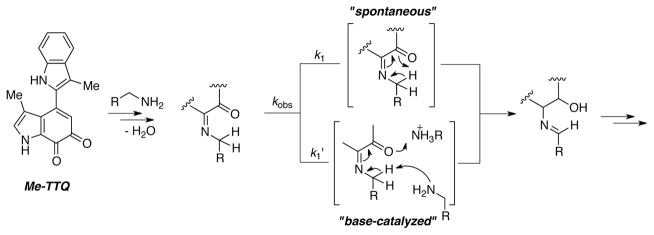
Mechanistic proposal for C-H bond breaking step in biomimetic model quinone- catalyzed aerobic oxidation of primary amines to imines, involving competing intramolecular (“spontaneous”) and intermolecular (“base-catalyzed”) C-H cleavage steps.[85a]
Scheme 29
Scheme 29
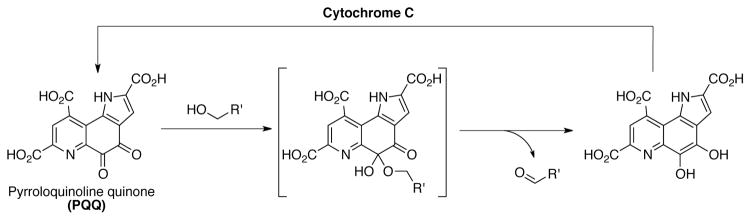
Proposed mechanism of alcohol oxidation mediated by cofactor PQQ.
Scheme 30
Scheme 30
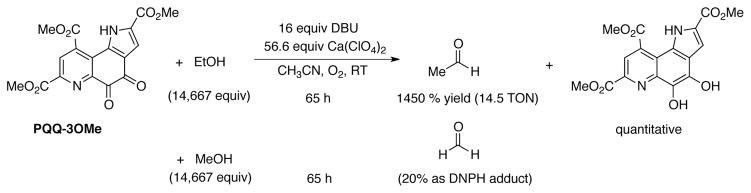
Biomimetic, aerobic oxidation of methanol and ethanol catalyzed by PQQ-3OMe.[88]
Scheme 31
Scheme 31
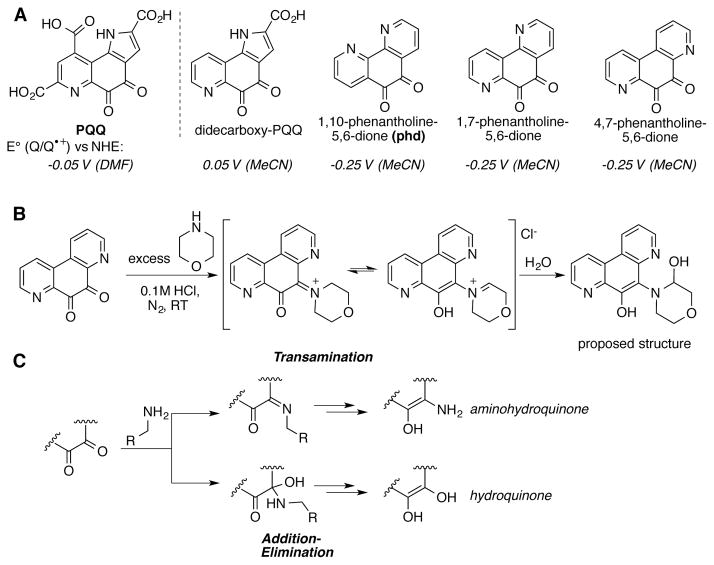
(A) PQQ and model compounds, didecarboxy PQQ and phenanthroline-derived quinones. (B) Adduct formation is observed in the reaction of 4,7-phenanthroline-1,10-dione with excess morpholine, implicating the transamination mechanism.[93] (C) Different reaction mechanisms lead to different reduction products, detected by end-product analysis.
Scheme 32
Scheme 32
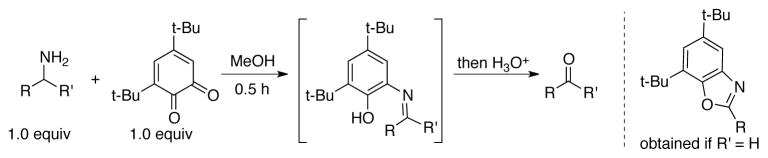
Stoichiometric oxidation of branched primary amines to ketones using 3,5-di-tert-butyl-o-quinone. Oxazole adducts are obtained when unbranched primary amines are used as substrates.[101]
Scheme 33
Scheme 33
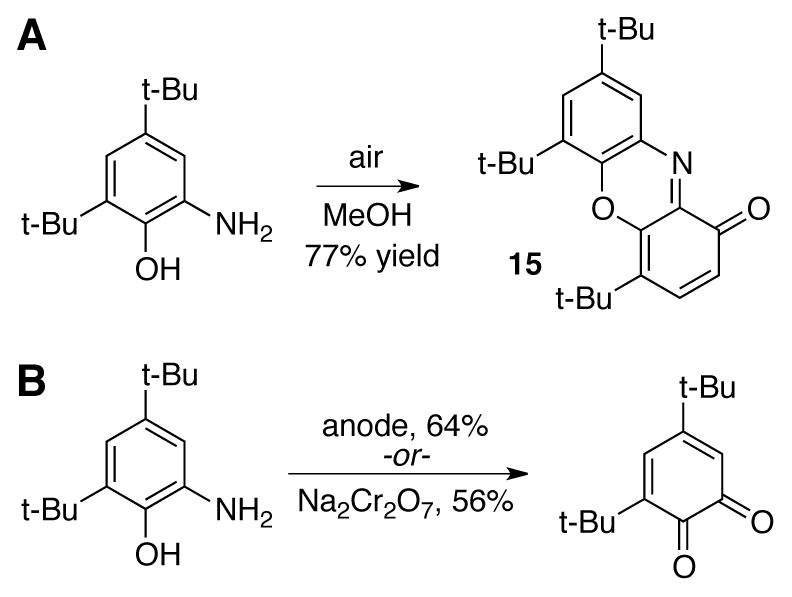
(A) Aerobic oxidation of aminohydroquinone results in formation of dimeric species 15, (B) and additional approaches to regenerate quinone from reduced aminohydroquinone.[104]
Scheme 34
Scheme 34
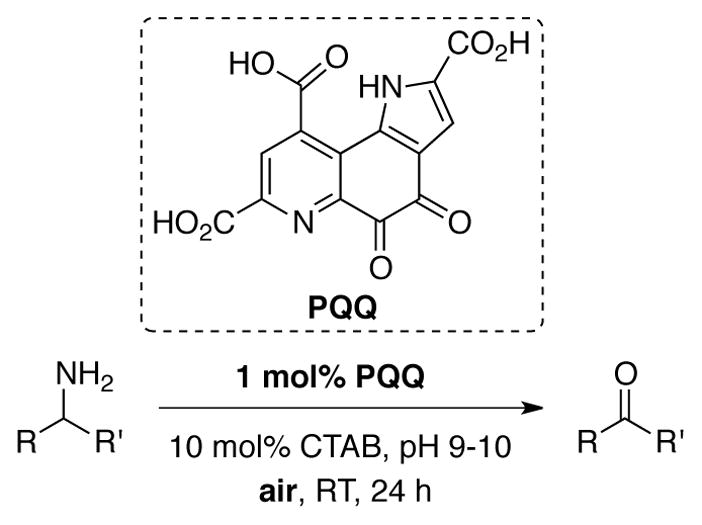
Catalytic oxidation of primary amines to aldehydes and ketones using PQQ promoted by micellar conditions.[105]
Scheme 35
Scheme 35
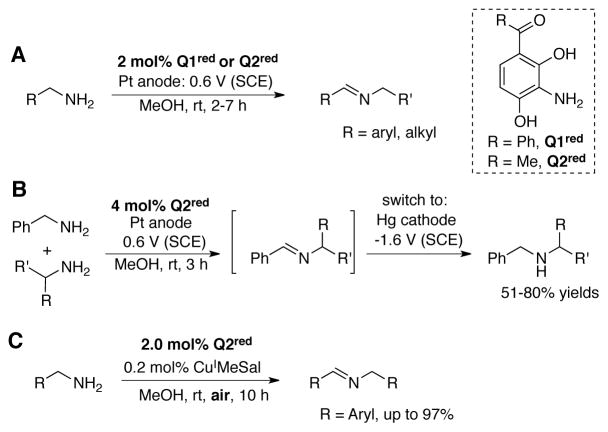
(A) Electrochemical oxidation of amines to imines[107] and (B) secondary amines, [108] by CAO mimics Q1red and Q2red. (C) When CuI is added as a co-catalyst, the aerobic oxidation of primary amines is also achieved.[109]
Scheme 36
Scheme 36
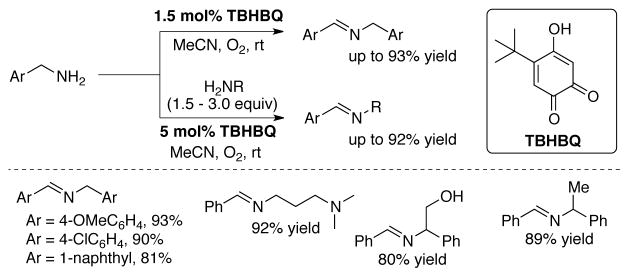
Aerobic oxidation of primary amines to imines using biomimetic o-quinone catalyst TBHBQ.[110]
Scheme 37
Scheme 37
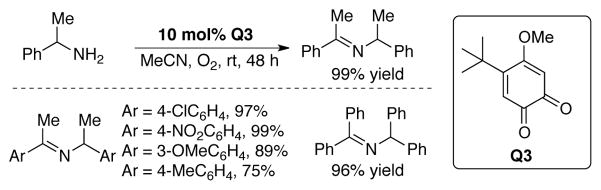
Aerobic oxidation of a-branched primary amines to imines using a biomimetic o-quinone catalyst, Q3. [112]
Scheme 38
Scheme 38
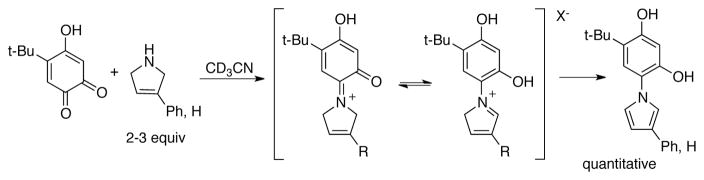
Irreversible pyrrolation of TBHBQ catalyst via transamination-type mechanism is observed when 3-pyrroline substrates are used.[113]
Scheme 39
Scheme 39
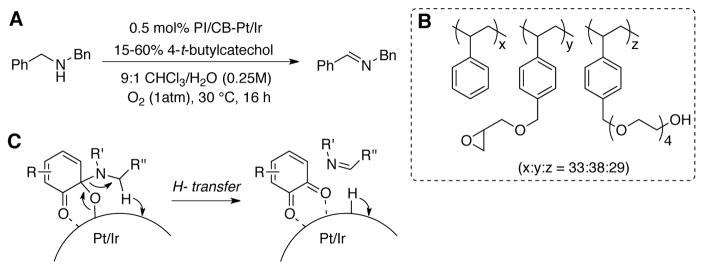
(A) Dehydrogenation of C-N bonds using Pt/Ir alloy incarcerated coblock polymer catalyst, (B) used in combination with co-catalytic catechol additives. (C) A mechanism is proposed wherein substrate oxidation by Pt involved quinone-substrate hemiaminal intermediates.[114]
Scheme 40
Scheme 40
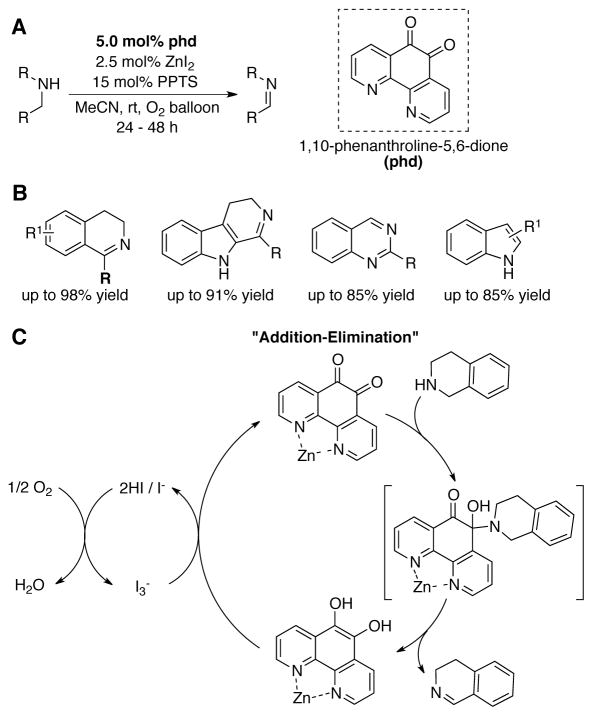
(A) Conditions for the aerobic phd-catalyzed oxidation of a variety of secondary amines, (B). (C) An “addition-elimination” mechanism is proposed involving a hemiaminal intermediate.[116]
Scheme 41
Scheme 41
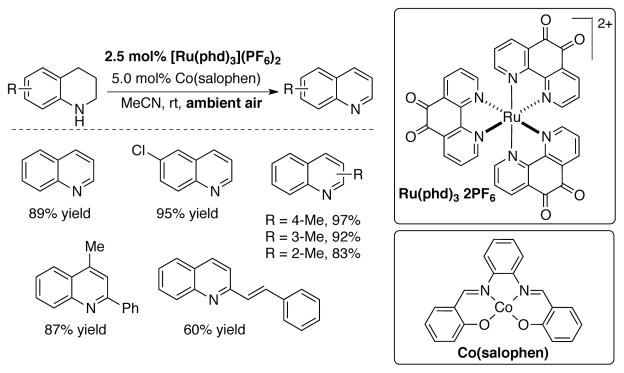
Dehydrogenation of tetrahydroquinolines to quinolines under ambient conditions with co-catalyst system consisting of [Ru(phd)3](PF6)2 and [Co(salophen)].
Scheme 42
Scheme 42
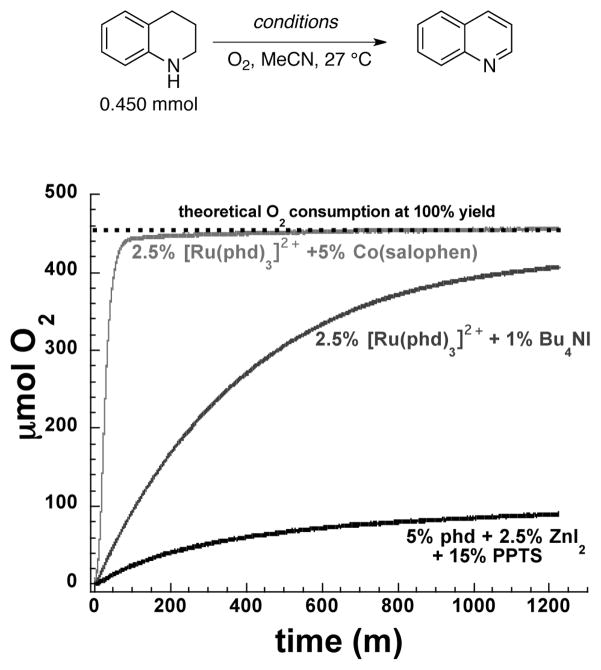
Influence of different Lewis acid promoters and co-catalysts on the quinone-catalyzed aerobic dehydrogenation of tetrahydroquinoline to quinoline by phd and phd-coordinated Ru complexes. Scheme adapted from ref .

References

    1. For selected reviews on the applications of nitroxyl radicals with and without metal co-catalysts, see: Nooy AEJd, Besemer AC, Bekkum Hv. Synthesis. 1996;1996:1153–1176.Cao Q, Dornan LM, Rogan L, Hughes NL, Muldoon MJ. Chem Commun. 2014;50:4524–4543.Wertz S, Studer A. Green Chemistry. 2013;15:3116–3134.Tebben L, Studer A. Angew Chem Int Ed. 2011;50:5034–5068.Sheldon RA, Arends IWCE. J Mol Cat A: Chem. 2006;251:200–214.Sheldon RA, Arends IWCE. Adv Synth Catal. 2004;346:1051–1071.Bobbitt JM, Brückner C, Merbouh N. Org React. 2009;74:106–132.Ryland BL, Stahl SS. Angew Chem Int Ed. 2014;53:8824–8838.Miles KC, Stahl SS. Aldrichimica Acta. 2015;48:8–10.

    1. For reviews focusing on synthetic applications of N-hydroxyphthalimide (NHPI)/Phthalimide N-oxyl (PINO), see: Recupero F, Punta C. Chem Rev. 2007;107:3800–3842.Melone L, Punta C. Beilstein J Org Chem. 2013;9:1296–1310.Galli C, Gentili P, Lanzalunga O. Angew Chem Int Ed. 2008;47:4790–4796.Coseri S. Catalysis Reviews. 2009;51:218–292.Ishii Y, Sakaguchi S. Catal Today. 2006;117:105–113.Ishii Y, Sakaguchi S, Iwahama T. Adv Synth Catal. 2001;343:393–427.

    1. Ciriminna R, Pagliaro M. Org Process Res Dev. 2010;14:245–251.
    2. Iwahama T, Syojyo K, Sakaguchi S, Ishii Y. Org Process Res Dev. 1998;2:255–260.
    3. Ishii Y, Kajikawa Y. 7,015,356. US Patent. (Daicel Chem. Ind), issued Mar 21, 2006.
    1. The Chemistry of the Quinonoid Compounds. Wiley-Interscience; New York: 1974 and 1988.
    2. Buckle DR, Collier SJ, McLaws MD. Encyclopedia of Reagents for Organic Synthesis. John Wiley & Sons, Ltd; 2001.
    1. Goor G, Glenneberg J, Jacobi S. Ullmann’s Encyclopedia of Industrial Chemistry. Wiley-VCH Verlag GmbH & Co. KGaA; Weinheim: 2012. Hydrogen Peroxide.
    2. Eul W, Moeller A, Steiner N. Hydrogen Peroxide. In: Seidel A, Bickford M, editors. Kirk-Othmer Encyclopedia of Chemical Technology. John Wiley & Sons, Inc; 2000.
    3. Jones CW, Clark JH, editors. Applications of Hydrogen Peroxide and Derivatives. The Royal Society of Chemistry; 1999.

Publication types

MeSH terms