Review
. 2015 Dec;15(12):747-56.
doi: 10.1038/nrc4015. Epub 2015 Nov 5.

Precision medicine for cancer with next-generation functional diagnostics

Affiliations
Review

Precision medicine for cancer with next-generation functional diagnostics

Adam A Friedman et al. Nat Rev Cancer. 2015 Dec.

Abstract

Precision medicine is about matching the right drugs to the right patients. Although this approach is technology agnostic, in cancer there is a tendency to make precision medicine synonymous with genomics. However, genome-based cancer therapeutic matching is limited by incomplete biological understanding of the relationship between phenotype and cancer genotype. This limitation can be addressed by functional testing of live patient tumour cells exposed to potential therapies. Recently, several 'next-generation' functional diagnostic technologies have been reported, including novel methods for tumour manipulation, molecularly precise assays of tumour responses and device-based in situ approaches; these address the limitations of the older generation of chemosensitivity tests. The promise of these new technologies suggests a future diagnostic strategy that integrates functional testing with next-generation sequencing and immunoprofiling to precisely match combination therapies to individual cancer patients.


Figures
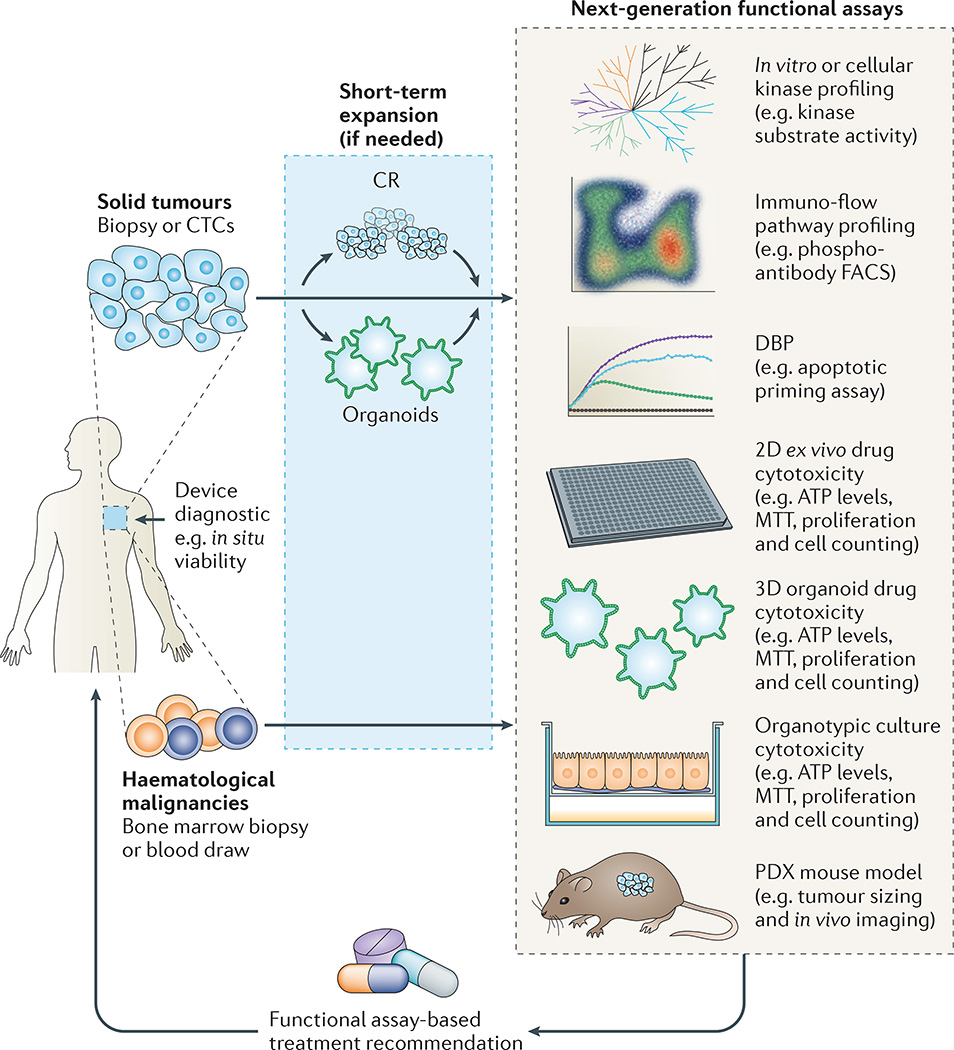
Figure 1
Figure 1. Next-generation approaches for cancer precision medicine
As discussed in the text, a wide range of new technologies have been developed for the ex vivo determination of live tumour cell responses to drug therapies. These include (arranged from top to bottom of figure) target- and pathway-based methods, direct cytotoxicity (reduction in tumour cell numbers) and in vivo models. All methods end in a recommendation for (or against) a specific therapy for a patient with advanced cancer on an individualized basis. For small tumour samples and depending on the method, some ex vivo expansion may be necessary before a functional measurement can be made. Combinations of these functional approaches may also be needed. Combined with gene sequencing and immunoprofiling, functional diagnostic methods are part of a comprehensive approach to precise matching of novel therapies to patients. CR, conditional reprogramming; CTCs, circulating tumour cells; FACS, fluorescence-activated cell sorting; MTT, metabolic tetrazolium dye; PDX, patient-derived xenograft. The dynamic BCL-2 homology domain 3 (BH3) profiling (DBP) graph is adapted with permission from REF. , Elsevier.
Figure 2
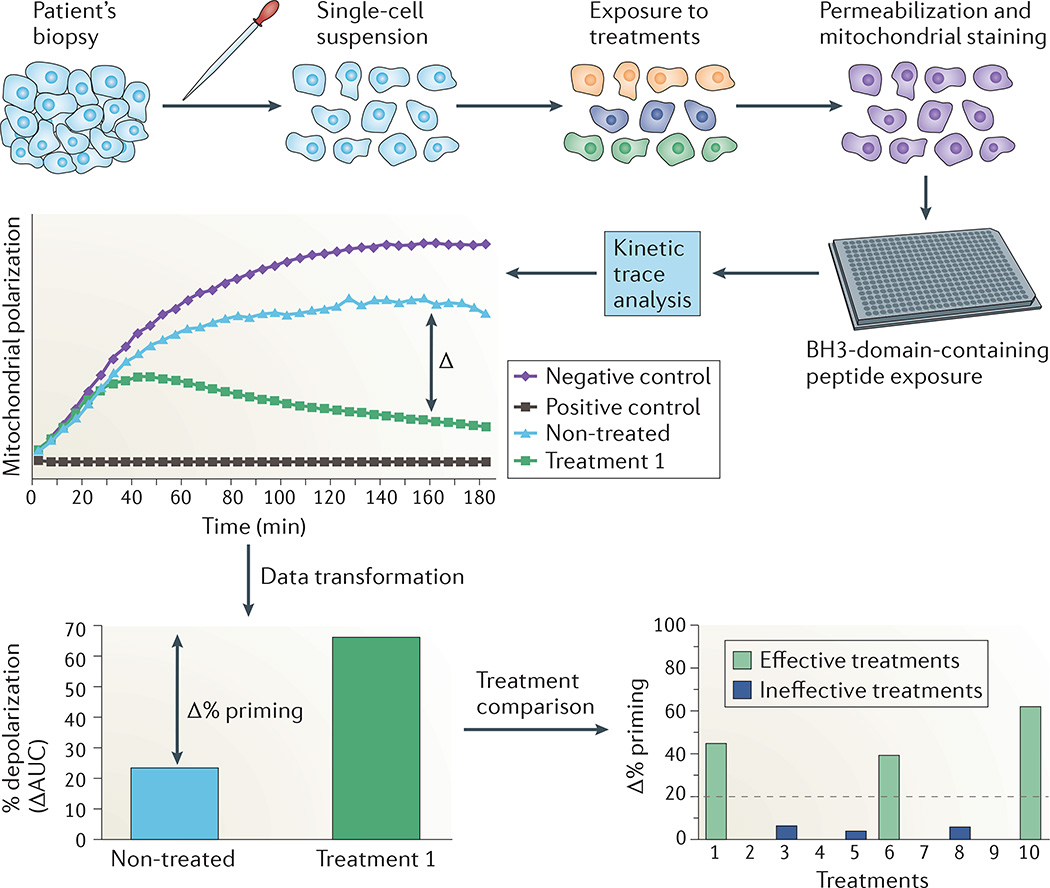
Figure 2. Dynamic BH3 profiling can predict patient responses to cancer therapies
Dynamic BCL-2 homology domain 3 (BH3) profiling is an example of a newer, more molecularly precise assay that can be used for ex vivo functional screening. Biopsy material from the patient is dispersed (for solid tumours) and briefly (for 16–24 hours) exposed to potential drug treatments. After incubation, cells are permeabilized and exposed to BH3-domain-containing peptides. Mitochondrial outer membrane permeabilization is measured, generating a kinetic trace of mitochondrial polarization (central graph). In this analysis, drug treatments that shift the apoptotic threshold generate a large increase in the difference between the kinetic trace area under the curve (AUC) for a negative control-treated sample and the drug-treated sample. This difference creates the ‘Δ% priming’ metric of apoptotic threshold (lower left graph). By comparing this metric across control and drug-treated samples, one can select drug treatments that preferentially lead to apoptotic priming (lower right graph). The dotted line represents the threshold of effectiveness. Adapted with permission from REF. , Elsevier.

References

    1. Lawrence MS, et al. Discovery and saturation analysis of cancer genes across 21 tumour types. Nature. 2014;505:495–501. - PMC - PubMed
    1. Cerami E, et al. The cBio cancer genomics portal: an open platform for exploring multidimensional cancer genomics data. Cancer Discov. 2012;2:401–404. - PMC - PubMed
    1. Sawyers CL, et al. Imatinib induces hematologic and cytogenetic responses in patients with chronic myelogenous leukemia in myeloid blast crisis: results of a Phase II study. Blood. 2002;99:3530–3539. - PubMed
    1. Talpaz M, et al. Imatinib induces durable hematologic and cytogenetic responses in patients with accelerated phase chronic myeloid leukemia: results of a Phase 2 study. Blood. 2002;99:1928–1937. - PubMed
    1. Dienstmann R, Jang IS, Bot B, Friend S, Guinney J. Database of genomic biomarkers for cancer drugs and clinical targetability in solid tumors. Cancer Discov. 2015;5:118–123. - PMC - PubMed

MeSH terms