


Critical review of the impact of core stability on upper extremity athletic injury and performance
- PMID: 26537806
- PMCID: PMC4647147
- DOI: 10.1590/bjpt-rbf.2014.0108
Critical review of the impact of core stability on upper extremity athletic injury and performance
Abstract
Background: Programs designed to prevent or rehabilitate athletic injuries or improve athletic performance frequently focus on core stability. This approach is based upon the theory that poor core stability increases the risk of poor performance and/or injury. Despite the widespread use of core stability training amongst athletes, the question of whether or not sufficient evidence exists to support this practice remains to be answered.
Objectives: 1) Open a dialogue on the definition and components of core stability. 2) Provide an overview of current science linking core stability to musculoskeletal injuries of the upper extremity. 3) Provide an overview of evidence for the association between core stability and athletic performance.
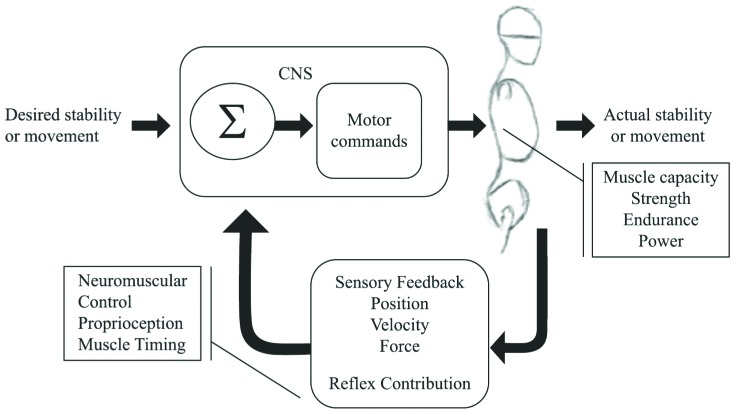
Discussion: Core stability is the ability to control the position and movement of the trunk for optimal production, transfer, and control of forces to and from the upper and lower extremities during functional activities. Muscle capacity and neuromuscular control are critical components of core stability. A limited body of evidence provides some support for a link between core stability and upper extremity injuries amongst athletes who participate in baseball, football, or swimming. Likewise, few studies exist to support a relationship between core stability and athletic performance.
Conclusions: A limited body of evidence exists to support the use of core stability training in injury prevention or performance enhancement programs for athletes. Clearly more research is needed to inform decision making when it comes to inclusion or emphasis of core training when designing injury prevention and rehabilitation programs for athletes.
Figures

References
-
- Centers for Disease Control and Prevention - CDC . In: CDC Injury Research Agenda. Fleming DW, Binder S, editors. Atlanta: National Center for Injury Prevention and Control; CDC; 2002.
Publication types
MeSH terms
LinkOut - more resources
Full Text Sources
Other Literature Sources
Medical