


Phenotypes, Risk Factors, and Mechanisms of Adult-Onset Asthma
- PMID: 26538828
- PMCID: PMC4619972
- DOI: 10.1155/2015/514868
Phenotypes, Risk Factors, and Mechanisms of Adult-Onset Asthma
Abstract
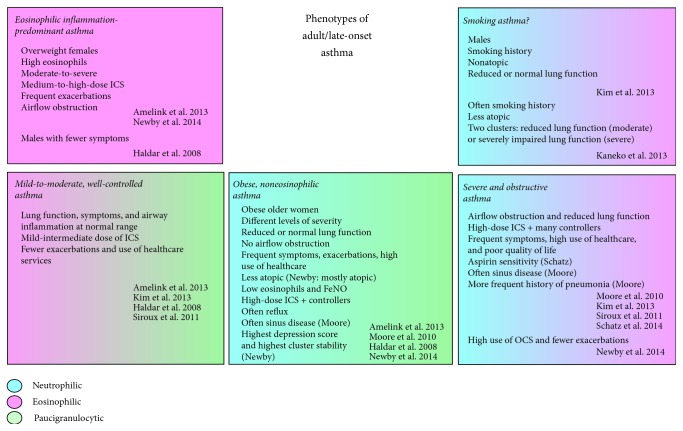
Asthma is a heterogeneous disease with many phenotypes, and age at disease onset is an important factor in separating the phenotypes. Genetic factors, atopy, and early respiratory tract infections are well-recognized factors predisposing to childhood-onset asthma. Adult-onset asthma is more often associated with obesity, smoking, depression, or other life-style or environmental factors, even though genetic factors and respiratory tract infections may also play a role in adult-onset disease. Adult-onset asthma is characterized by absence of atopy and is often severe requiring treatment with high dose of inhaled and/or oral steroids. Variety of risk factors and nonatopic nature of adult-onset disease suggest that variety of mechanisms is involved in the disease pathogenesis and that these mechanisms differ from the pathobiology of childhood-onset asthma with prevailing Th2 airway inflammation. Recognition of the mechanisms and mediators that drive the adult-onset disease helps to develop novel strategies for the treatment. The aim of this review was to summarize the current knowledge on the pathogenesis of adult-onset asthma and to concentrate on the mechanisms and mediators involved in establishing adult-onset asthma in response to specific risk factors. We also discuss the involvement of these mechanisms in the currently recognized phenotypes of adult-onset asthma.
Figures
References
Publication types
MeSH terms
Substances
LinkOut - more resources
Full Text Sources
Other Literature Sources
Medical
