Granulomatous amebic encephalitis following hematopoietic stem cell transplantation
- PMID: 26539322
- PMCID: PMC4604647
- DOI: 10.4103/2152-7806.166788
Granulomatous amebic encephalitis following hematopoietic stem cell transplantation
Abstract
Background: Granulomatous amebic encephalitis (GAE) is rare, but often fatal. The infection has been documented predominantly among the immunocompromised population or among those with chronic disease. To date, however, there have only been eight cases regarding the infection following hematopoietic stem cell transplantation (HSCT).
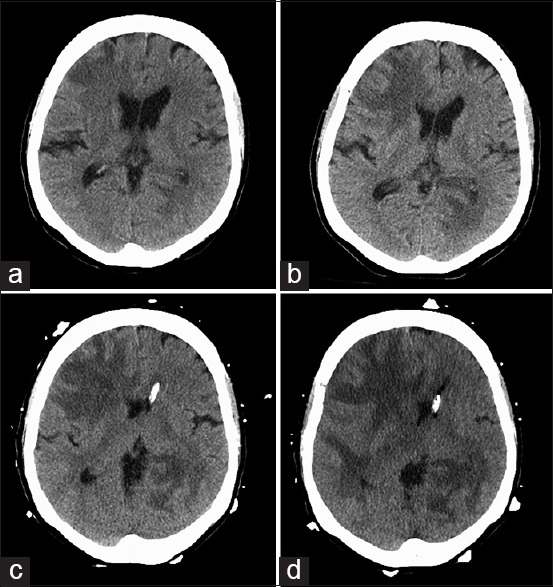
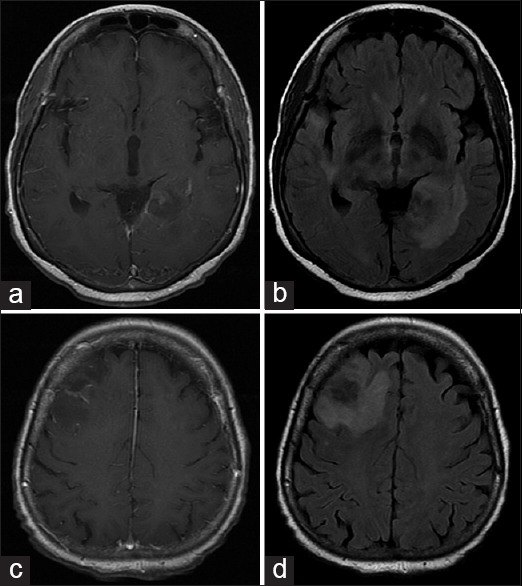
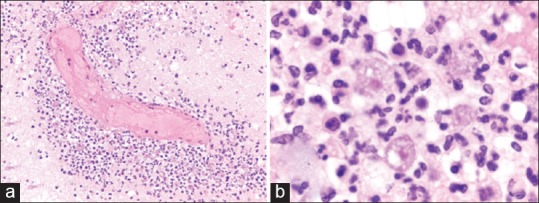
Case description: A 62-year-old female with a history of relapsed diffuse large B-cell lymphoma, recently underwent peripheral blood autologous stem cell transplant after BEAM conditioning (day 0). On day +15, she began to exhibit worsening fatigue, generalized weakness, and fever. Symptoms progressed to nausea, emesis, somnolence, confusion, and frontal headaches over the next few days. Imaging demonstrated multifocal ill-defined vasogenic edema with patchy enhancement. The patient was started on broad antibiotics, antifungals, and seizure prophylaxis. Evaluation for bacterial, fungal, mycobacterial, and viral etiologies was fruitless. Her mental status progressively deteriorated. On day +22, she exhibited severe lethargy and went into pulseless electrical activity arrest, requiring chest compressions. The episode lasted <2 min and her pulse was restored. She was taken to the operating room for a brain biopsy. Postoperatively, her right pupil began to dilate compared to the left; she demonstrated extensor posturing in her upper extremities and withdrawal in her lower extremities. Repeat computed tomography demonstrated progressive edema. Given poor prognosis and poor neurological examination, the family opted for withdrawal of care. Final pathology was consistent with Acanthamoeba GAE.
Conclusion: The authors report the third case of GAE after autologous stem cell transplant, and the ninth case overall after HSCT. This case is unusual due to its rapid clinical presentation after HSCT compared to prior literature. The case highlights the need for high suspicion of Acanthamoeba infection in this patient population.
Keywords: Acanthamoeba; encephalitis; stem cell transplantation.
Figures
References
-
- Abd H, Saeed A, Jalal S, Bekassy AN, Sandström G. Ante mortem diagnosis of amoebic encephalitis in a haematopoietic stem cell transplanted patient. Scand J Infect Dis. 2009;41:619–22. - PubMed
-
- Akpek G, Uslu A, Huebner T, Taner A, Rapoport AP, Gojo I, et al. Granulomatous amebic encephalitis: An under-recognized cause of infectious mortality after hematopoietic stem cell transplantation. Transpl Infect Dis. 2011;13:366–73. - PubMed
-
- Anderlini P, Przepiorka D, Luna M, Langford L, Andreeff M, Claxton D, et al. Acanthamoeba meningoencephalitis after bone marrow transplantation. Bone Marrow Transplant. 1994;14:459–61. - PubMed
-
- Castellano-Sanchez A, Popp AC, Nolte FS, Visvesvara GS, Thigpen M, Redei I, et al. Acanthamoeba castellani encephalitis following partially mismatched related donor peripheral stem cell transplantation. Transpl Infect Dis. 2003;5:191–4. - PubMed
-
- Feingold JM, Abraham J, Bilgrami S, Ngo N, Visvesara GS, Edwards RL, et al. Acanthamoeba meningoencephalitis following autologous peripheral stem cell transplantation. Bone Marrow Transplant. 1998;22:297–300. - PubMed
LinkOut - more resources
Full Text Sources
Other Literature Sources