Comparative Study
. 2015 Nov 5;11(11):e1005614.
doi: 10.1371/journal.pgen.1005614. eCollection 2015 Nov.

Genus-Wide Comparative Genomics of Malassezia Delineates Its Phylogeny, Physiology, and Niche Adaptation on Human Skin

Affiliations
Comparative Study

Genus-Wide Comparative Genomics of Malassezia Delineates Its Phylogeny, Physiology, and Niche Adaptation on Human Skin

Guangxi Wu et al. PLoS Genet. .

Abstract

Malassezia is a unique lipophilic genus in class Malasseziomycetes in Ustilaginomycotina, (Basidiomycota, fungi) that otherwise consists almost exclusively of plant pathogens. Malassezia are typically isolated from warm-blooded animals, are dominant members of the human skin mycobiome and are associated with common skin disorders. To characterize the genetic basis of the unique phenotypes of Malassezia spp., we sequenced the genomes of all 14 accepted species and used comparative genomics against a broad panel of fungal genomes to comprehensively identify distinct features that define the Malassezia gene repertoire: gene gain and loss; selection signatures; and lineage-specific gene family expansions. Our analysis revealed key gene gain events (64) with a single gene conserved across all Malassezia but absent in all other sequenced Basidiomycota. These likely horizontally transferred genes provide intriguing gain-of-function events and prime candidates to explain the emergence of Malassezia. A larger set of genes (741) were lost, with enrichment for glycosyl hydrolases and carbohydrate metabolism, concordant with adaptation to skin's carbohydrate-deficient environment. Gene family analysis revealed extensive turnover and underlined the importance of secretory lipases, phospholipases, aspartyl proteases, and other peptidases. Combining genomic analysis with a re-evaluation of culture characteristics, we establish the likely lipid-dependence of all Malassezia. Our phylogenetic analysis sheds new light on the relationship between Malassezia and other members of Ustilaginomycotina, as well as phylogenetic lineages within the genus. Overall, our study provides a unique genomic resource for understanding Malassezia niche-specificity and potential virulence, as well as their abundance and distribution in the environment and on human skin.


Conflict of interest statement

HZ, CS, JX, RR, and NR are employed by Procter & Gamble, who sells anti-dandruff shampoo.

Figures
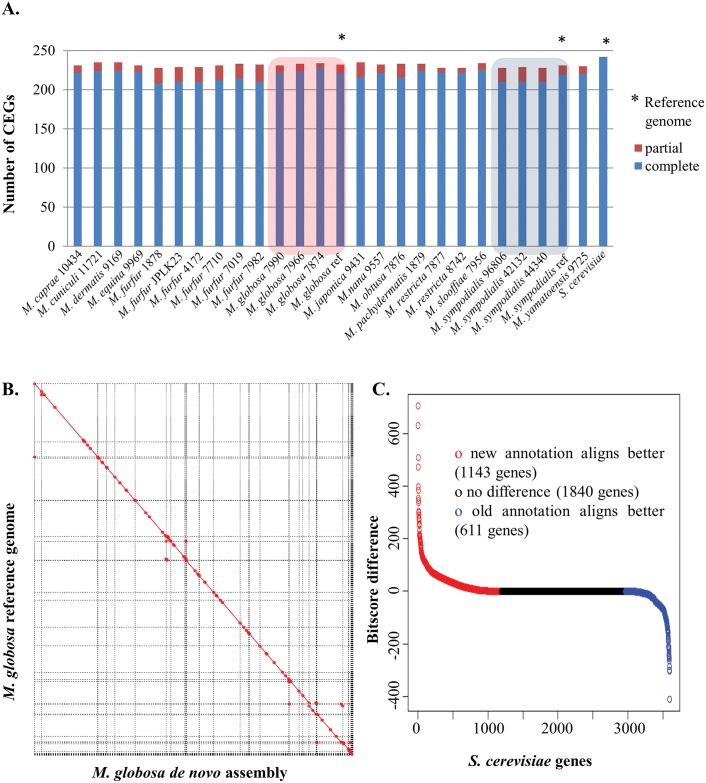
Fig 1
Fig 1. Correctness and completeness of Malassezia assembly and annotation.
A) Assembly completeness in terms of partial and complete core eukaryotic genes that can be detected in each genome. As shown here, the assemblies from this study are comparable to published references for M. globosa and M. sympodialis and are very similar to the gold-standard S. cerevisiae genome. B) Whole-genome alignment of the assembly of M. globosa 7966 in this study as compared to the published reference, highlighting the robust assembly and the lack of clear misassemblies. C) Comparison of an annotation of M. globosa 7966 in this study with the reference annotation, using alignments to S. cerevisiae as a gold-standard. Y-axis indicates the BLAST bitscore difference between the top matches from the new and old annotations to the same S. cerevisiae protein. X-axis indicates the number of S. cerevisiae proteins. Red circles indicate S. cerevisiae proteins with a better match to the new annotation. Blue circles indicate S. cerevisiae proteins with a better match to the reference annotation.
Fig 2
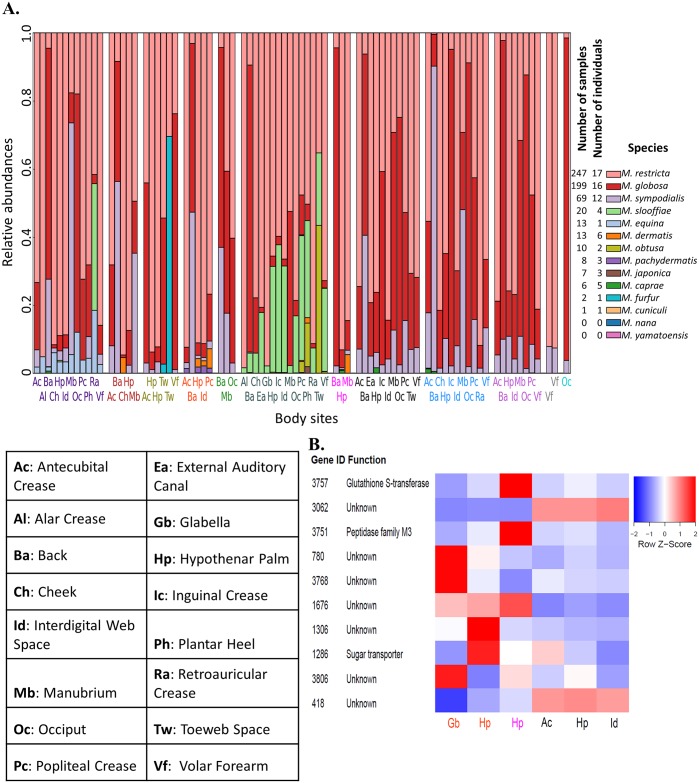
Fig 2. Characterizing the diversity of Malassezia in skin samples.
A) The relative abundance of various Malassezia species (y-axis) in skin samples from different body sites (labels on the x-axis) and individuals (separated by white columns) is depicted. Samples where >99% of reads came from M. globosa and M restricta are not shown here. The numbers of samples and the numbers of individuals in which each species was found is indicated in the legend on the right. B) Z-score transformed normalized read counts for the top 10 copy number variable genes in M. restricta 7877 (measured in terms of coefficient of variation of normalized counts) across six skin samples.
Fig 3
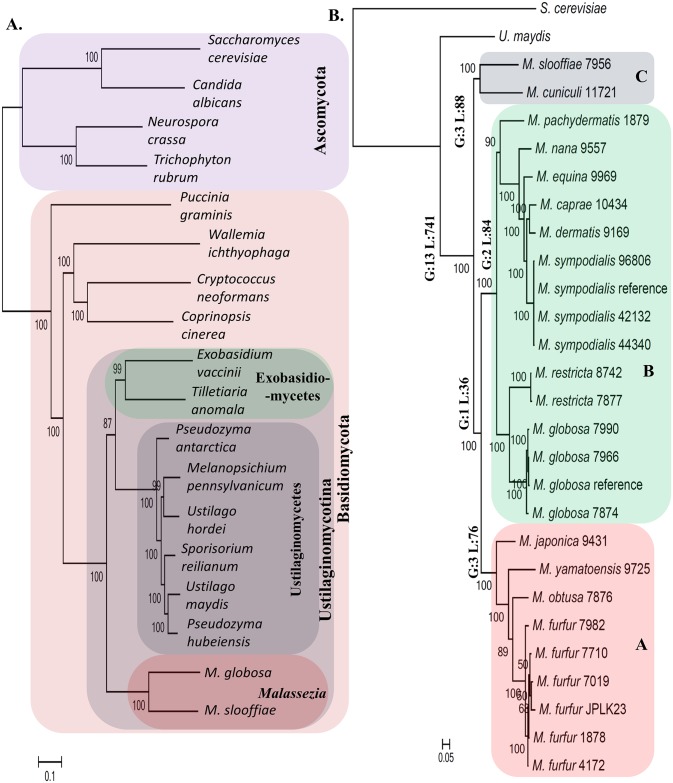
Fig 3. Phylogenetic relationships and lineage specific events in the Malassezia genus.
A) The relationship of the Malassezia genus with respect to other fungi with sequenced genomes. Malassezia seem to form a distinct group in the subphylum of Ustilaginomycotina contrary to earlier reports. B) An expanded phylogeny of Malassezia that includes all known species in the genus. Major lineages of the genus are annotated with the number of lineage specific events that were identified in this study (G: gene family gain; L: gene family loss based on PFam analysis; see S3 Table for details). Horizontal numbers on each branch are bootstrap values.
Fig 4
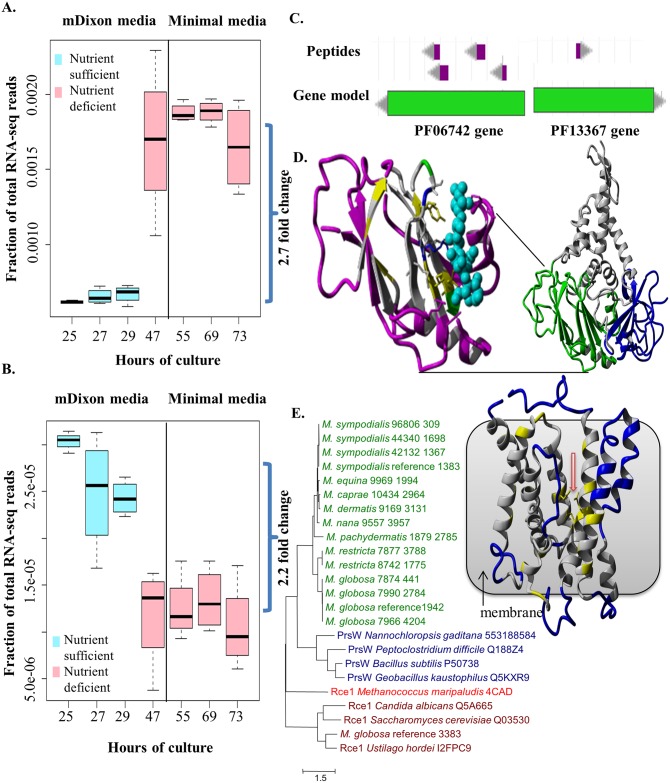
Fig 4. Functional characterization of novel, putative horizontally transferred genes in Malassezia.
A) Upregulation of the gene containing the PFam domain PF06742 in nutrient deprived conditions in M. globosa. B) Downregulation of the gene containing PF13367 in nutrient deprived conditions in M. globosa. C) Peptide evidence for the genes containing PF06742 and PF13367 in M. sympodialis. D) Structural model of representative gene containing PF06742 (MGL_833 from M. globosa 7966 reference). Right side: full model with domains in different colors. Left side: zoom to Jelly Roll domain with predicted glycosyl hydrolase function (Coloring shows relative similarity to known hydrolase enzymes. Purple: structurally different; Gray: structurally same, amino acid different; Yellow: structurally same, amino acid identical, hydrophobic; Blue, Red, Green: structurally same, amino acid identical, non-hydrophobic [blue: positive charge; red: negative charge; green: polar]; Cyan: substrate sugar). E) Left side: Maximum likelihood phylogenetic tree of the Malassezia PrsW-like family (green) with representatives from PrsW (blue) and Rce1 (brown) families including one resolved structure (red). Gene IDs are specified behind species names and strain IDs. Right side: homology model of a PrsW-like protease (MG7966_4204 from M. globosa 7966; contains the PFam domain PF13367) with red arrow indicating conserved glutamates and histidines coming together to form the active site. Coloring: Blue: structurally different; Gray: structurally same, amino acid different; Yellow: structurally same, amino acid identical (all types).
Fig 5
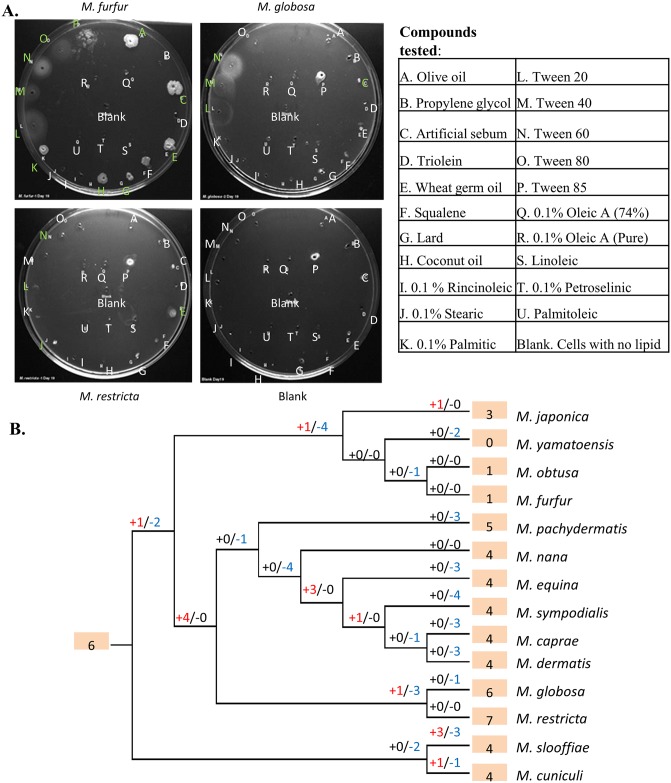
Fig 5. Lipid specificity and extensive turnover in the lipase gene family.
A) Representative lipid assimilation assay images. Letters correspond to lipid wells (S5 Table). White letters indicate no growth, while green letters indicate growth on visual scale. B) Gene gains and losses in phosphoesterase family PF04185, where “+” indicates the number of gene gain events while “-” indicates the number of gene loss events. Shaded numbers indicate the estimated gene copy number in the most recent common ancestor and gene copy numbers in the observed species.

References

    1. Malassez L. Note sur le champignon du pityriasis simple. Arch Physiol. 1874;1: 451–459.
    1. Xu J, Saunders CW, Hu P, Grant RA, Boekhout T, Kuramae EE, et al. Dandruff-associated Malassezia genomes reveal convergent and divergent virulence traits shared with plant and human fungal pathogens. Proc Natl Acad Sci. 2007;104: 18730–18735. - PMC - PubMed
    1. Kurtzman C, Fell JW, Boekhout T. The Yeasts: A Taxonomic Study. Elsevier; 2011.
    1. Castellá G, Hernández JJ, Cabañes FJ. Genetic typing of Malassezia pachydermatis from different domestic animals. Vet Microbiol. 2005;108: 291–296. - PubMed
    1. Hirai A, Kano R, Makimura K, Duarte ER, Hamdan JS, Lachance M-A, et al. Malassezia nana sp. nov., a novel lipid-dependent yeast species isolated from animals. Int J Syst Evol Microbiol. 2004;54: 623–627. - PubMed

Publication types