Review
. 2015 Oct;7(10):754-65.
doi: 10.18632/aging.100819.

Systemic Problems: A perspective on stem cell aging and rejuvenation

Affiliations
Review

Systemic Problems: A perspective on stem cell aging and rejuvenation

Irina M Conboy et al. Aging (Albany NY). 2015 Oct.

Abstract

This review provides balanced analysis of the advances in systemic regulation of young and old tissue stem cells and suggests strategies for accelerating development of therapies to broadly combat age-related tissue degenerative pathologies. Many highlighted recent reports on systemic tissue rejuvenation combine parabiosis with a "silver bullet" putatively responsible for the positive effects. Attempts to unify these papers reflect the excitement about this experimental approach and add value in reproducing previous work. At the same time, defined molecular approaches, which are "beyond parabiosis" for the rejuvenation of multiple old organs represent progress toward attenuating or even reversing human tissue aging.

Keywords: aging; neurogenesis; parabiosis; rejuvenation; stem cells.


Conflict of interest statement

Conflicts of interest statement

The authors declare no conflicts of interest.

Figures
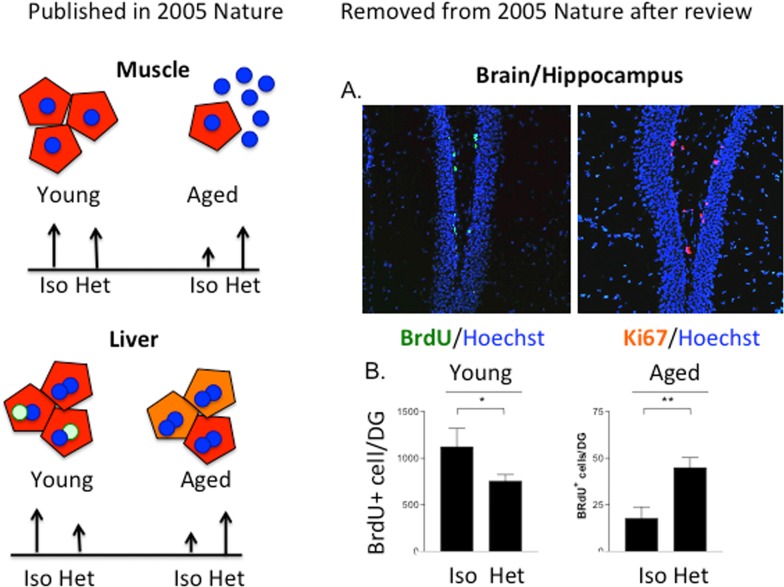
Figure 1
Figure 1. The age of the systemic milieu affects myogenesis, hepatogenesis AND neurogenesis
The work on myogenesis and liver regeneration is described in [1]. The work on neurogenesis was reviewed as a part of the same manuscript (conceived, planned, executed and written by Irina and Michael Conboy and Tom Rando; Conboy et al, 2004-02-15708A) but was removed after the review. (A) BrdU was administered to 5 week parabionts at 5, 3 and 1 day before mice were sacrificed and brains were processed for immunofluorescence analysis. Sections through the dentate gyrus of the hippocampus were immunostained for BrdU (green; left panel) or Ki67 (red; right panel) to identify proliferating progenitor cells. Hoechst dye (blue) labels all nuclei. (B) Quantitation of neural stem cell proliferation as determined from experiments represented in panel (A). Counting BrdU+ cells in periodic sections and extrapolating to the entire thickness of the DG estimated the total number of proliferating neural stem cells. The scales for the young and aged animals are different because of the marked global reduction in neurogenesis in brains of old mice compared with young mice, as previously reported. Neural stem cell proliferation was significantly enhanced for old partners in heterochronic pairings, compared to those in isochronic pairs (**p < 0.005). There was an inhibition of proliferation in young partners involved in heterochronic pairings compared to those in isochronic pairings (*p < 0.05).
Figure 2
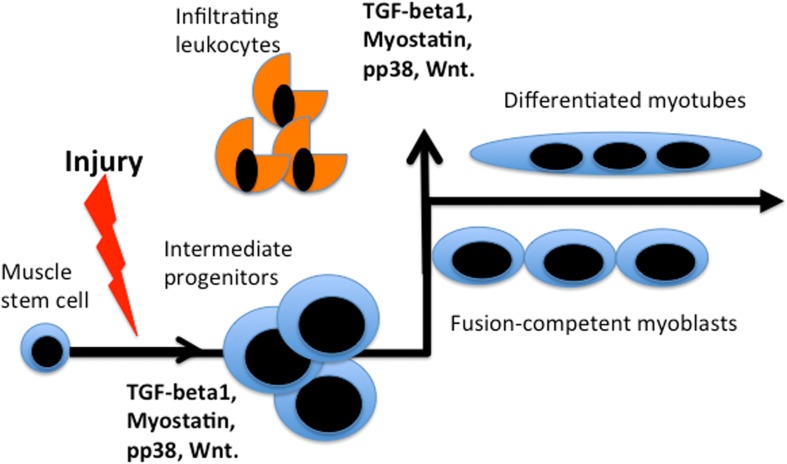
Figure 2. Bi-phasic requirements for TGFβ, myostatin, pp38, Wnt during muscle repair
Activated by muscle injury quiescent muscle stem cells enter cell cycle and differentiate into rapidly dividing intermediate progenitor cells that expand, when the levels of listed factors are low. Up-regulation of these factors (likely by many sources, including infiltrating leukocytes that clear the wound) is needed for productive differentiation of the intermediate progenitors into fusion-competent myoblasts and post-mitotic multi-nucleated myotubes. In vitro, intermediate progenitors can be expanded in high mitogen medium and upon withdrawal of mitogens they form multi-nucleated myotubes in culture.
Figure 3
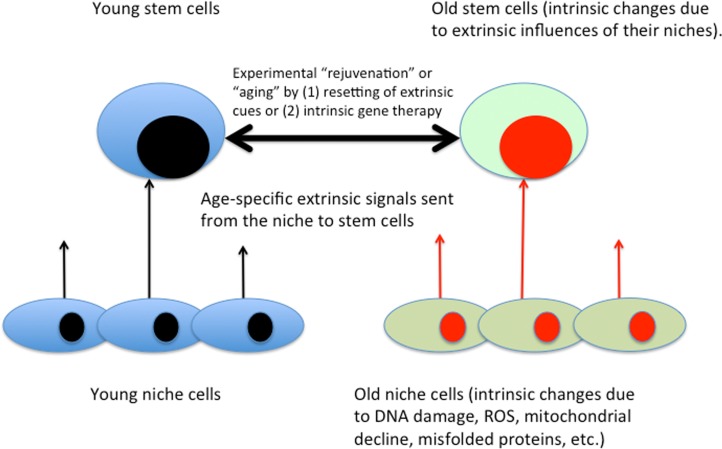
Figure 3. Intrinsic / extrinsic aging of tissue stem cells
Based on the body of published literature, gene expression, epigenome, signal transduction and behavior of stem cells are influenced by the signals that emanate from their local and systemic niches. Niche cells experience intrinsic aging, which results in the changed extrinsic influences on tissue stem cells. Accordingly, in addition to gene therapy and not adding stem cells, defined molecular approaches for enhancement of tissue maintenance and repair have been demonstrated [3].
Figure 4
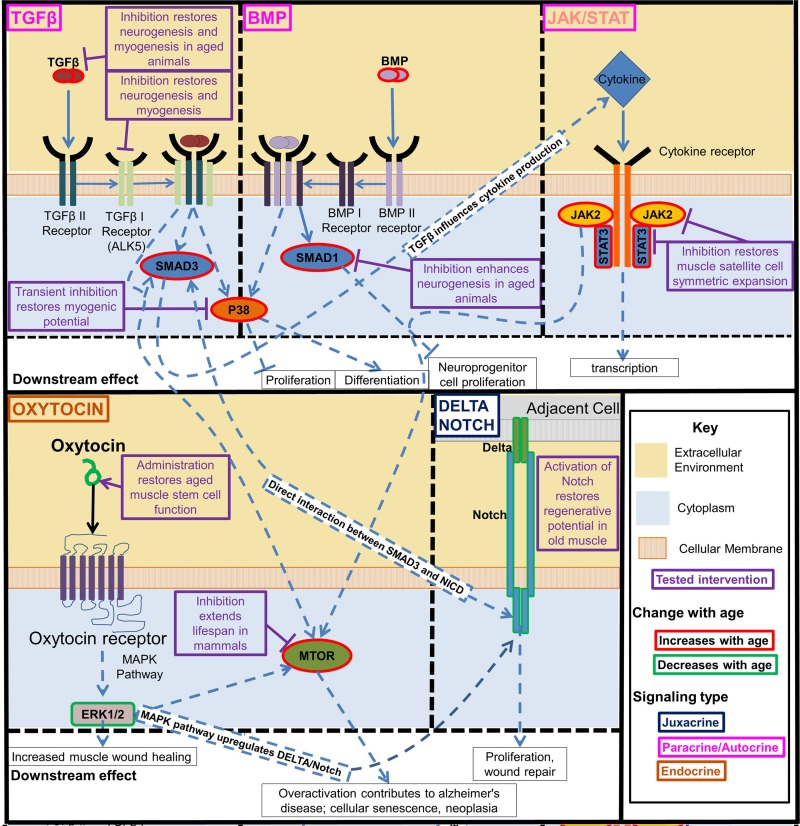
Figure 4. Key regulatory signaling pathways that become deregulated with age
The interactive developmentally and evolutionary conserved Notch, TGF-beta/BMP, Jak/Stat, p38, oxytocin/MAPK, and mTOR signaling pathways control function of tissue stem cells and change with age in ways that interfere with tissue maintenance and repair. Experimental modulation of these pathways enhanced the tissue regenerative capacity in old mammals. Beginning clockwise from top left. TGFβ and BMP pathway increase with age and activate pp38, transient inhibition of which is sufficient to restore myogenic potential in muscle stem cells. TGFβ and BMP also separately act through SMADs, inhibiting these SMADs was also found to rescue from some of the negative effects of these pathways pathogenic activation with age. JAK/STAT is a cytokine receptor pathway that increases with age. Many inflammatory cytokines act through this pathway. Inhibition of this pathway restores muscle satellite cell symmetric expansion. Delta/Notch signaling decreases with age, the activation of which in old muscle restores its regenerative potential. Oxytocin signaling decreases with age, restoring this signaling improves aged muscle satellite cell function. These intracellular signaling pathways are highly interactive. TGFβ acts through SMADs to influence downstream cytokine production which act on the Jak/Stat pathway, and SMAD3 and the Notch Intracellular Domain (NICD) interact directly to form a complex in the nucleus that binds to specific DNA sequences [8]. The MAPK/ERK pathway is activated by oxytocin, and the MAPK pathway is known to activate Notch signaling [9]. There is crosstalk between TGFβ signaling, Jak/Stat, and Erk1/2 mediated through mTOR.

References

    1. Conboy IM, Conboy MJ, Wagers AJ, Girma ER, Weissman IL, Rando TA. Rejuvenation of aged progenitor cells by exposure to a young systemic environment. Nature. 2005;433:760–764. - PubMed
    1. McCay CM, Pope F, Lunsford W, Sperling G, Sambhavaphol P. Parabiosis between old and young rats. Gerontologia. 1957;1:7–17. - PubMed
    1. Conboy IM, Rando TA. Heterochronic parabiosis for the study of the effects of aging on stem cells and their niches. Cell cycle (Georgetown, Tex.) 2012;11:2260–2267. - PMC - PubMed
    1. Conboy IM, Conboy MJ, Smythe GM, Rando TA. Notch-mediated restoration of regenerative potential to aged muscle. Science (New York, NY) 2003;302:1575–1577. - PubMed
    1. Elabd C, Cousin W, Upadhyayula P, Chen RY, Chooljian MS, Li J, Kung S, Jiang KP, Conboy IM. Oxytocin is an age-specific circulating hormone that is necessary for muscle maintenance and regeneration. Nature Communications. 2014 in press. - PMC - PubMed

Publication types

Substances